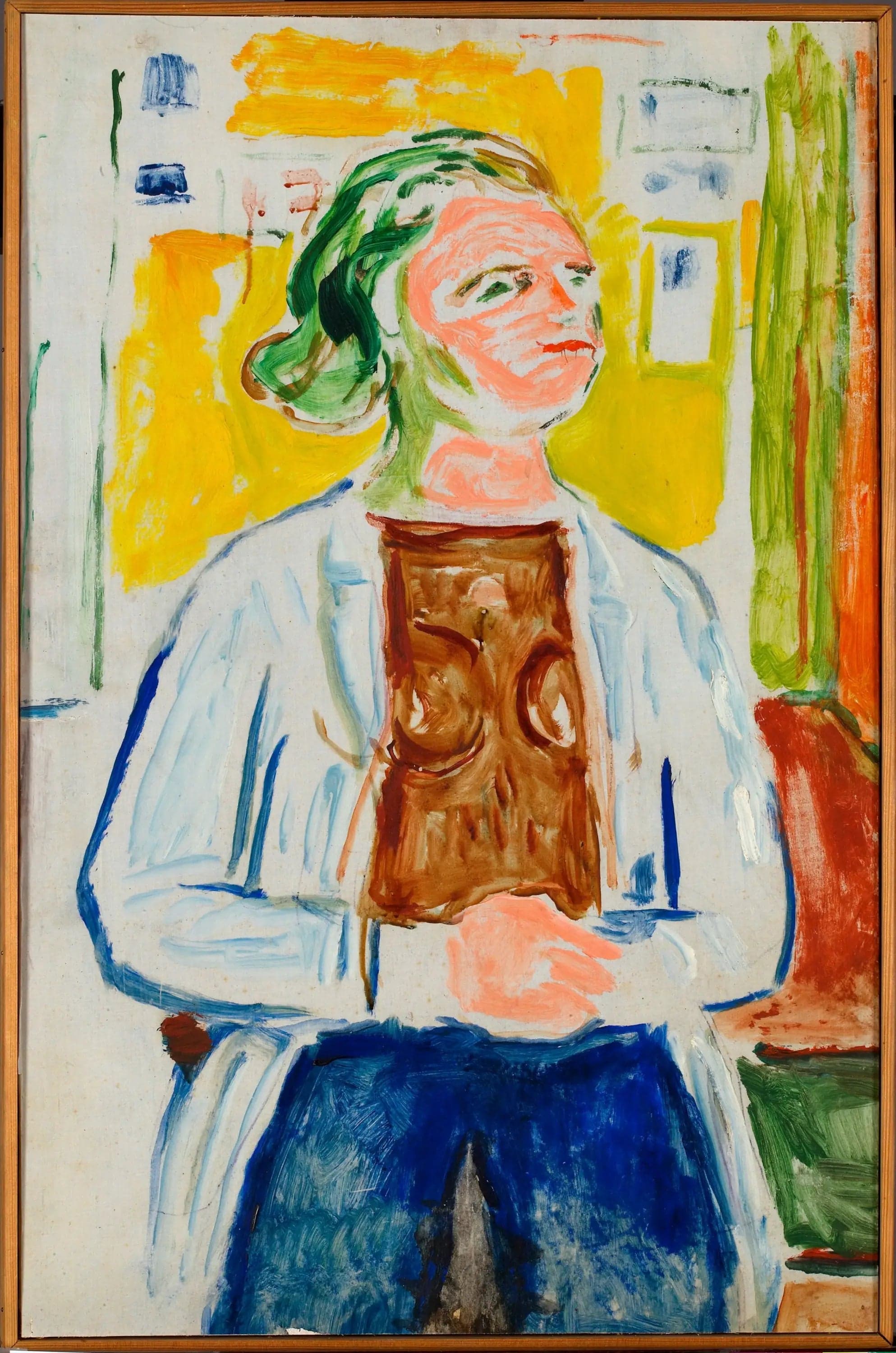
Young Woman
- Original dimensions
- 43 x 66 cm
- Museum
- Munch Museum
- Year
- 1942
Scene depicted
In this painting , Munch delivers a poignant portrait of a woman with delicate beauty and palpable emotion. The captivating gaze of the model seems to call to the depths of the human soul, infusing the scene with a gentle melancholy. Every contour and every color gives the canvas a contemplative atmosphere, inviting us to feel the nuances of her thoughts.
Historical context
Created in 1942, in Oslo, this iconic work belongs to the expressionist movement. Young Woman is situated at a pivotal time in art, reflecting the social and personal tensions of a changing world. Today, the painting rests in the Munch Museum, testament to the powerful artistic legacy of Edvard Munch , where it continues to capture the imagination of visitors.
Place in the artist's career
Young Woman positions itself between the artistic maturity and emotional exploration of Edvard Munch . In comparison with The Scream , where anxiety predominates, and The Madonna , which radiates passion, this painting reveals a more inward sensitivity, a witness to a remarkable stylistic evolution at the heart of his career.
Anecdote
“A pure soul, a mundane light, that is where beauty resides,” Munch is said to have remarked while contemplating the face of a young woman, the inspiration for this masterpiece . On a sweet and sunny afternoon, he encountered her in a park. Her softness and fragility inspired him to capture the essence of humanity. Young Woman remains an emotional and iconic resonance of that precious moment.
Major exhibitions
Edvard Munch and his models: 1912-1943