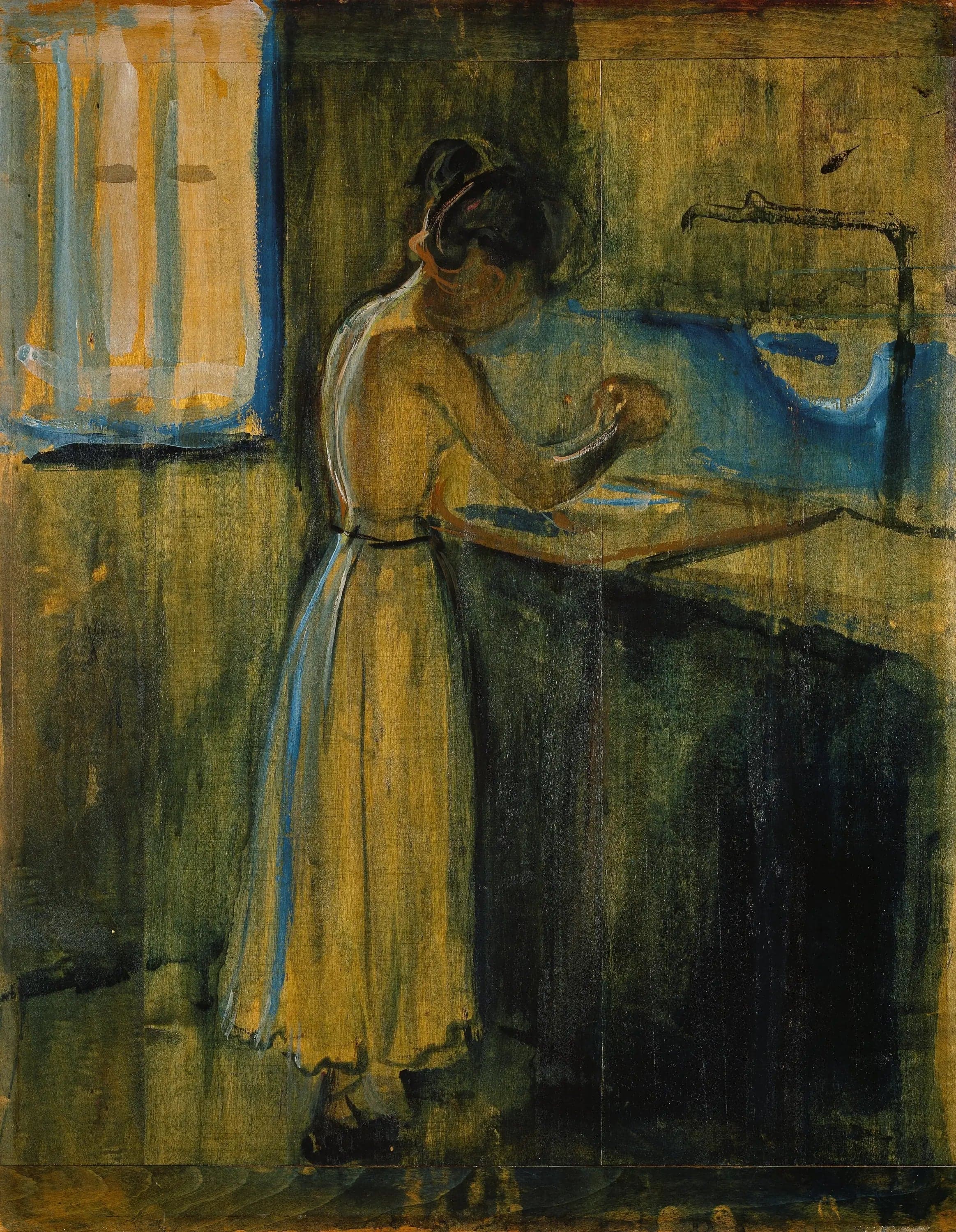
Young Woman and Wash
- Original dimensions
- 59 x 74.5 cm
- Museum
- National Gallery of Oslo
- Year
- 1896
Scene depicted
The canvas , Young Woman and Lava , captures a serene female figure, immersed in the waves. The artist, a master of conveying feelings, plays with aquatic elements to symbolize purification, passage, and rebirth. Each brushstroke contributes to a silent language where the woman seems to converse with the waters surrounding her, blending intimacy and vast horizon.
Historical context
This painting emblematic, created in 1896, is part of the vibrant artistic context of the late 19th century in the city of Oslo. Rooted in the expressionist movement, Young Woman and Lava resonates with an artistic breath that highlights the turmoil of the human soul. Today, this canvas remarkable is preserved at the National Gallery of Oslo, testifying to a time when art broke free from tradition to embrace raw emotion.
Place in the artist's career
This canvas positions itself at the heart of Edvard Munch 's career, marking not only a promising beginning but also a symbolic period of artistic maturity. In parallel, other works like The Scream and The Madonna define decisive stages of his evolution, blending technique and emotion in an unparalleled way.
Anecdote
Edvard Munch often stated: “The painting is the voice of dream and fear.” It was on a morning steeped in mist, by the edge of a tranquil lake, that he drew inspiration for this masterpiece . The subtle glow of colors evokes both serenity and intensity of human emotions, perfectly describing the essence of the [title of the painting] .
Major exhibitions
Olaf Schous gifts to the National Gallery: National Gallery November 14, 1987 - February 7, 1988