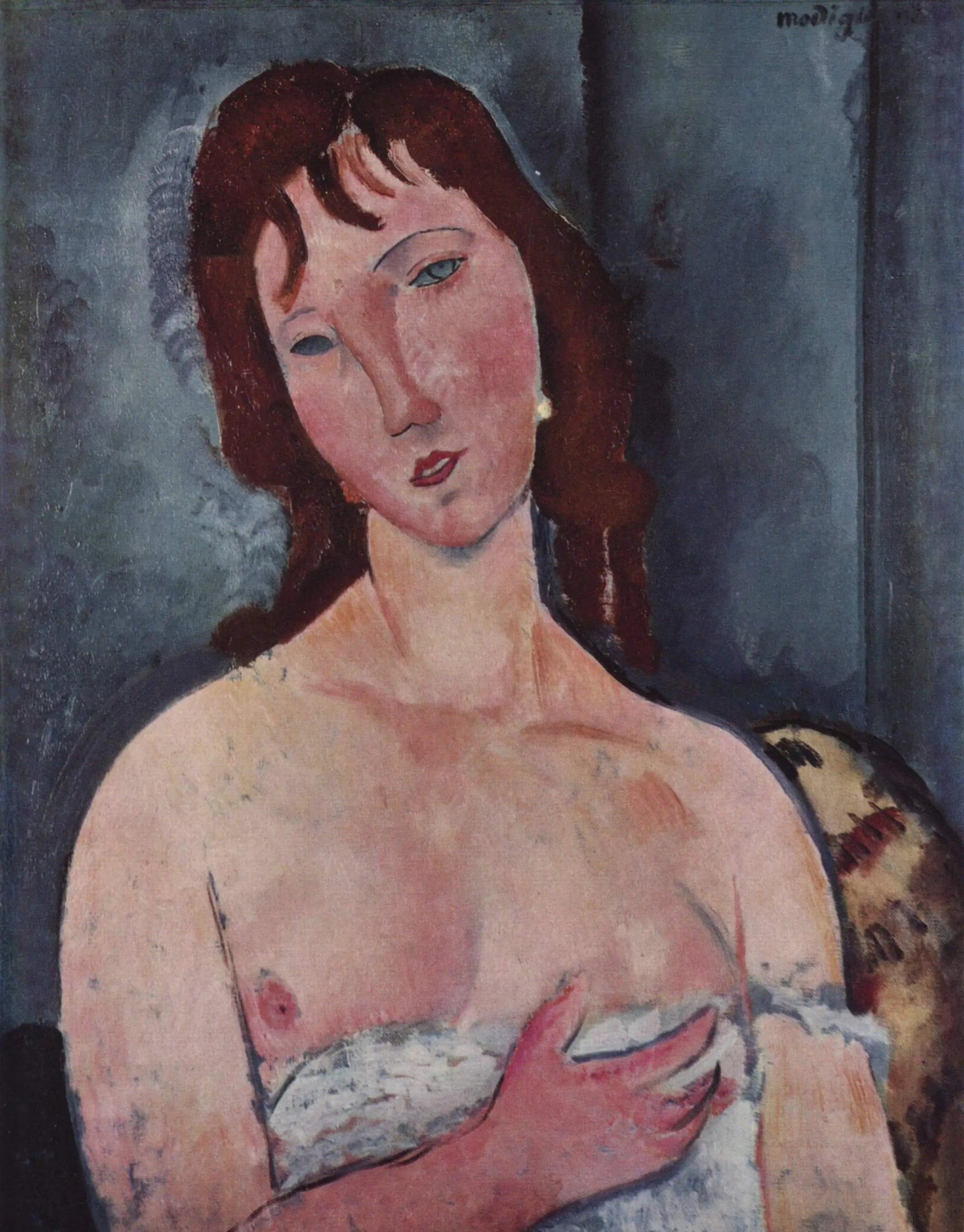
Young Woman
- Original dimensions
- 37.7 x 54.7 cm
- Museum
- National Museum
- Year
- 1918
Scene depicted
This painting depicts a young woman whose gentle and melancholic attitude evokes the fragility of existence. The elongated features, typical of Modigliani, transcend mere representation to offer a dive into intimacy and reflection. The subtle light that bathes her face seems to testify to the secrets of her soul, providing those who contemplate this work with a moment of emotional connection.
Historical context
Created in 1918, at the heart of the artistic effervescence of Paris, Young Woman is part of the expressionist movement. Modigliani, whose work transcends the conventions of his time, captures here the essence of an era marked by a quest for freedom of expression. The canvas is currently housed in the National Museum, a place that celebrates the cultural and artistic heritage of the period.
Place in the artist's career
Young Woman marks a turning point in Modigliani's career, symbolizing both his rise and his aesthetic quest. This work stands out alongside Reclining Nude and Portrait of Jean Cocteau , where he boldly explores complex emotions, pushing the boundaries of his art.
Anecdote
In a moment of striking inspiration, Modigliani reportedly declared: "Simplicity is the key to art." One sunny morning, wandering through the streets of Montparnasse, he was struck by the grace of a young woman, whose slender silhouette would become the subject of his masterpiece . This canvas is the result of a fleeting yet indelible encounter.
Major exhibitions
An Audience with Art. The National Museum at the Queen Sonja Art Stable