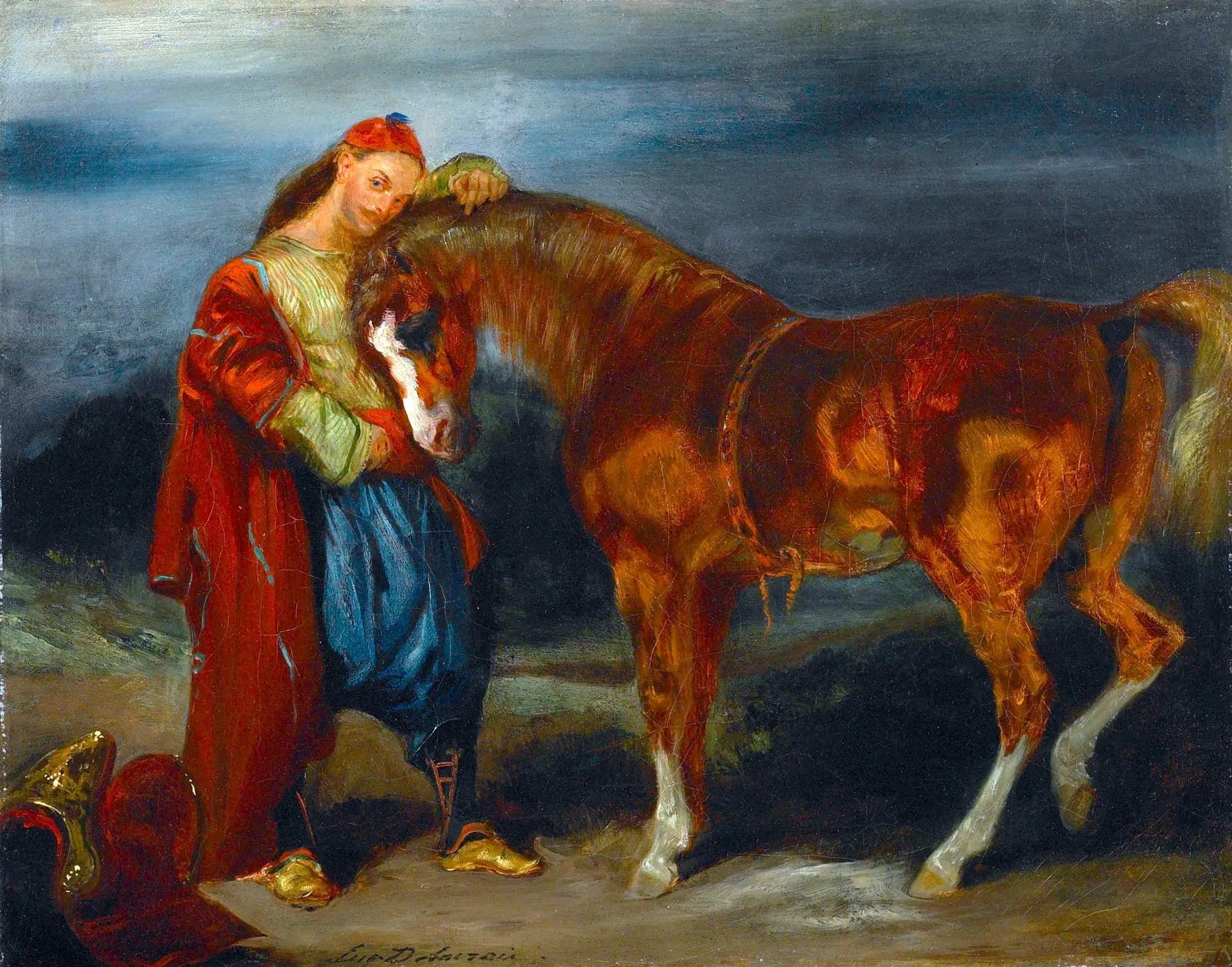
Young Turk caressing his horse
- Original dimensions
- 41 x 33 cm
- Museum
- villa Vauban
- Year
- 1825
Scene depicted
The painting depicts a young Turkish man in a moment of emotional surge, tenderly caressing his horse. This fleeting moment, between softness and strength, evokes a deep connection between man and animal, a relationship imbued with respect and understanding. The eyes of the young Turk, full of passion, seem to tell a story of freedom and harmony, while capturing the exuberant spirit of romanticism .
Historical context
In 1825, within the vibrant framework of the romantic movement, Eugène Delacroix presents with his painting "Young Turk Caressing His Horse" an emblematic work of his time. This scene takes place in France but finds its inspiration in the distant lands of the East. The painting now rests in the prestigious villa Vauban in Luxembourg, where its charm and beauty continue to move visitors. With dimensions of 41 x 33 cm, this painting asserts itself through its presence and influence.
Place in the artist's career
“Young Turk Caressing His Horse” is chronologically positioned at the beginning of Delacroix's career, marking a promising step for this emerging artist. This painting can be paralleled with other notable works such as “ Liberty Leading the People ” and “The Women of Algiers ”, which testify to a stylistic and emotional evolution. The artist gradually abandons rigid outlines to embrace expressive gestures.
Anecdote
“Art is the reflection of the soul of the time.” This quote from Delacroix resonates familiarly when considering the genesis of his masterpiece . Inspired by a sunny morning, where a young man with a passionate gaze shared an intimate moment with his horse, Delacroix managed to capture this fleeting emotion. This painting thus becomes a celebration of youth, blending tenderness and strength in a poignant composition.