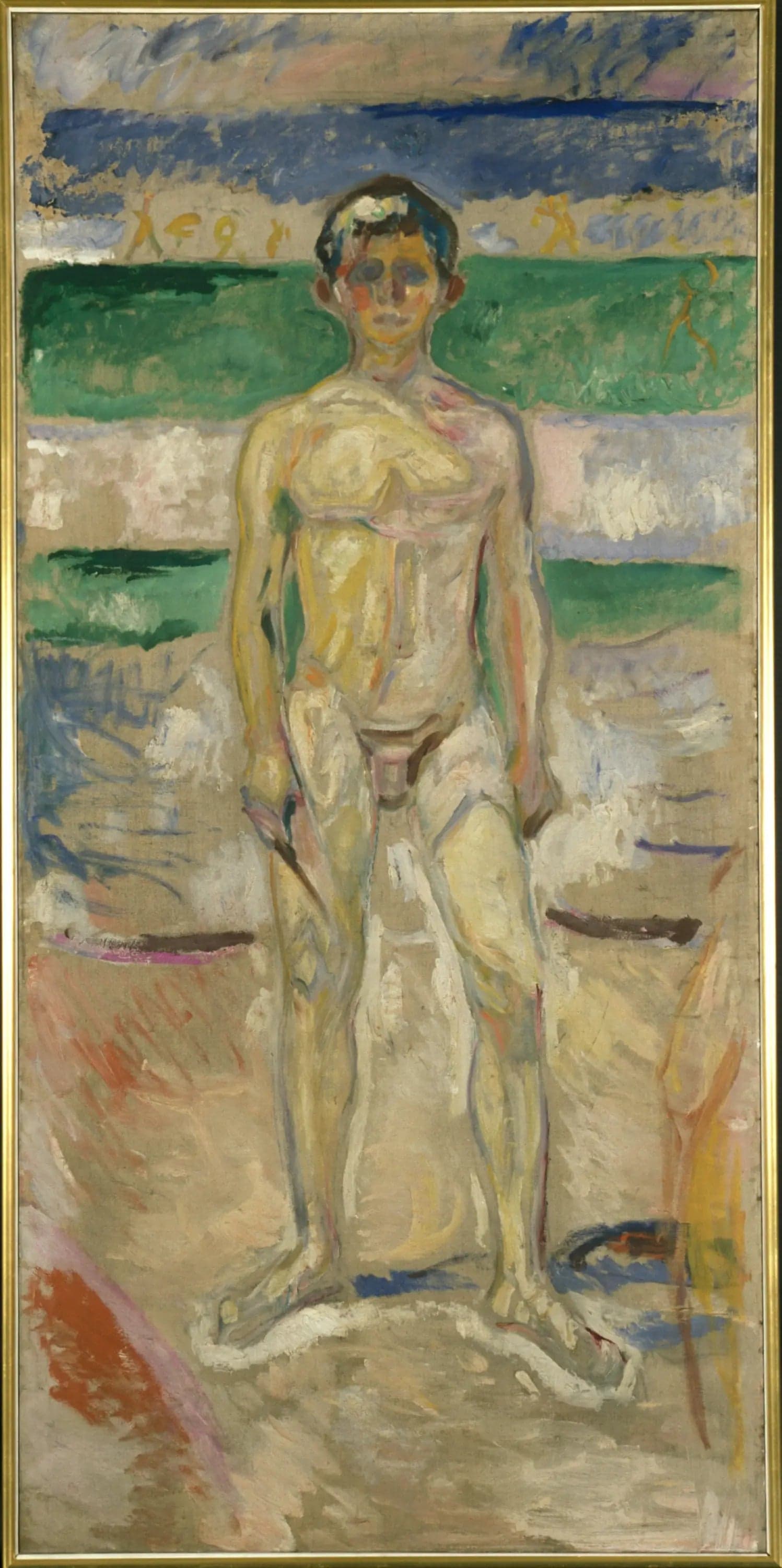
Young Person
- Original dimensions
- 97.5 x 201 cm
- Museum
- Munch Museum
- Year
- 1913
Scene depicted
This painting immerses the viewer in a universe that is both realistic and deeply symbolic. Through the gaze of a young person, Munch captures the very essence of youth, its hopes, its uncertainties, and the ephemeral beauty of life's moments. Every detail of the canvas seems to whisper a story, that of awakening to complex emotions, where the sweetness of existence is intertwined with palpable melancholy.
Historical context
Created in 1913, this painting finds its roots in Oslo, in an artistic context marked by expressionism , a bold movement that exhumes inner emotions. The painting, a true visual monument, is currently preserved at the Munch Museum, where it continues to inspire generations of visitors. With its imposing dimensions of 97.5 x 201 cm, it captures attention and invites deep contemplation.
Place in the artist's career
“Young Person” stands as a key work in Munch's career, reflecting his artistic and existential concerns. It marks a stylistic peak, comparable to other iconic paintings such as “The Scream” and “The Madonna,” revealing a technical evolution towards even bolder and more emotional compositions.
Anecdote
“Art must be a confession, a cry of the soul, a liberation of emotions,” might have said Edvard Munch one spring morning while observing the soft light that illuminated the streets of Oslo. This moment of inspiration marks the genesis of the painting “Young Person,” transforming fleeting impressions into a vibrant masterpiece of emotion.
Major exhibitions
Munch og Warnemünde: 1907-1908