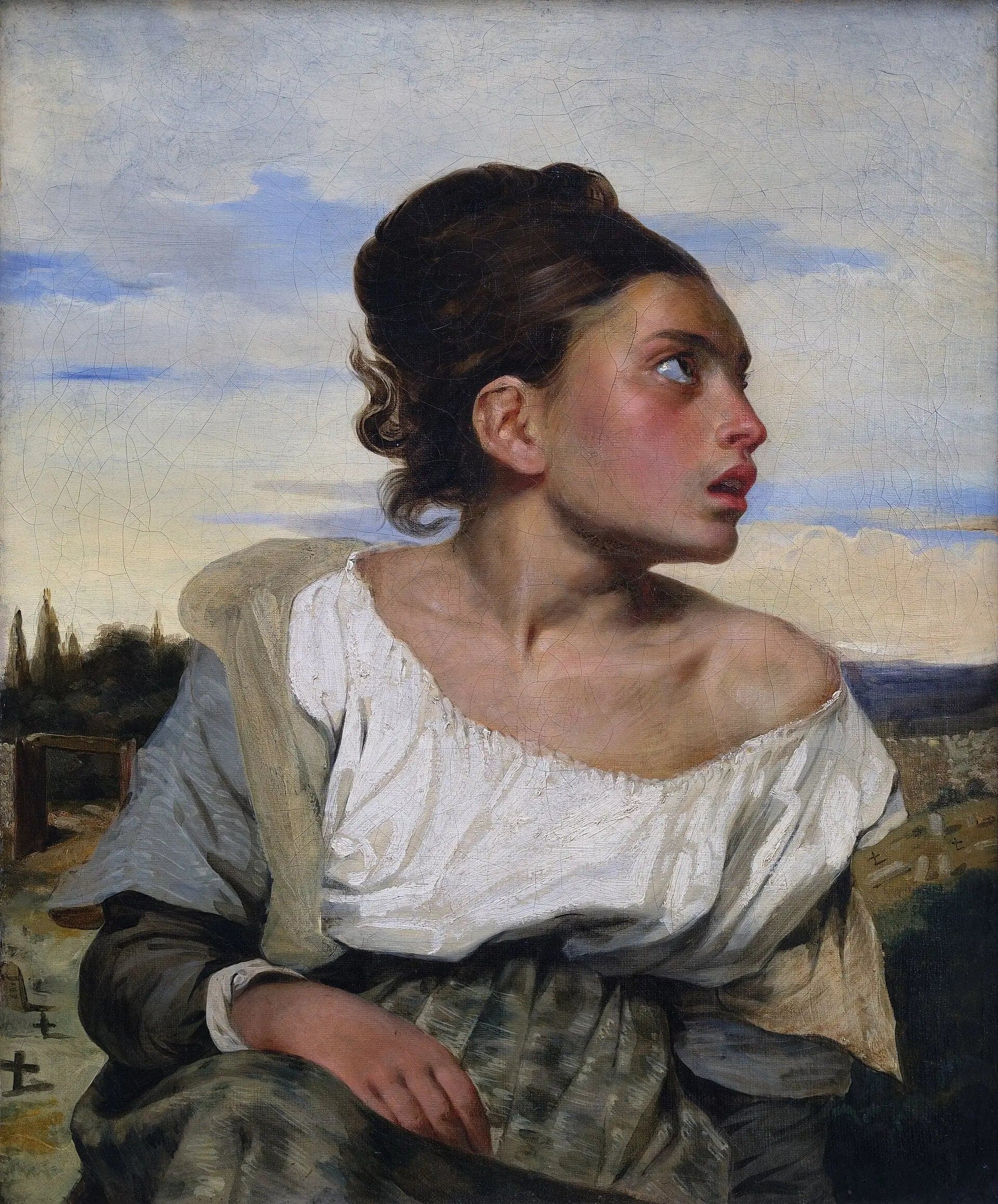
Young Orphan in the Cemetery
- Original dimensions
- 54.3 x 65.5 cm
- Movement
- romanticism
- Museum
- room 950
- Year
- 1824
Scene depicted
This painting highlights the delicate moment when a young orphan, surrounded by graves, bears witness to solitude and loss. With dramatic intensity, Delacroix makes every gaze experience the emotion of an identity quest, while evoking memories of beloved ones who have passed away. The painting invites reflection on the fragility of life and the beauty of memory.
Historical context
Created in 1824 in Paris, during a period of artistic fervor, the painting Young Orphan in the Cemetery is part of the romantic movement. Developed at a time when emotions and feelings took precedence over reason, this canvas reflects the quest for an authentic pictorial expression. Today, this painting is displayed in room 950 of a famous museum, thus preserving the essence of the work through the ages.
Place in the artist's career
The canvas Young Orphan in the Cemetery marks a significant turning point in the career of Eugène Delacroix . It belongs to a period of artistic maturity, alongside other emblematic works such as Liberty Leading the People and The Massacres of Chios , where Delacroix increasingly explores the power of emotions through colors and forms.
Anecdote
“Like a breath of life, each color tells a story.” Such could be the feeling of Eugène Delacroix during the creation of his masterpiece . Inspired by the melancholy of an orphan, encountered one foggy morning at the turn of a Parisian cemetery, the artist managed to capture this poignant emotion, linking his painting to the evocative power of his subject.
Major exhibitions
Salon of 1824