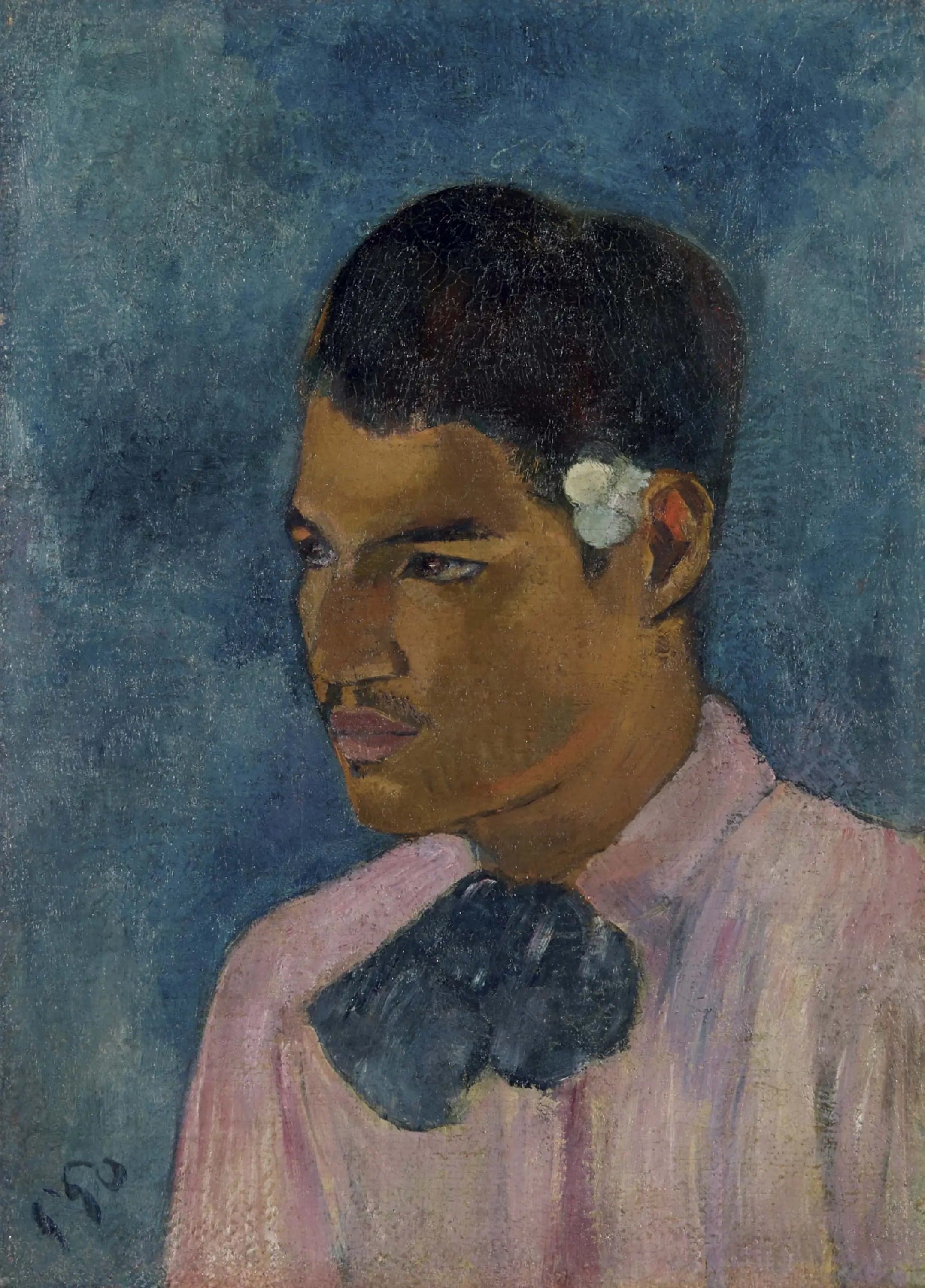
Young Man with a Flower
- Original dimensions
- 33.5 x 45.4 cm
- Museum
- Not specified
- Year
- 1891
Scene depicted
This canvas captures the essence of a contemplative young man, enveloped in a halo of bright colors, offering a flower as a symbol of innocence and beauty. The meticulous details, from his gaze turned outward to the gentle softness of the flower in his hands, express a dialogue between simplicity and emotion, coming to life on the canvas .
Historical context
From an emblematic year, 1891, this painting was born in the exotic landscapes of Europe, representing the post-impressionist movement, known for its bold use of colors and its quest for pure emotion. In a captivating setting, this canvas illuminates Gauguin's artistic journey, which flourished between classical influences and his personal revelations. Currently, the canvas delights the eyes of a few private collectors.
Place in the artist's career
The painting “Young Man with a Flower” represents a turning point in Gauguin's career: a step towards creative maturity and a bold style. In parallel, “Vision After the Sermon” and “The Nap” show an evolution in his technique, playing with color and form to evoke deeper emotions than ever.
Anecdote
“Art is not the mirror of reality, but a window open to the soul.” One spring morning, while wandering through the richly colored forests, Gauguin encountered a young man holding a vibrant flower. This simple moment became the seed of this masterpiece , immortalizing the innocence and fleeting beauty of existence.