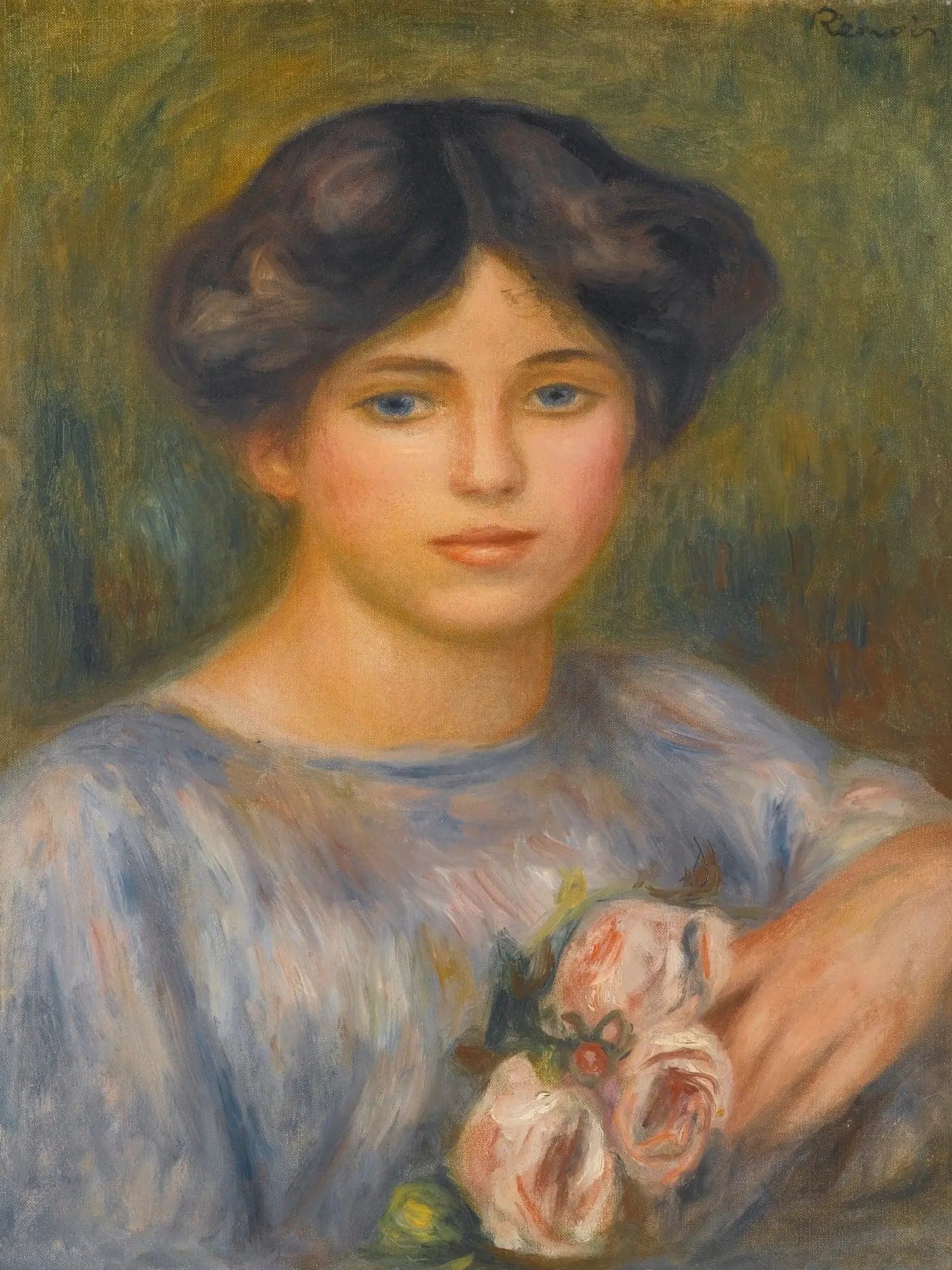
Young Girl with Roses - Pierre
- Original dimensions
- 36.5 x 47 cm
- Museum
- Museo d'arte contemporanea del castello di Rivoli
- Year
- 1897
Scene depicted
The painting highlights a delicate girl, her head adorned with roses, with soft features and palpable innocence. The composition evokes freshness and renewal, integrating nature with human beauty. The roses, symbols of love and beauty, envelop the subject in a romantic atmosphere full of promises, thus capturing a moment suspended between reality and dream.
Historical context
Created in 1897, the painting "Girl with Roses" takes place in the vibrant context of the Belle Époque in Paris, a period of cultural and artistic flourishing. Evolving under the Impressionist movement, this painting illustrates Renoir's mastery in capturing the fleeting beauty of light and colors. Currently, this magnificent canvas is displayed at the Museo d'arte contemporanea del castello di Rivoli, a true showcase for this pictorial work of delicate sensitivity.
Place in the artist's career
"Girl with Roses" represents a pivotal moment in Renoir's career, illustrating both his artistic maturity and his love for themes of feminine beauty. Alongside works like "Luncheon of the Boating Party" and "Dance in the City," this painting testifies to a stylistic diversity while remaining rooted in the palpable emotion that only Impressionist painting can convey.
Anecdote
Renoir once stated: "The painting must be a bouquet of sensations." Inspired by the softness of a spring morning, the canvas was born from an unexpected encounter with youth and freshness, thus merging the essence of the girl with that of the roses she delicately holds. Each brushstroke, each shade of color evokes this fleeting and ephemeral magic of life.