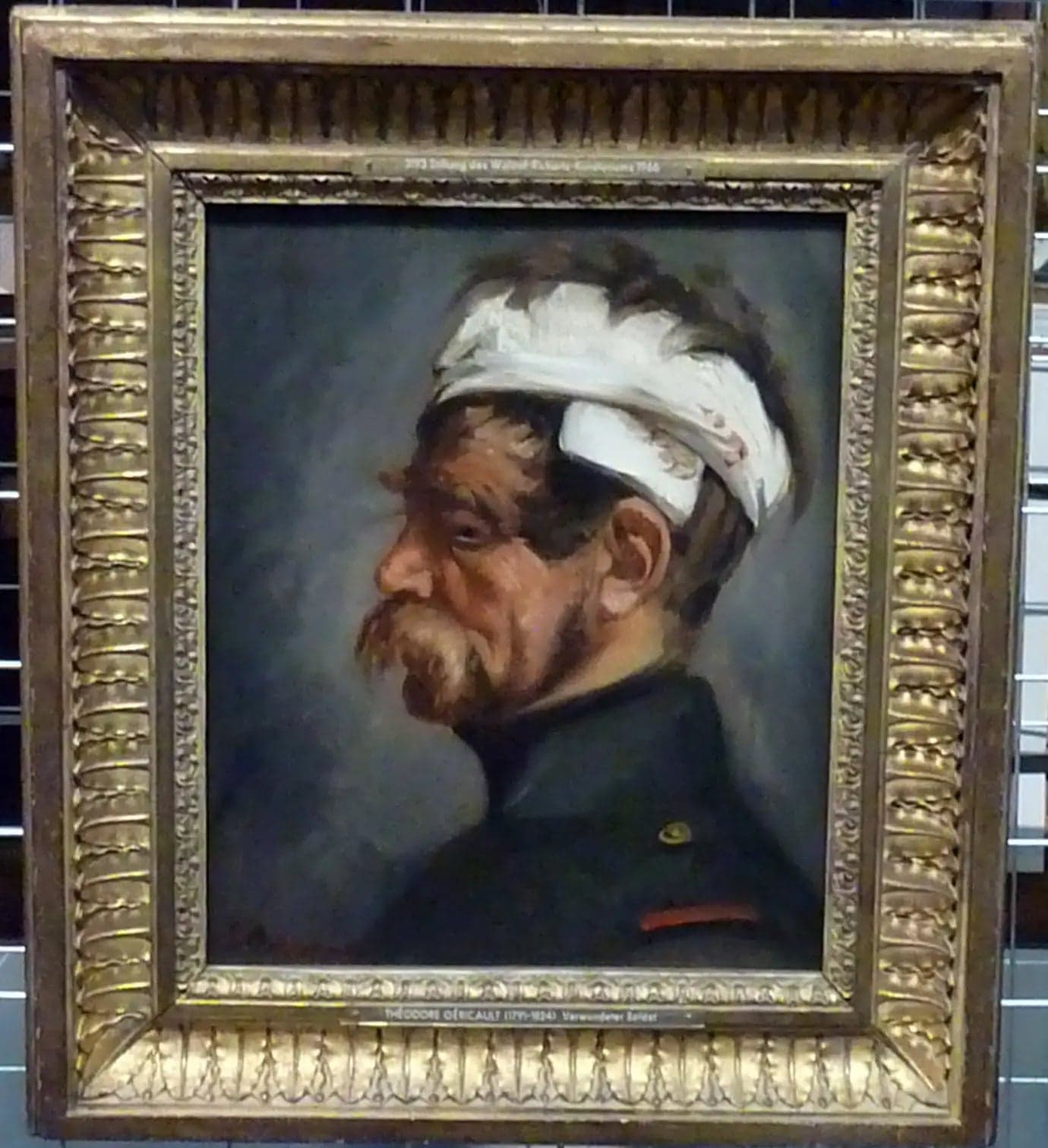
Wounded Soldier
- Original dimensions
- 36.5 x 45 cm
- Museum
- Wallraf-Richartz Museum
- Year
- 1814
Scene depicted
This imposing painting captures a crucial moment: a soldier, in a slumped posture, bears immeasurable suffering after a battle. The features of his face, caught between pain and resilience, are rendered with remarkable precision, echoing a raw humanity. The scene unfolds with dramatic intensity, plunging the viewer into a world where war leaves indelible marks.
Historical context
Artwork: Wounded Soldier |BRK| Artist: Théodore Géricault |BRK| Year: 1814 |BRK| Museum: Wallraf-Richartz Museum |BRK| Dimensions: 36.5 x 45 cm |BRK|
Place in the artist's career
Wounded Soldier represents a pivotal turning point in Géricault's career. Passionate and eager for experimentation, he enters a period of artistic maturity with this painting. Alongside it, The Raft of the Medusa and Study of an Alaskan Fur Seal reveal the evolution of his technique. Here, he stands out as a fervent advocate of Romantic painting, integrating complex emotions into the artistic composition.
Anecdote
Géricault once declared: “Every brushstroke must tell a story.” One spring morning, while walking through a bustling alley, he reportedly locked eyes with a man, the marks of war still present on his face. This fleeting yet intense encounter formed the very essence of his masterpiece , Wounded Soldier , imbued with raw emotion and unparalleled human depth.