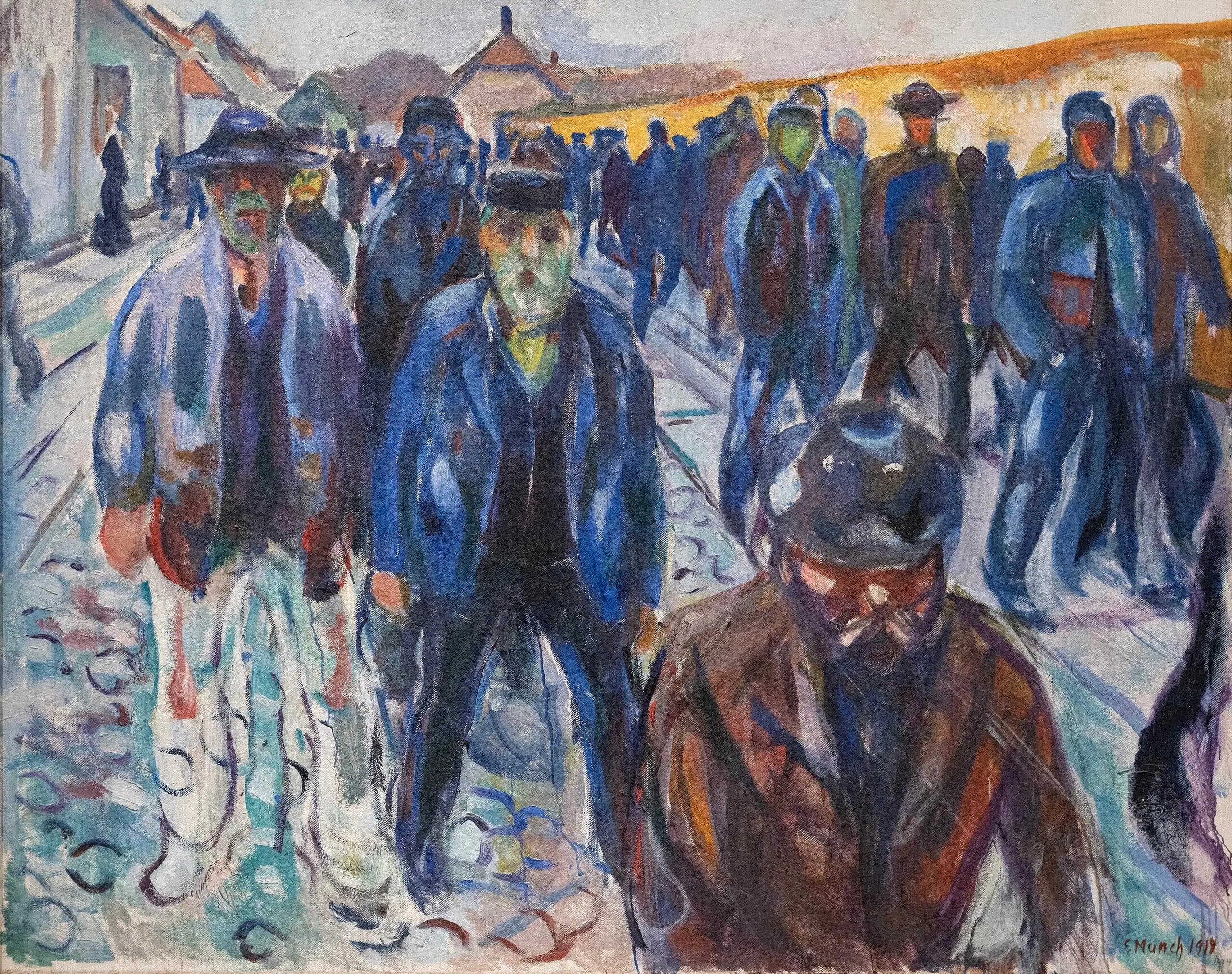
Workers on the Way Home
- Original dimensions
- 227 x 201.5 cm
- Museum
- Munch Museum
- Year
- 1913
Scene depicted
In this poignant painting, Munch manages to immortalize the fatigue and melancholy of the workers returning home. The scene evokes a lifeless rural path, left behind by intense labor, as the silhouettes of the workers, burdened by their sufferings, are outlined in shadows. This painting conveys with great sincerity the beauty and sadness of everyday life, an ambassador of a delicate social reality.
Historical context
This painting emblematic was born in Oslo, Norway, at the heart of an era marked by symbolism , an artistic movement that is characterized by its quest for deep emotions and inner sensations. The painting is currently housed in the Munch Museum, where it is carefully preserved, playing a key role in highlighting the artist's work.
Place in the artist's career
Workers on the Way Home is an essential piece of Munch's artistic journey, reflecting his period of maturity. In parallel, The Scream and The Madonna reflect the thematic and stylistic evolutions of the artist, illustrating his work on human emotions and human existence. The ability to convey such emotional depth unites these paintings in an exploration of human struggles and passions.
Anecdote
“Reality must be felt before it is painted.” This quote, imbued with poetry, reflects the state of mind of Edvard Munch when he conceived the masterpiece that is Workers on the Way Home . Inspiration seized him as he observed tired silhouettes returning home after a day of labor, a moment filled with emotions that finds its full intensity in this composition.
Major exhibitions
Edvard Munch . Monumental projects