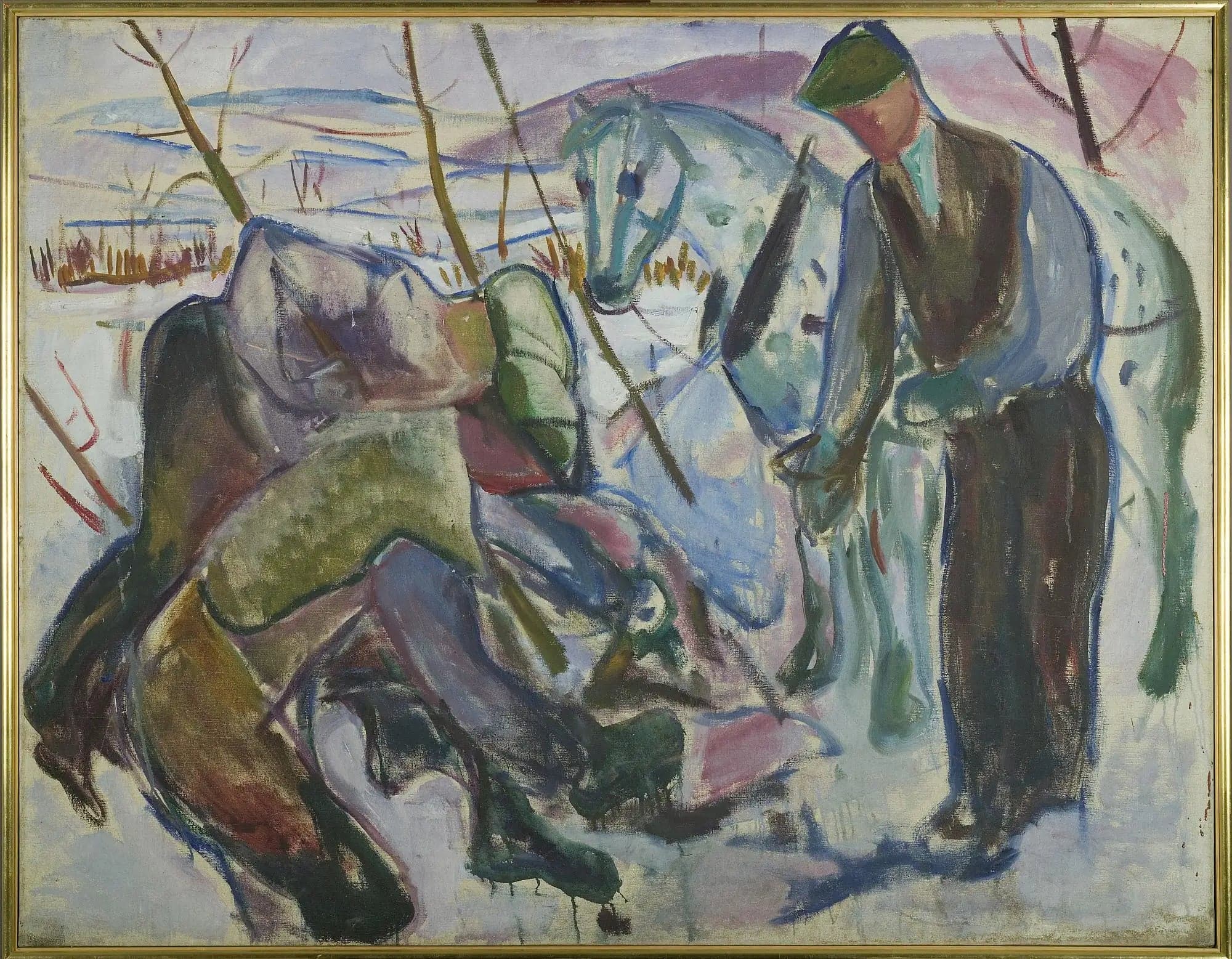
Workers and Horse
- Original dimensions
- 160.5 x 125 cm
- Museum
- Munch Museum
- Year
- 1920
Scene depicted
At the heart of the painting , stands a collective of workers who, in harmony with the horse, symbolize both strength and labor. The work depicts a scene where shared effort becomes a dance between man and animal, a celebration of laborious life. This painting does not merely show; it tells a story of solidarity and bravery.
Historical context
Created in 1920, this painting is an echo of an era marked by social upheavals. Located in Oslo, this work belongs to the expressionist movement, where human emotion is highlighted through powerful compositions. The canvas is currently at the Munch Museum, where it fascinates visitors with its poignant message, all within impressive dimensions.
Place in the artist's career
This canvas is situated at a turning point in Munch's career, where he evolves towards more social subjects. In parallel with "The Scream" and "The Madonna," a strong evolution is noticeable, from individual emotions to a collective consciousness, reflecting the growing depth of his art.
Anecdote
Edvard Munch , sensitive to the struggles of workers, reportedly said: "Art must be the cry of society." Inspired by the struggles and lives of workers, he captured the essence of their daily life in this canvas . This reflection on humanity permeates the masterpiece , making every brushstroke laden with emotions and thoughts.
Major exhibitions
Edvard Munch . Monumental projects