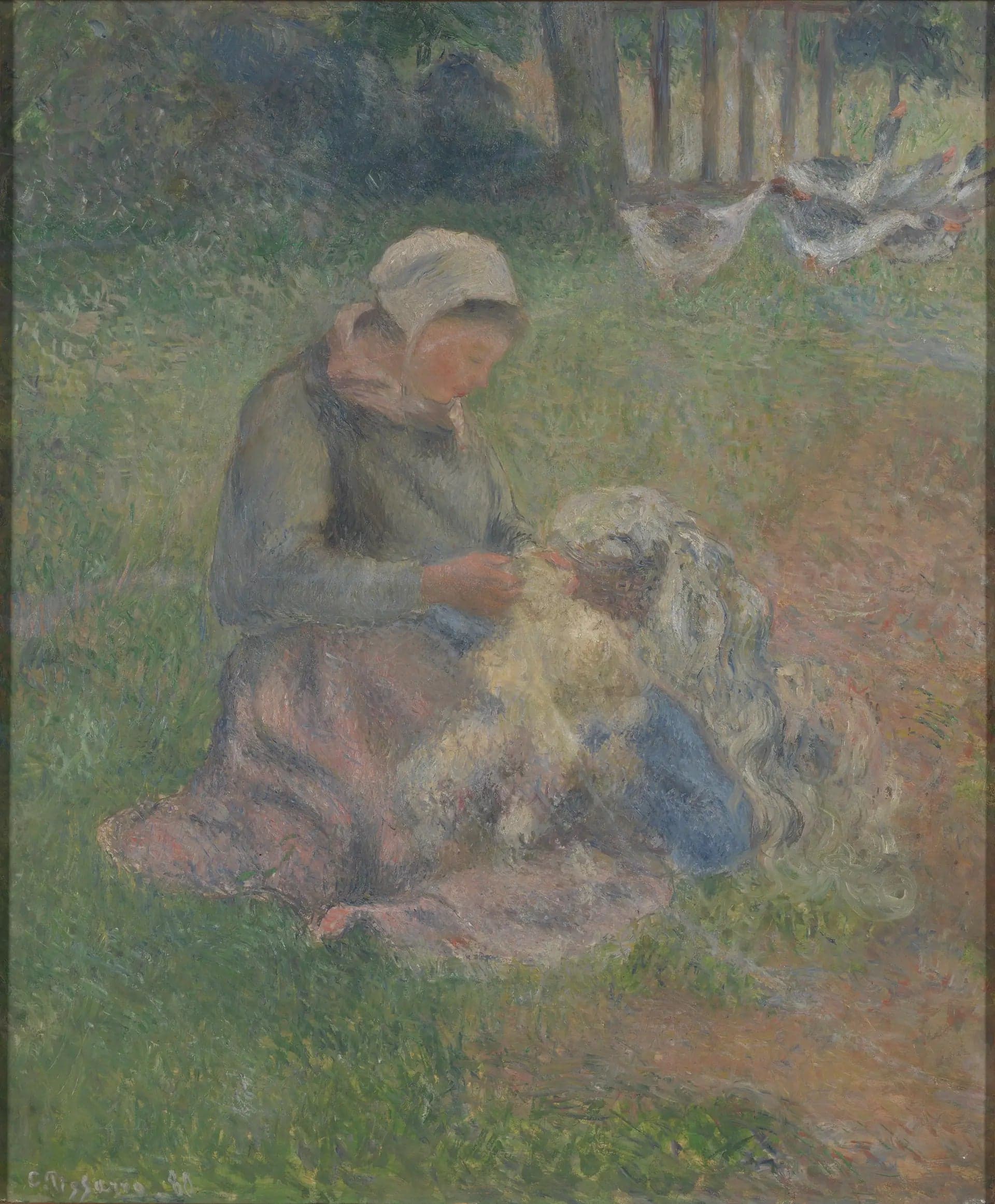
Wool Carder
- Original dimensions
- 55.9 x 46.4 cm
- Museum
- National Gallery
- Year
- 1880
Scene depicted
In this canvas , Pissarro reveals the sweetness of domestic labor through the representation of a wool carder, busy at her work. The painting evokes a disarming simplicity, where the feminine gesture, intimate and contemplative, becomes a reflection of an era. The light illuminating the English scene, subtle and diffuse, creates a captivating link between the human figure and its environment. It is a chronicle of small joys, of work rituals that blend with the surrounding nature.
Historical context
Created in the heart of the late 19th century, during a summer in Éragny, France, the painting Wool Carder is deeply rooted in the Impressionist movement, a revolutionary artistic current. It is here, in the soft light and vibrant nature of Val-d'Oise, that Pissarro captured the very essence of rural life in his time. Currently housed in the National Gallery , this canvas captivates with its precise dimensions that invite attentive contemplation.
Place in the artist's career
The painting Wool Carder stands in Pissarro's career as a flagship example of his Impressionist works, both in style and subject matter. Compared to his canvas The Artist's Garden in Éragny and Country Road in Éragny , this work reveals a technical progression towards mastery of light and shadow, thus enhancing the emotion and expression of daily life.
Anecdote
“I simply want to capture light, life, and the gestures of everyday life.” These words resonate like an echo of the inspiration that springs in Pissarro's heart as he observed a woman carding wool in the early morning. His gaze, filled with tenderness and curiosity, rested on this vibrant scene, where craftsmanship mingles with the poetry of daily life, giving birth to this masterpiece .