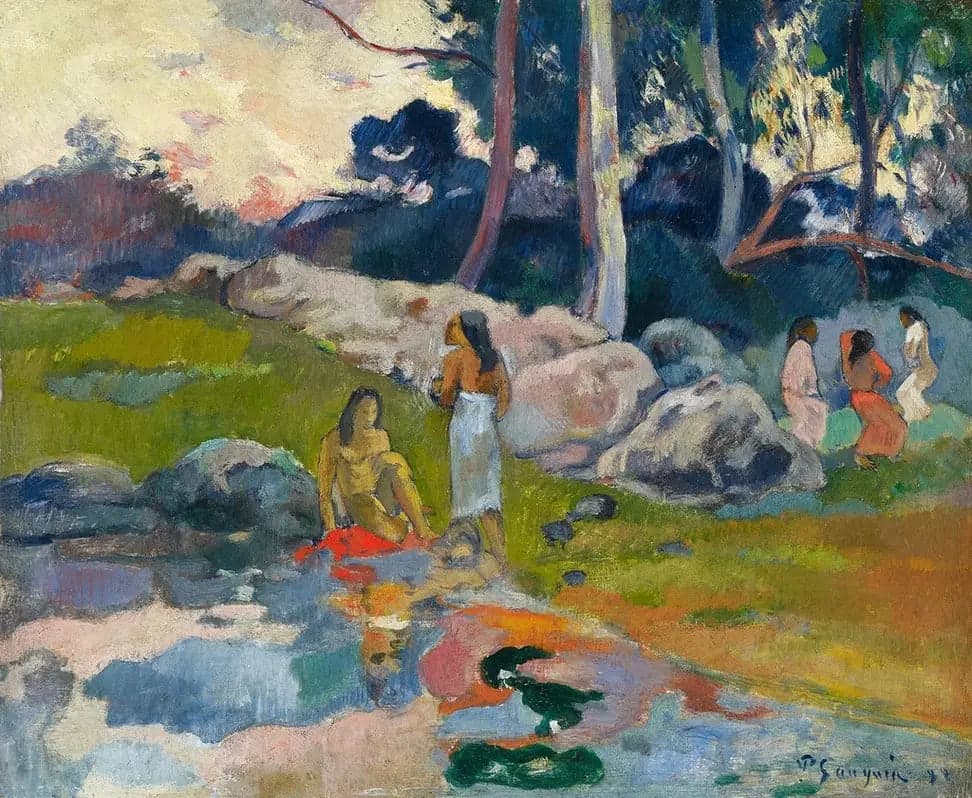
Women by the River
- Original dimensions
- 40 x 31.8 cm
- Museum
- Not specified
- Year
- 1892
Scene depicted
This painting features women, truly rooted in nature, enjoying the coolness of a peaceful river. Their silhouette gracefully stands out against a lush background, where green and blue merge into a harmonious composition. Gauguin, as a virtuoso of painting , succeeds in capturing the intimacy of this everyday moment while infusing it with a mystical atmosphere.
Historical context
Created in 1892, in the vibrant atmosphere of Paris at the end of the 19th century, the painting "Women by the River" is part of the post-impressionist movement. This period, marked by the exploration of emotional expressionism and bold colors, reflects a major artistic evolution. Although the canvas is not currently exhibited in a known museum, it holds particular significance in the history of art.
Place in the artist's career
"Women by the River" stands as an essential canvas at the heart of Gauguin's career, representing a pivotal period where he hones his unique style. Echoing canvases like "The Vision After the Sermon" and "La Orana Maria," this painting reflects the evolution of his work towards bolder and more expressive compositions.
Anecdote
"Nature is an infinite source of inspiration," Gauguin might have said one summer morning, as he observed women working near the water. It is in this enchanting setting that the artist captured the essence of his subject, transforming a simple scene of life into a pictorial work imbued with poetry and sensitivity.