Women at the Pool
- Original dimensions
- 121.5 x 72.5 cm
- Museum
- Munch Museum
- Year
- 1896
Scene depicted
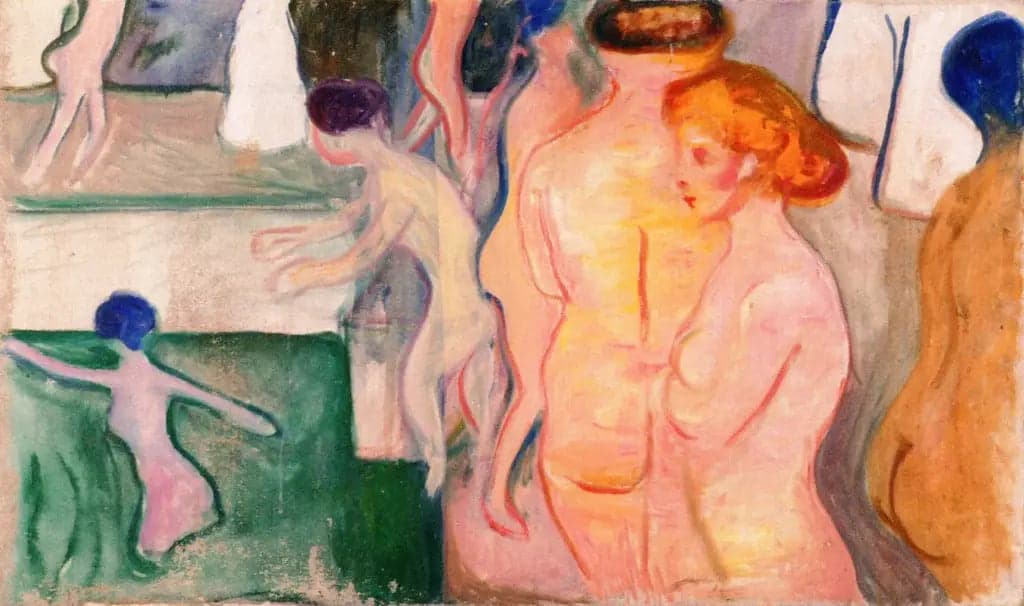
The painting “Women at the Pool” transports us to the heart of a vibrant moment of life. We see women sharing a moment of carefree joy, bathed in light, where the beauty of the human body merges with that of the surrounding nature. The composition, both dynamic and soothing, invites us to feel a harmony between the natural world and human experiences.
Historical context
Created in 1896, this painting is set in the vibrant framework of the city of Oslo, then the capital of Norway. At that time, Munch's art, recorded in the symbolist movement, provoked an introspective revolution that highlighted human emotions. Currently, this canvas is preserved at the Munch Museum, offering access to a fascinating emotional world.
Place in the artist's career
At the heart of Edvard Munch's career, Women at the Pool represents a pivotal stage where the artist refines his distinctive style. While he explored themes of anxiety and isolation in previous works like “The Scream,” this masterpiece rather unfolds a celebration of life. One can feel a palpable evolution between the intensity of “The Scream” and the serene celebration of this painting .
Anecdote
“I paint my dreams, not my reality,” said Munch, thus capturing the very essence of his artistic approach. Imagine a spring morning by a pool, where the reflections of water and the laughter of women blend with the fragrant air of blooming flowers. This canvas , a sign of a frozen moment, embodies this transcendental inspiration of the artist.