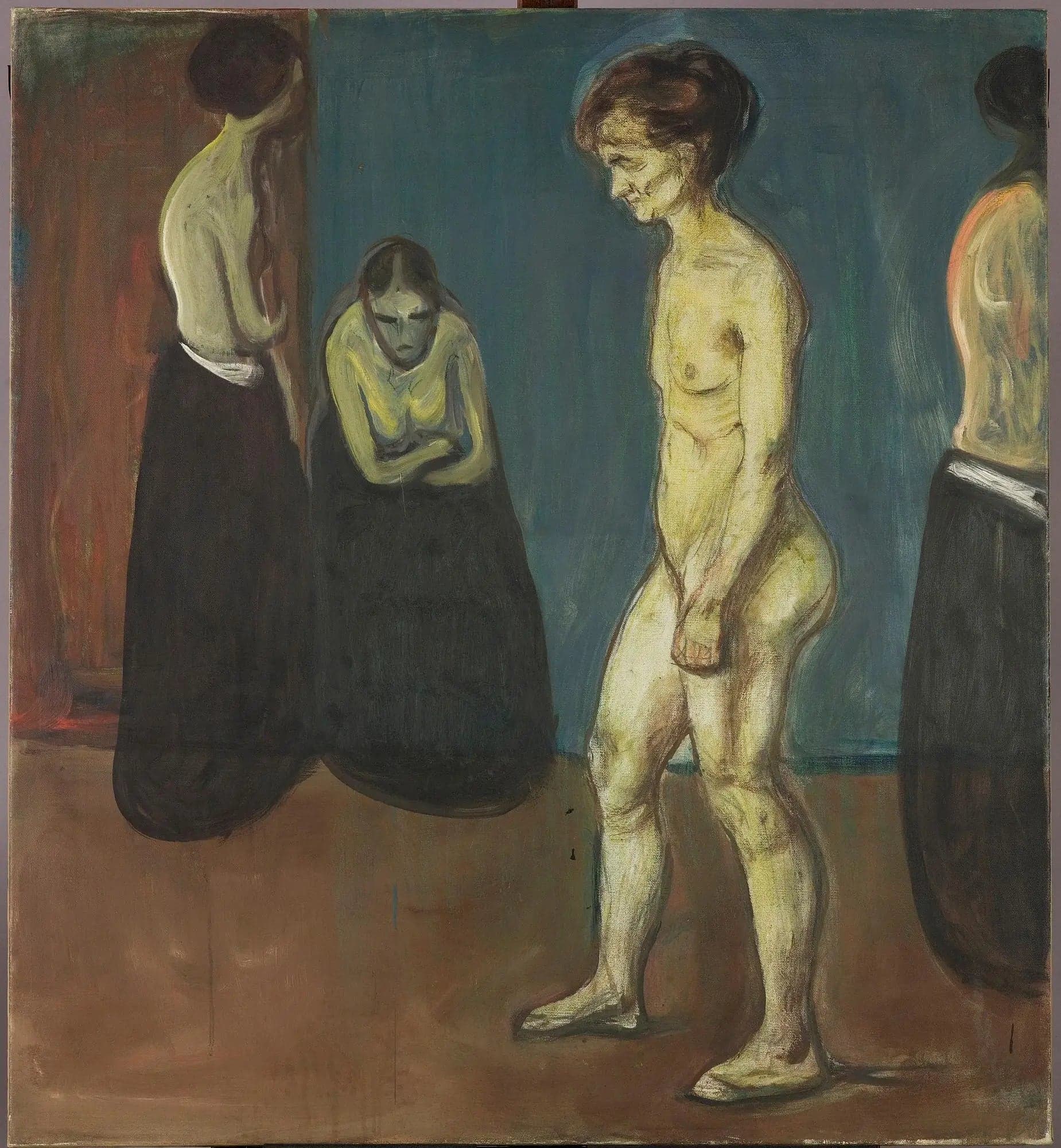
Women at the Hospital
- Original dimensions
- 100 x 110 cm
- Museum
- Munch Museum
- Year
- 1897
Scene depicted
The painting “Women in the Hospital” depicts a poignant scene where two women, illuminated by soft light, juggle with the fragility of life in a hospital environment. Munch captures the essence of human emotion through the representation of vulnerability, exchanged glances, and delicate gestures. This canvas conveys an atmosphere of reflection and compassion, creating an unexpressed connection with the viewer.
Historical context
Created at the end of the 19th century, this painting is set in the vibrant city of Oslo, Norway, flooded with northern light and marked by symbolism , an artistic movement that spans Europe. Women in the Hospital is a mirror of a time when art reinvents itself, seeking to express intense emotion in the face of existence. This canvas , part of the collections of the Munch Museum, is always accessible to art enthusiasts, while its impressive dimensions of 100 x 110 cm captivate the eye.
Place in the artist's career
This painting , located at the heart of Munch's mature period, represents a stylistic turning point. It echoes other iconic paintings such as “The Scream” and “The Madonna,” exploring a sentimental palette through bold brush technique, symbolizing the evolution of his artistic quest towards themes of suffering and love.
Anecdote
Edvard Munch once stated: “Art is the most beautiful of fugues.” This sentiment resonates particularly during the creation of this masterpiece , on a dark night when the pale light had to pierce through human pain. The scene, at the heart of the hospital, revealed itself to him as a revelation, filled with whispers and anxiety, making the painting both personal and universal.