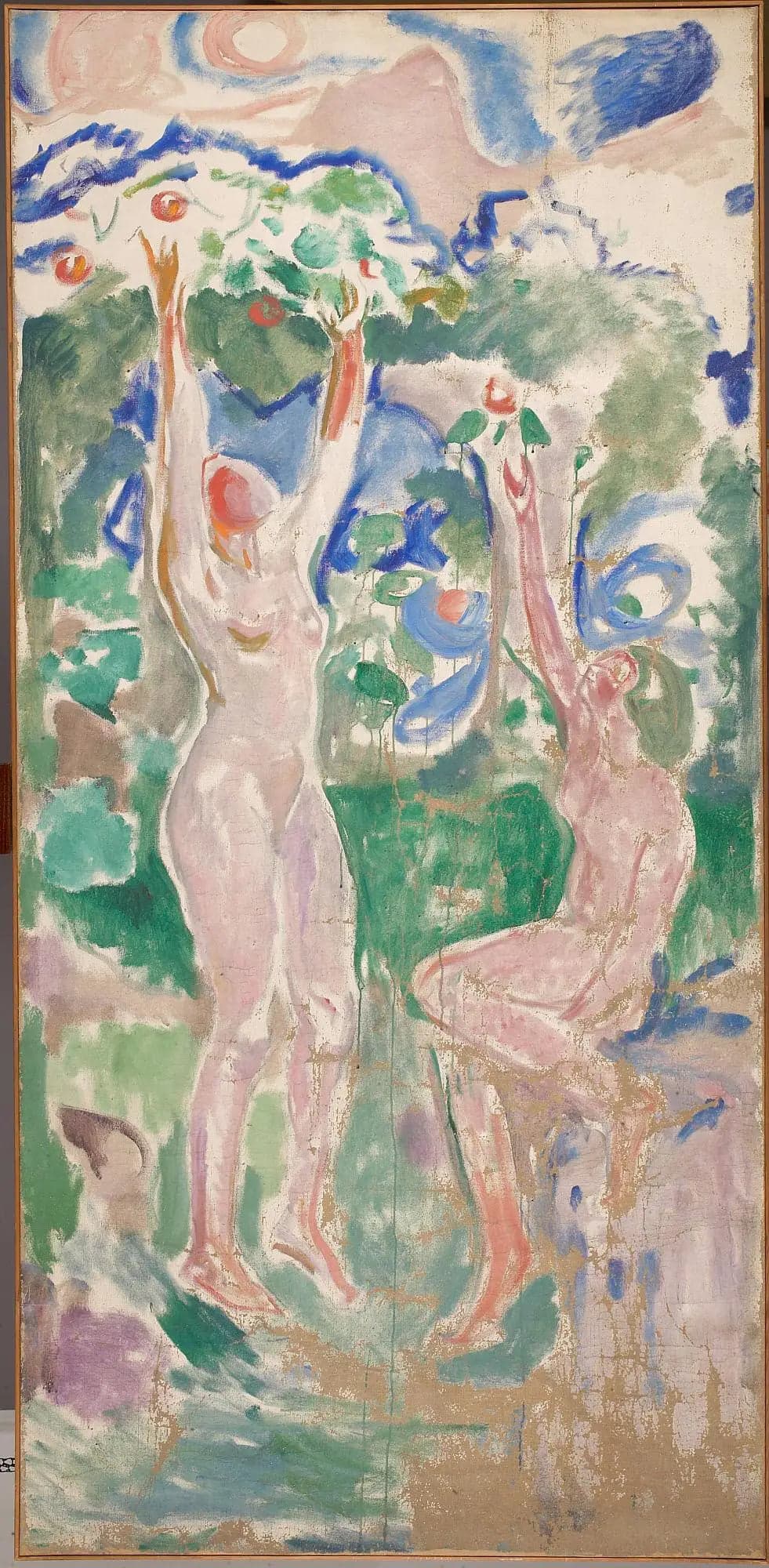
Women at the Harvest
- Original dimensions
- 124.5 x 257.5 cm
- Museum
- Munch Museum
- Year
- 1912
Scene depicted
The painting "Women at the Harvest" depicts a group of hardworking women, bent under the weight of the harvest. The female figures embody strength and resilience, a symbol of unity in the rural world. By scrutinizing the scene, one can feel the scent of fresh wheat, listen to the rustling of the ears, and immerse in the labors of daily life. This pictorial work stands as a tribute to nature and humanity, a frozen moment where hard work and simple beauty converge.
Historical context
Created in 1912, Women at the Harvest is an emotional precipitate anchored in Oslo, Norway. This painting is part of the expressionist movement, a time when the artist explores suffering and inner truths. The canvas is currently housed in the Munch Museum, a true sanctuary dedicated to the art of this master. Its imposing dimensions of 124.5 by 257.5 cm invite deep contemplation.
Place in the artist's career
Women at the Harvest is at the heart of Munch's career, marking a period of stylistic maturity. Compared to works like The Scream and The Madonna , this painting reflects an evolution towards a more tangible expression of daily life. Far from the dramatic intensity of his earlier creations, Munch here explores simple beauty, making the rural world a central subject in his work.
Anecdote
In a moment of deep inspiration, Munch once confided: "The harvest is an echo of the cycle of life, a delicate dance between man and the earth." This painting, emblematic of his artistic quest, was born on a quiet morning, where the sunlight caresses the golden fields. The energy carried by this canvas evokes an emotion that resonates even beyond time.