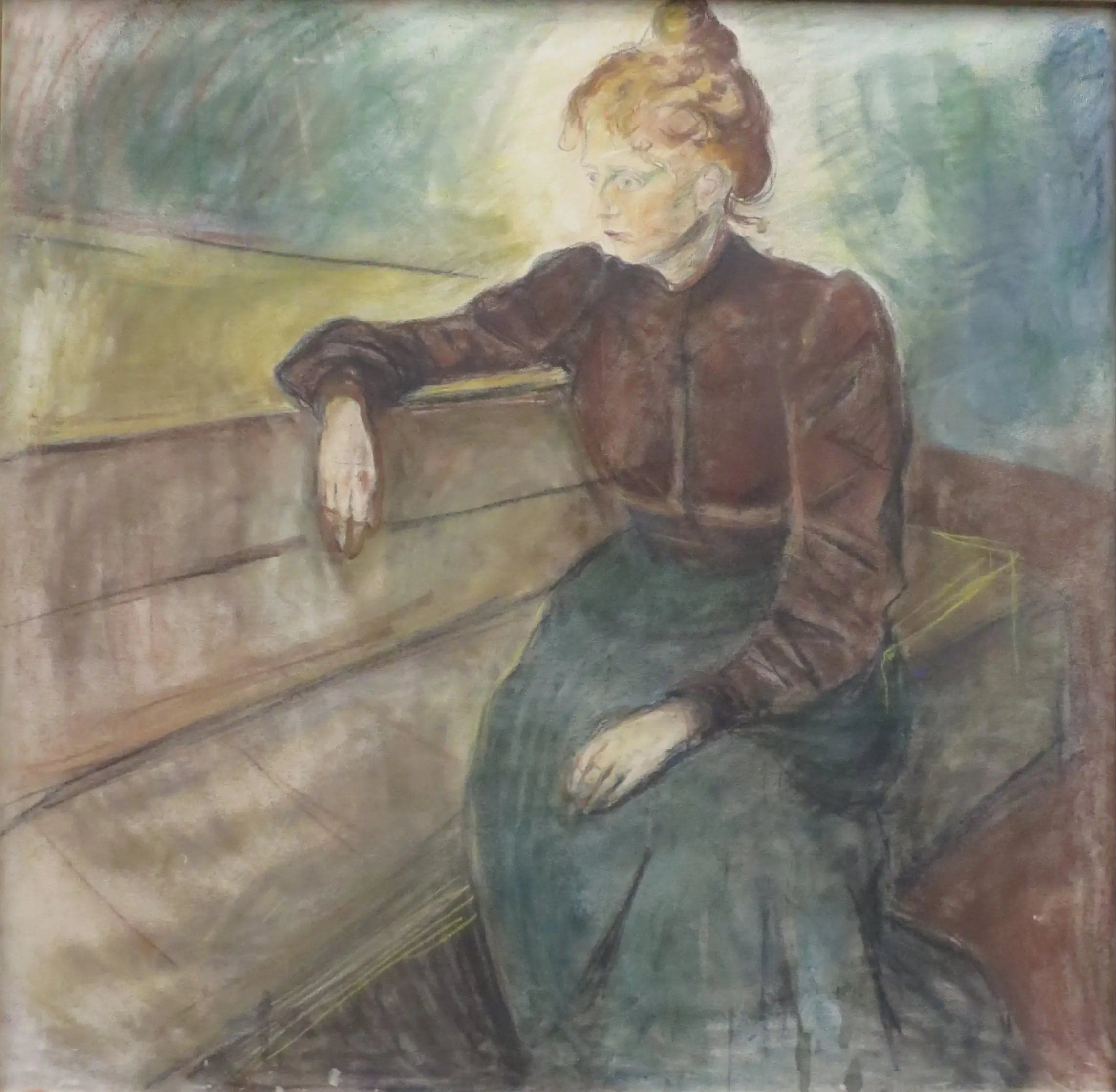
Woman's Portrait
- Original dimensions
- 108 x 105.5 cm
- Museum
- Rasmus Meyer
- Year
- 1898
Scene depicted
In this canvas , Munch creates a portrait that transcends simple representation. The depth of the gazes and the emotional tension in the woman's posture evoke a mystery, an introspection. The character stands there, both accessible and distant, confronting the viewer with their own emotions, conveying a universal and timeless story.
Historical context
Created at the end of the 19th century, the painting "Portrait of a Woman" is part of the rich tradition of symbolism . Edvard Munch , one of the pioneers of this movement, painted this canvas in Oslo, Norway, during a time when tensions and human emotions were at the heart of artistic concerns. The painting is currently displayed at the Rasmus Meyer museum, where it attracts attention with its imposing dimensions of 108 x 105.5 cm.
Place in the artist's career
The "Portrait of a Woman" marks a significant milestone in the career of Edvard Munch . Situated in a period of maturity, this painting reflects his ability to explore human psychology. In parallel with "The Madonna" and "The Scream," this work perfectly illustrates his stylistic and emotional evolution, where each painting tells a complex facet of the human experience.
Anecdote
“Art must be the passion of life,” said Munch. He drew his inspiration for this work during a walk in the garden of his childhood, where the colors and atmosphere of a sunny morning revealed to him the hidden beauty of human emotions. This fleeting moment transformed the painting into a powerful exploration of the feminine soul, embodied by its captivating subject.