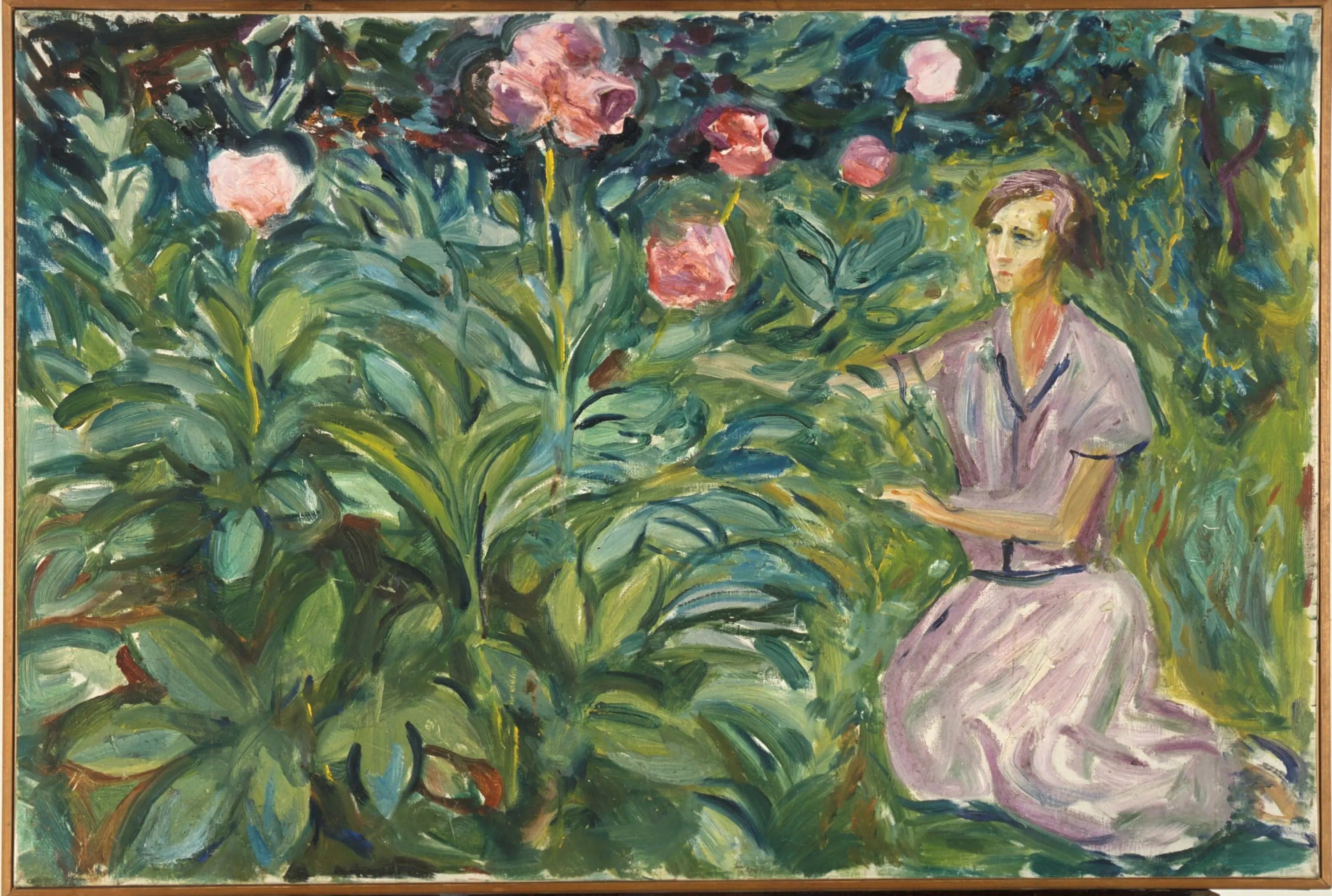
Woman with Peonies
- Original dimensions
- 90 x 60 cm
- Museum
- Munch Museum
- Year
- 1926
Scene depicted
In the painting “Woman with Peonies,” Munch captures with emotional delicacy the sweet marriage between the feminine and nature. The woman, enveloped in vibrant peonies, appears both tranquil and troubled, representing the complex harmony of the human soul, imbued with contradictory feelings. This composition immerses us in a reflection on the link between beauty and vulnerability.
Historical context
Created in 1926, this iconic work by Edvard Munch finds its origin in Oslo, Norway, in a context marked by post- expressionism . This painting is situated in a pivotal period of his artistic career, at a time when his explorations of the human psyche and intense emotions reach their full scope. Currently exhibited at the Munch Museum, this canvas of 90 x 60 cm bears witness to the intensity and passion that characterize Munch's art.
Place in the artist's career
“Woman with Peonies” marks a turning point in the artistic journey of Edvard Munch . Compared to his earlier works like “The Scream” and “The Madonna,” this painting expresses a softer melancholic scope, illustrating a stylistic peak where lucidity and introspection unite. It is a period where the gloomy emotions of his beginnings lighten.
Anecdote
“Nature is my best confidant,” Munch said. Imagine him, sitting in the midst of his favorite forest, one spring morning. The peonies, emerging from the ground to greet the new day, offered him the crucial inspiration for the painting . This sublime moment infused the work with its evocative power.
Major exhibitions
Munch og Ekely: 1916-1944