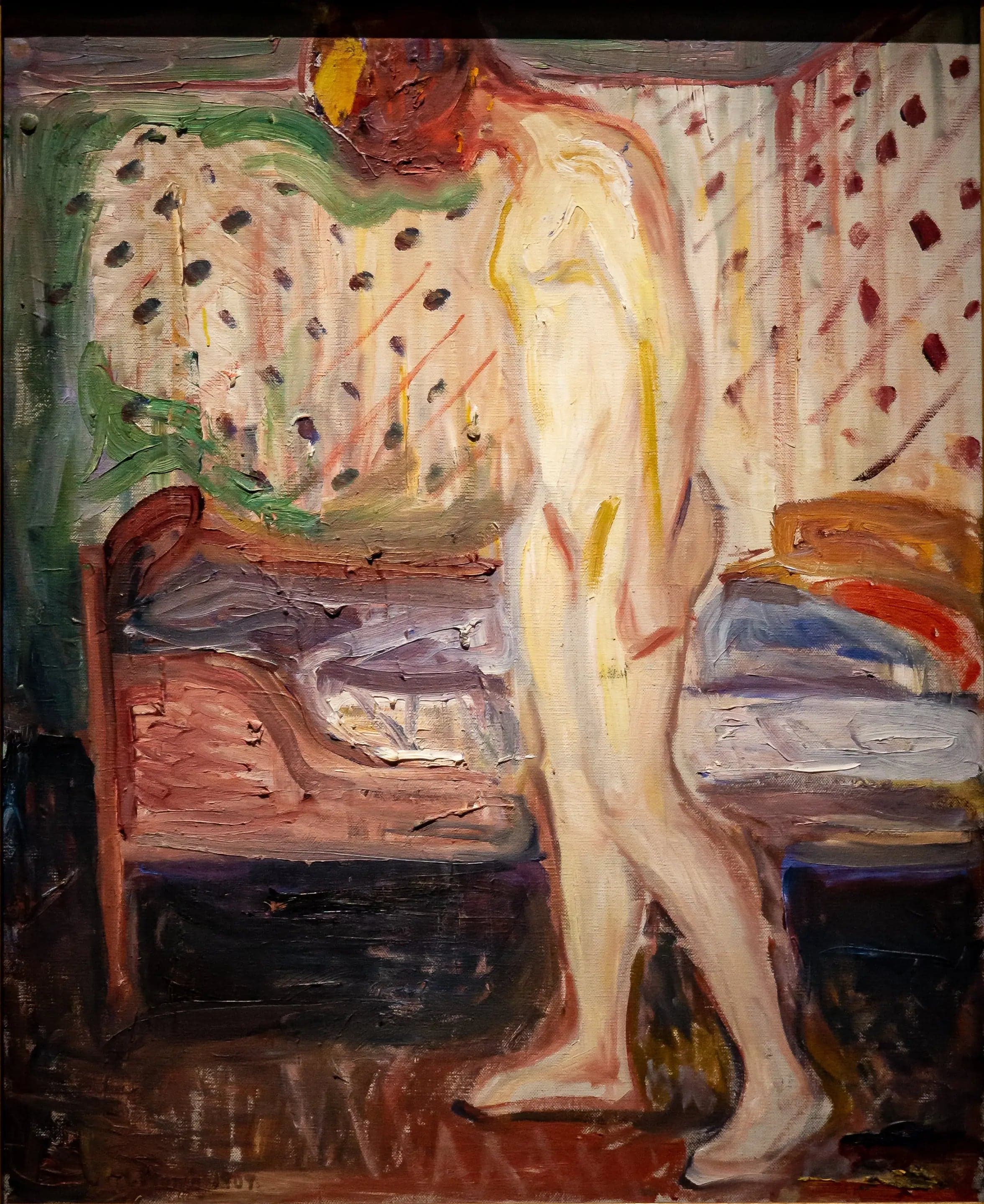
Woman Weeping
- Original dimensions
- 99.5 x 110.5 cm
- Museum
- Munch Museum
- Year
- 1907
Scene depicted
The painting “Woman Weeping” depicts a female figure in the throes of silent tears, encapsulating a deep and personal suffering. Her expressive face evokes a universal melancholy, as if the pain itself were put into color. Munch was able to capture this fleeting moment of vulnerability and despair, transforming it into an eternal masterpiece .
Historical context
Created in 1907, in the vibrant city of Oslo, this iconic work belongs to the expressionist movement. In a context marked by emotional and social upheaval, Edvard Munch captured a universal pain through this painting . Today, this canvas is displayed at the Munch Museum, a sanctuary of art where it continues to inspire generations.
Place in the artist's career
This painting marks a major turning point in Edvard Munch's career. It illustrates his ability to transcend personal themes to communicate universal emotions. Compared to his earlier works like “The Scream” and later ones such as “The Madonna,” “Woman Weeping” embodies a stylistic evolution, merging expressive technique and psychological depth.
Anecdote
“Sadness deeply impacts all those who experience it, its beauty lies in its intensity,” Munch is said to have declared, referring to this canvas at the time of its creation. One rainy afternoon, he encountered a face marked by suffering, a scene that touched him so deeply and transferred onto the canvas, infusing emotional power into the painting .
Major exhibitions
Munch og Warnemünde: 1907-1908