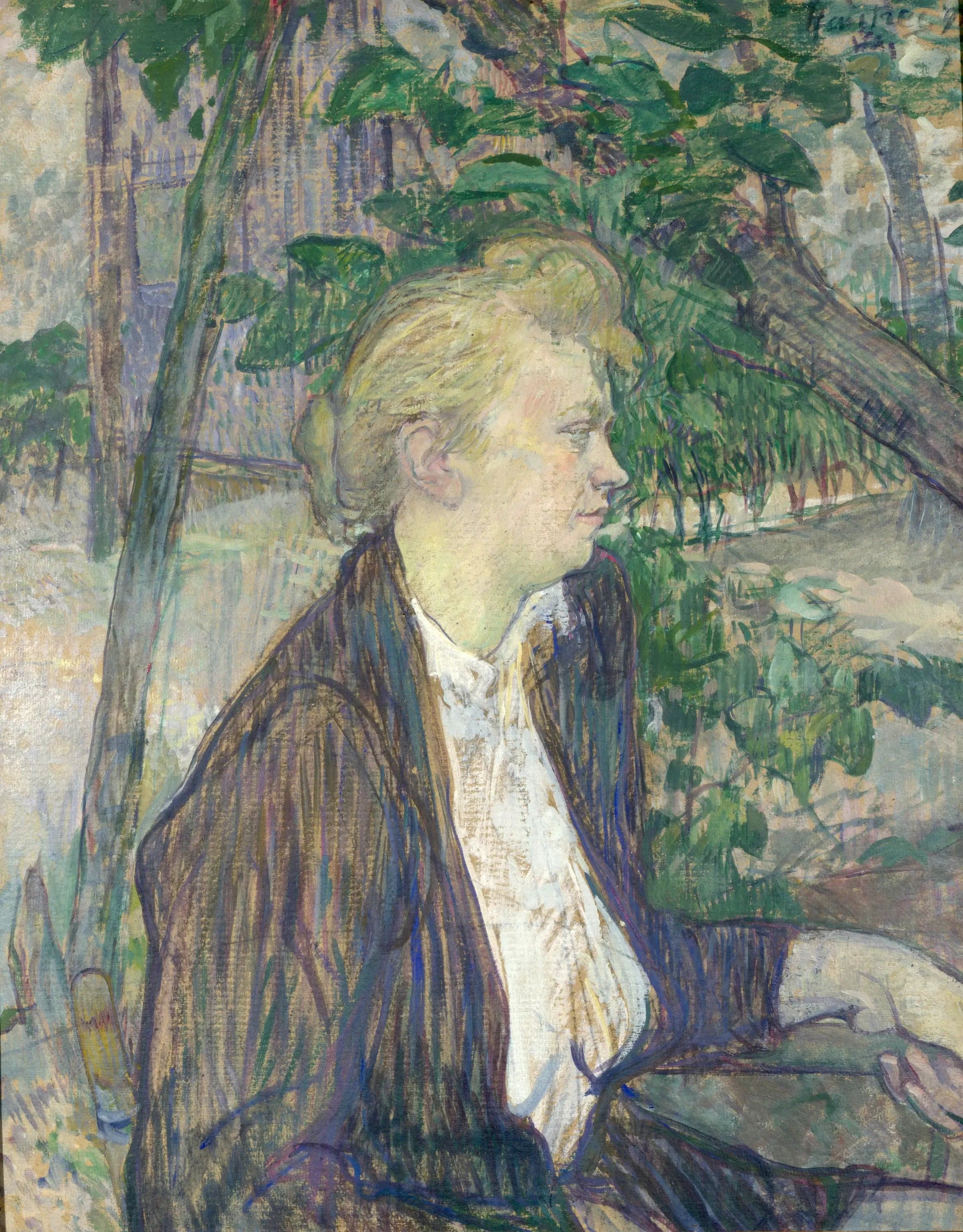
Woman Sitting in a Garden - Henri de Toulouse
- Original dimensions
- 52.8 x 66.7 cm
- Museum
- National Gallery
- Year
- 1891
Scene depicted
In this pictorial work , a woman is depicted sitting, surrounded by the floral lushness of a garden. The idyllic setting of this scene denotes a search for tranquility and beauty. With her gaze lost in the void, she seems caught up in her thoughts, absorbed by the nature around her. This painting, exalted by daylight, perfectly embodies the spirit of the era while revealing a deep introspection.
Historical context
Painted in 1891, the canvas Woman Sitting in a Garden is part of the cultural richness of the Belle Époque, an era marked by artistic innovation and a taste for scenes of everyday life. It is in London, at the National Gallery, that this painting resides, testifying to the undeniable talent of Toulouse-Lautrec, a famous figure of the post-impressionist movement. The dimensions of this work are 52.8 cm by 66.7 cm, making it a magnificent element to contemplate.
Place in the artist's career
This painting stands as a significant milestone in Toulouse-Lautrec's career. While his early works explored Parisian nightlife, Woman Sitting in a Garden represents a stylistic peak where he captures the sweetness of everyday life. In parallel, works such as Moulin Rouge: La Goulue and At the Circus allowed the artist to assert himself, thus establishing the foundations of his unique pictorial universe.
Anecdote
Henri de Toulouse-Lautrec once declared: "Life is made of colors, shapes, and emotions captured on a canvas ." It was in a Parisian garden that the artist drew his inspiration, the scent of flowers and the sweet song of birds creating an ideal setting for this painting . Woman Sitting in a Garden thus evokes a stolen moment, rich with vibrant emotional intensity.