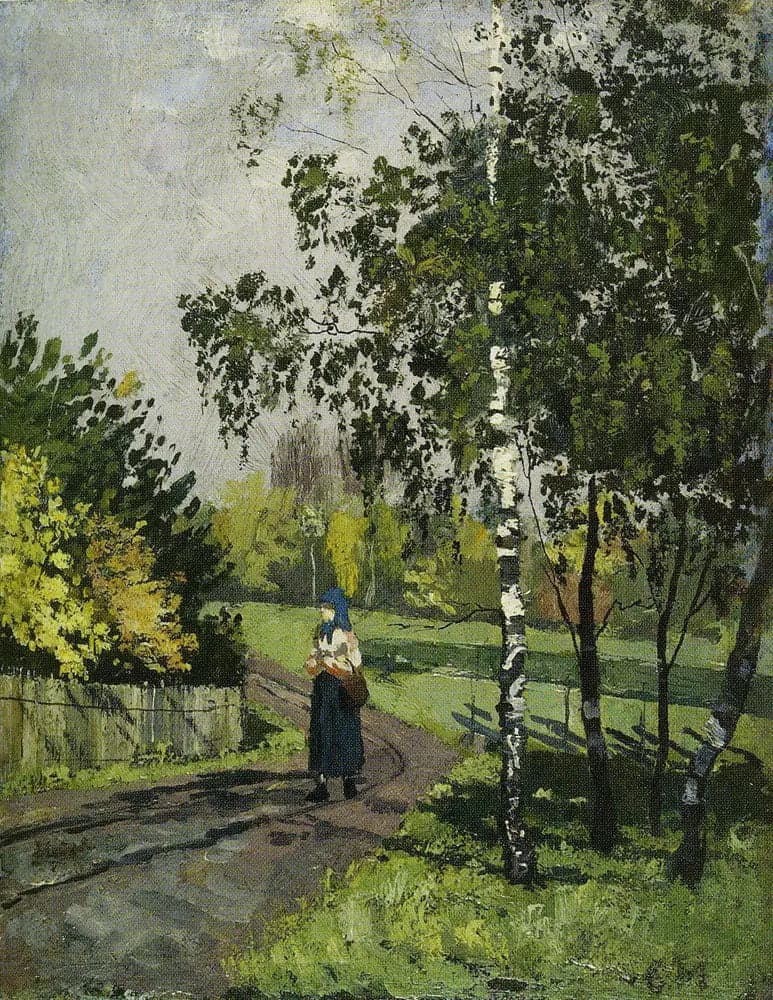
Woman on a Country Road
- Original dimensions
- 24.5 x 31.5 cm
- Museum
- Not specified
- Year
- 1882
Scene depicted
In this painting , Munch depicts a woman walking alone on a peaceful path. Framed by lush nature, she seems to surrender to her thoughts. The entirety of the canvas evokes contemplative silence, inviting the viewer to share this suspended moment, where the outside world slowly dissipates.
Historical context
Created in 1882 during a period when Edvard Munch explores the emotional turmoil of the human soul, this painting is part of the emerging expressionist movement. Set against the vibrant cultural context of Norway, this pictorial work reflects a time when art begins to emancipate itself from academic conventions. The canvas is currently held in a private collection, attesting to its historical and artistic significance.
Place in the artist's career
Woman on a Country Road represents a turning point in Munch's career, illustrating his exploration of human emotions. Here he manages to capture an ephemeral light, similar to works such as The Scream and The Madonna , where the technique evolves towards striking psychological depth.
Anecdote
Edvard Munch once shared: “Nature is a reflection of our emotions.” Imagine him wandering in the early morning on a country road, soaking in the songs of birds, the fresh air, and a soft light. It is in this haven of peace that he drew inspiration for Woman on a Country Road , a composition vibrant with sensitivity.