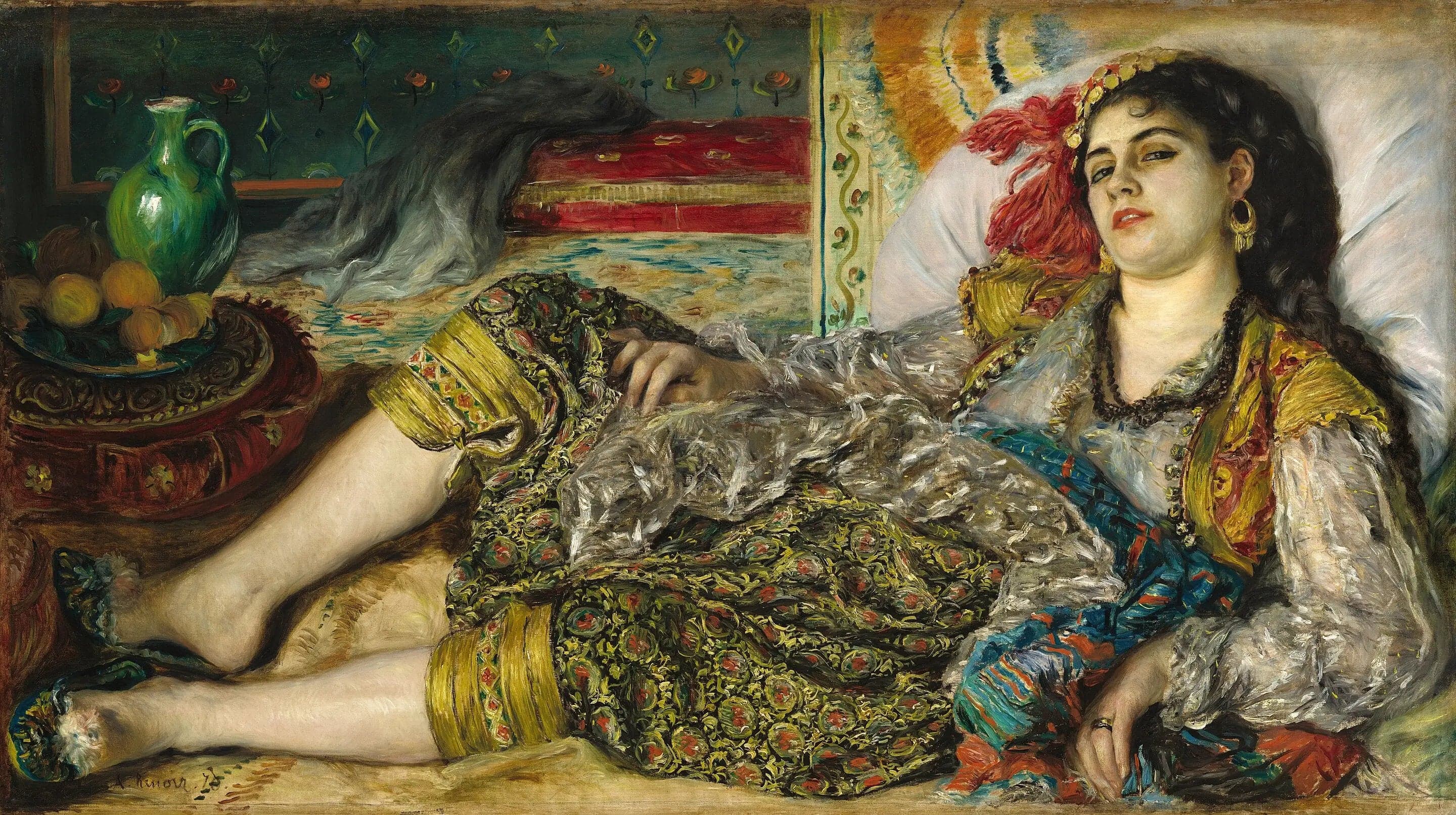
Woman of Algiers - Pierre
- Original dimensions
- 122.6 x 69.2 cm
- Museum
- National Gallery of Art
- Year
- 1870
Scene depicted
“Woman of Algiers” captures a moment of grace, a female figure in backlight, enveloped in soft light. The pictorial work highlights not only the outer beauty but also the hidden soul of its model. Renoir succeeds in immortalizing a fleeting emotion, inviting the viewer to its contemplation.
Historical context
Created in 1870, the painting “Woman of Algiers” is set in the vibrant artistic context of the Impressionist movement. In the heart of Washington, at the National Gallery of Art , this canvas evokes a time when light and colors shone with a new brilliance, testifying to the genius of an artist on the rise.
Place in the artist's career
This iconic canvas marks a turning point in Renoir's career, blending his innovative Impressionist style with remarkable pictorial delicacy. Alongside works such as “La Grenouillère” and “The Large Bathers,” “Woman of Algiers” testifies to an evolution towards greater artistic maturity, where warmth and intimacy coexist.
Anecdote
“Beauty lies in movement and light,” said Renoir. It was on a summer evening, with the scent of roses rising in the air, that he imagined this vibrant scene. The composition features a woman whose elegance radiates, revealing the harmony between the individual and nature.
Major exhibitions
Salon of 1870