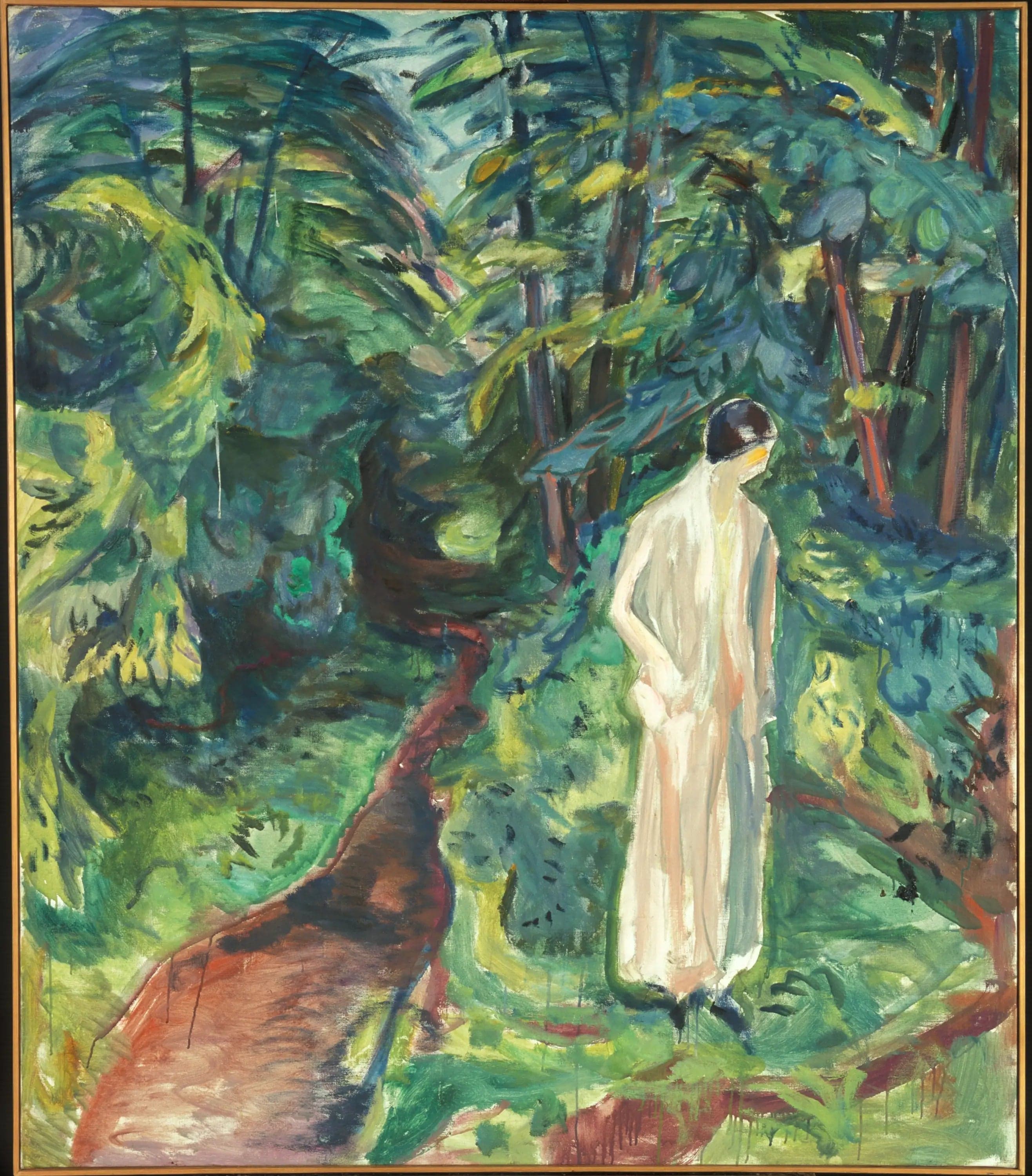
Woman in the Garden
- Original dimensions
- 120 x 138.5 cm
- Museum
- Munch Museum
- Year
- 1920
Scene depicted
The scene captured in Woman in the Garden depicts a woman, a symbol of beauty and connection with nature, standing in the heart of a lush garden. Munch, in this painting, seeks to convey the harmony between the human and their environment. The flowers, bursting with colors, seem to dance around her, while the atmosphere bathed in sunlight evokes an almost palpable serenity.
Historical context
Created in 1920, the painting Woman in the Garden by Edvard Munch is set against the vibrant backdrop of the city of Oslo, Norway. At that time, Munch, an iconic figure of symbolism , explores the nuances of human emotion, infusing his canvases with a particular intensity. Today, this masterpiece is housed in the Munch Museum, where it continues to enchant visitors. Its imposing dimensions of 120 x 138.5 cm draw the eye and invite deep contemplation.
Place in the artist's career
Woman in the Garden is a pivotal work in Edvard Munch's career, illustrating his phase of artistic maturity. After his famous painting The Scream and the introspective The Madonna , this painting reveals an evolution towards a more serene and luminous representation of the world, contrasting with his earlier sometimes dark works.
Anecdote
Edvard Munch once said: "Light is the soul of color." This quote resonates particularly with the genesis of Woman in the Garden , painted on a spring morning when flowers burst into vibrant colors in the garden. The scent of lilacs and the song of birds nourished his inspiration, creating a pictorial work where each brushstroke breathes life.
Major exhibitions
Munch og Ekely: 1916-1944