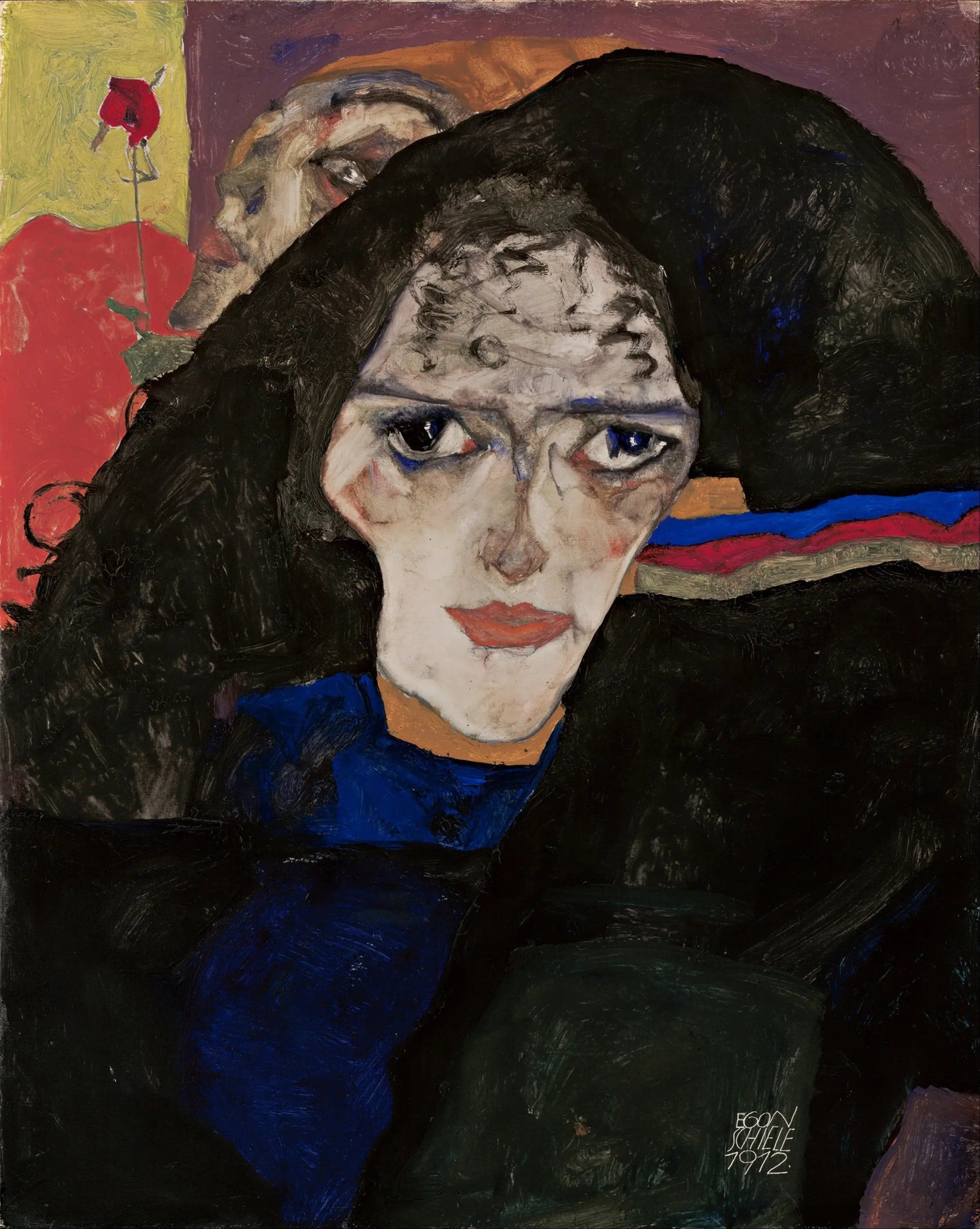
Woman in Mourning
- Original dimensions
- 340 x 425 cm
- Museum
- Leopold Museum
- Year
- 1912
Scene depicted
This painting captivates with a woman immersed in deep sorrow, a remnant of a tragic personal story. Her face, marked by sharp lines and a palette of dark colors, evokes both beauty and pain. The delicate composition generates a complicit contemplation with the observer, transforming the masterpiece into a space of silent empathy.
Historical context
Created in 1912, regionally rooted in the artistic effervescence of Vienna, this painting is a vibrant testimony of the expressionist movement. Egon Schiele , an iconic figure of this tumultuous era, managed to capture on his canvas the complexity of human emotions. Today, this masterpiece rests at the Leopold Museum in Vienna, where it continues to evoke the depth of human sorrow.
Place in the artist's career
“Woman in Mourning” stands as a pinnacle in the career of Egon Schiele , joining other iconic paintings like “Self-Portrait” and “Maternity,” which also raise questions about identity and suffering. This canvas is the synthesis of a stylistic transformation towards the intense and poignant expression of his emotions.
Anecdote
“Pain is the very essence of my creation,” would have escaped Egon Schiele , inspired by a silent encounter in an alley in Vienna. It is this essence that he conveys in his painting with “Woman in Mourning,” encapsulating the shadows of a life marked by loss and melancholy, transforming the canvas into an emotional reflection for anyone who lingers.