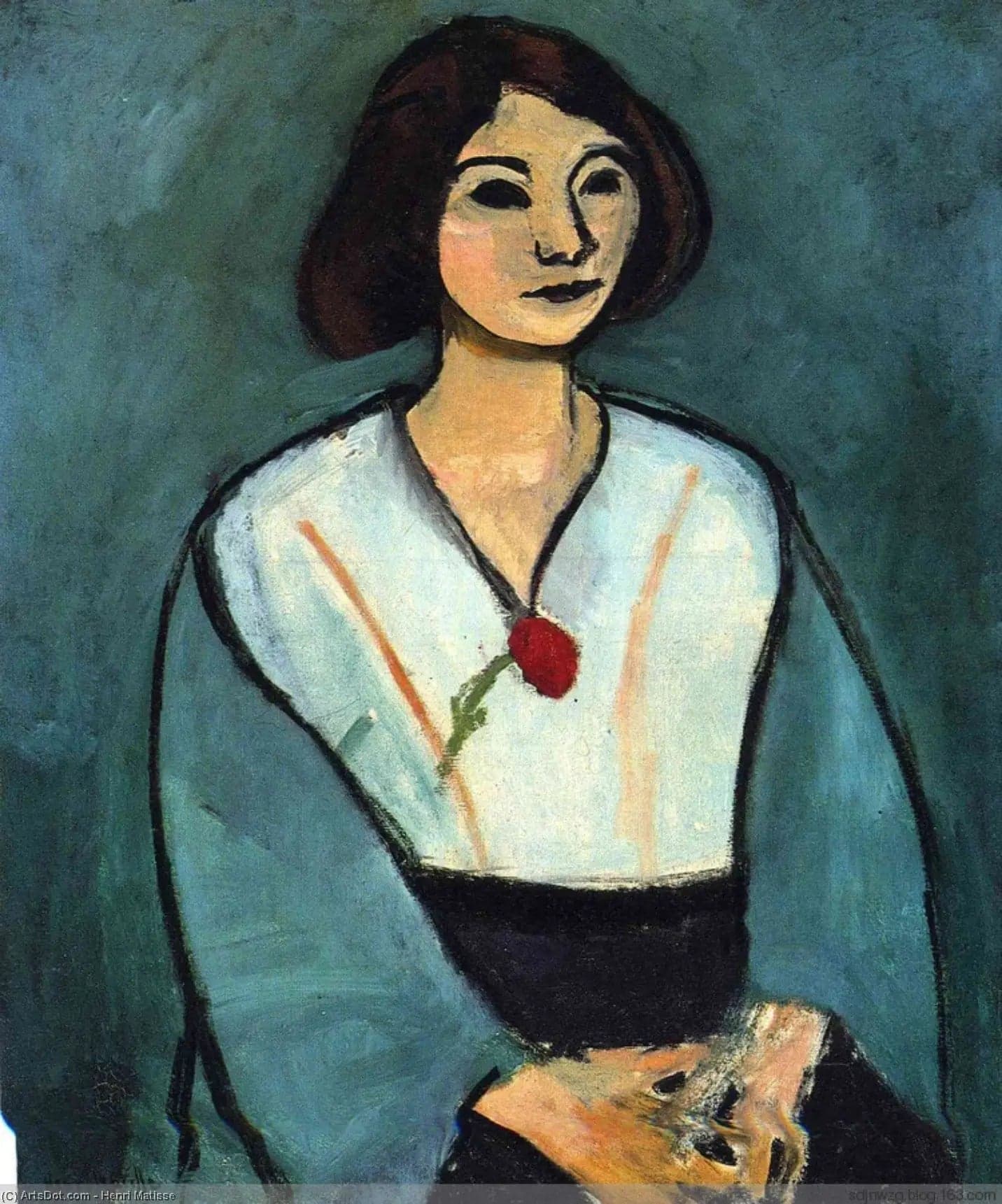
Woman in Green
- Original dimensions
- 54 x 65 cm
- Museum
- Hermitage Museum
- Year
- 1909
Scene depicted
The painting “Woman in Green” depicts an elegant female figure, integrated into a harmonious dance of vibrant colors. Matisse captures a moment of refinement and serenity, where the woman seems to be both a spectator and an actress in a fantasized world. The composition is a play of contrasts where the contours are softened, thus proving the artist's unique ability to merge subject and background. This painting is much more than a simple representation; it is a celebration of beauty and movement.
Historical context
Created in 1909, this magnificent painting is part of the Fauvist movement, which is distinguished by its chromatic boldness and innovative compositions. The current canvas is located at the Hermitage Museum in Saint Petersburg, an iconic place where the viewer can admire this major work within an exceptional collection. France, the cradle of this creativity, experienced a flourishing artistic period, synonymous with refinement and experimentation.
Place in the artist's career
“Woman in Green” represents a pivotal moment in Matisse's career, marking the transition to a remarkable stylistic maturity. Alongside his other masterpieces such as “The Dance” and “The Joy of Life,” this canvas illustrates the evolution of his bold palette and his innovative approach to the human body and space. It is a work that resonates with the echoes of its time, while laying the groundwork for future generations of artists.
Anecdote
Henri Matisse once stated: “Color is the most powerful tool to move and express the soul in painting .” It is probably this philosophy that allowed him to create this inspiring pictorial work . Evoking a spring morning, the artist drew his inspiration from the soft light of a blooming garden, where every shade of green and every shadow becomes a true visual language.