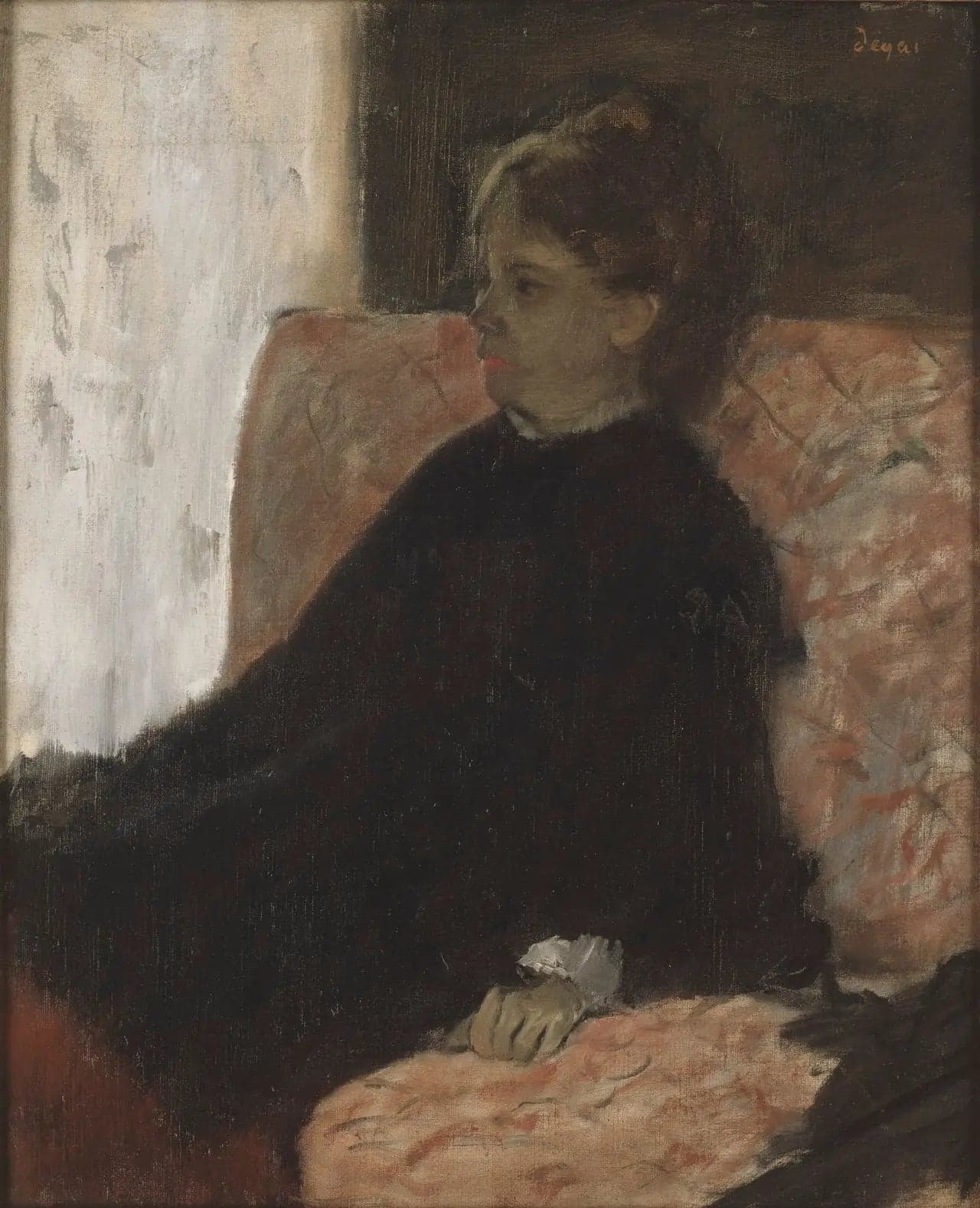
Woman in Black
- Original dimensions
- 51 x 60 cm
- Museum
- Nationalmuseum
Scene depicted
The painting reveals a woman dressed in black, seated with subtle grace, against a shaded background. This fleeting moment, frozen in time, evokes an atmosphere of sophistication and mystery. The expressiveness of the details, from drapery to shadows, accentuates the enigmatic character of her model, like a secret whispered under the cloak of light.
Historical context
Created in 1894, this canvas embodies life in Paris, at the heart of the Impressionist movement that revolutionized the arts at the end of the 19th century. This period of artistic effervescence is marked by a quest for modernity and emotion, where artists, such as Degas, break free from academic traditions. Currently, the painting is preserved at the Nationalmuseum in Stockholm, where its brilliance and elegance captivate generations of art lovers.
Place in the artist's career
Woman in Black represents a pivotal moment in Degas's career, merging his inimitable style with an introspective approach. This canvas can be compared to his other famous paintings, such as The Dance Class and The Dancers, where the artist further explores human dynamics and social interactions.
Anecdote
“Life is a ballet of light and movement, captured for a moment.” It is in this introspection that Degas finds inspiration for his masterpiece . On a golden afternoon, he observes an elegant woman in black in a Parisian salon, her silhouette both mysterious and imposing, marking the beginning of a creation that will speak to the soul of viewers.
Major exhibitions
Mästerverk i Nationalmusei samlingar