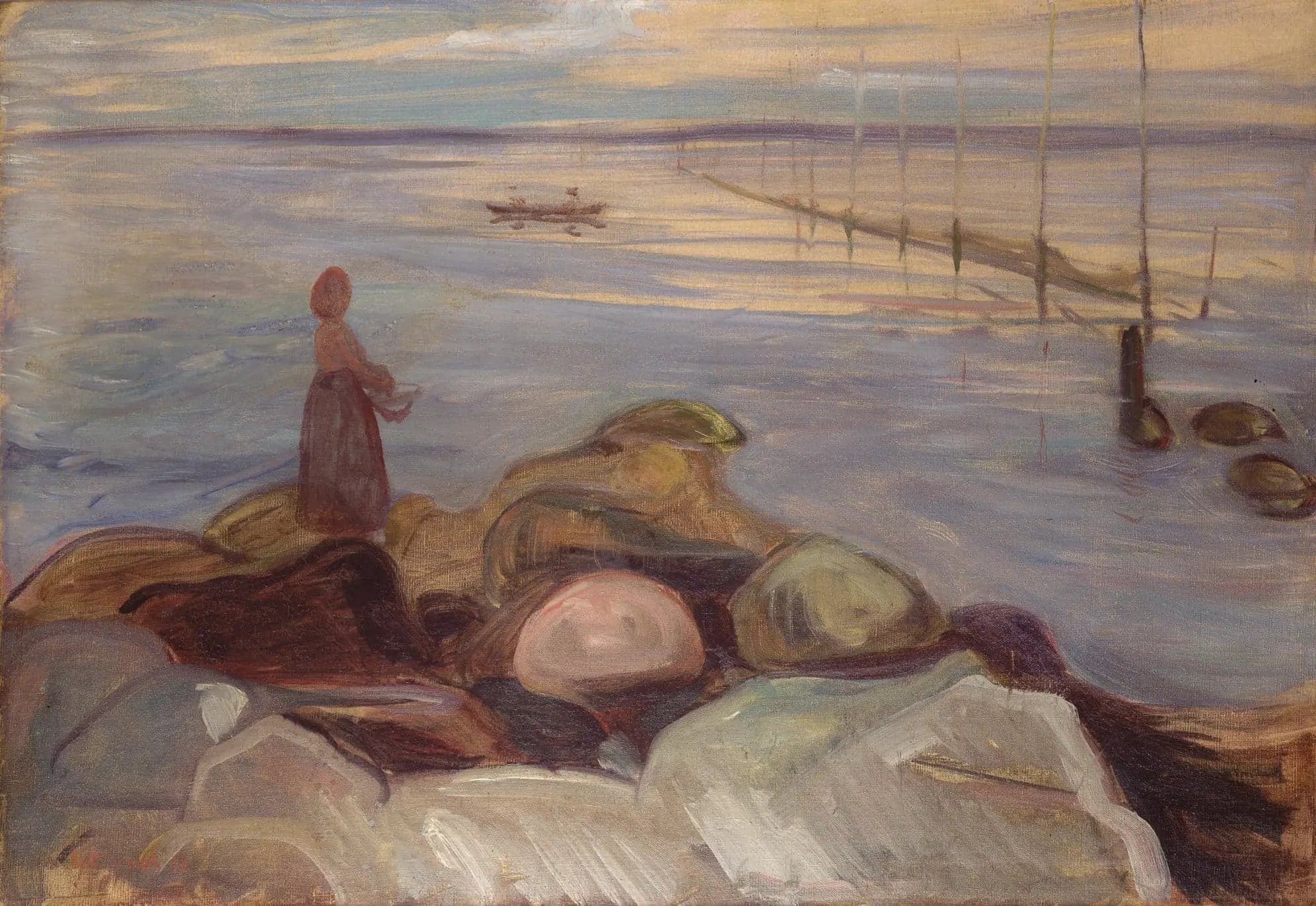
Woman by the Sea at Åsgardstrand
- Original dimensions
- 80.9 x 56 cm
- Museum
- Not specified
- Year
- 1898
Scene depicted
The scene captured in the canvas reveals a thoughtful female silhouette standing near the waves, while the sky is tinted with pastel shades. This painting evokes a mysterious serenity, where the woman seems in symbiosis with the vastness of the sea, highlighting solitude, reflections, and an intimate connection with nature. The movement of the waves and the softness of the light create a composition that invites escape.
Historical context
Created in 1898 during the post- impressionist period, Munch's painting is set in Åsgardstrand, a charming Norwegian village known for its soothing seascapes. It is in this idyllic setting that the work was born, symbolizing a moment of deep connection between the artist and nature, perfectly resonating with the themes of the expressionist movement that explored human emotions through landscapes. Currently, the painting remains a remarkable collectible piece, even though its exact museum is not specified.
Place in the artist's career
Woman by the Sea at Åsgardstrand stands in Munch's career as an emblematic representation of his artistic evolution. This pictorial work marks both an emotional turning point and an increased mastery of color techniques. In parallel, other famous paintings such as The Scream and The Madonna illustrate the richness and complexity of his creations, highlighting modern angst and the beauty of Nordic landscapes.
Anecdote
“The sea is the reflection of the soul, where we discover our own storms.” Edvard Munch , while walking on the beach, was inspired by the calm and serene atmosphere of Norwegian mornings. This magical moment between the sky and the sea gave birth to this masterpiece , an invitation to contemplation and introspection.