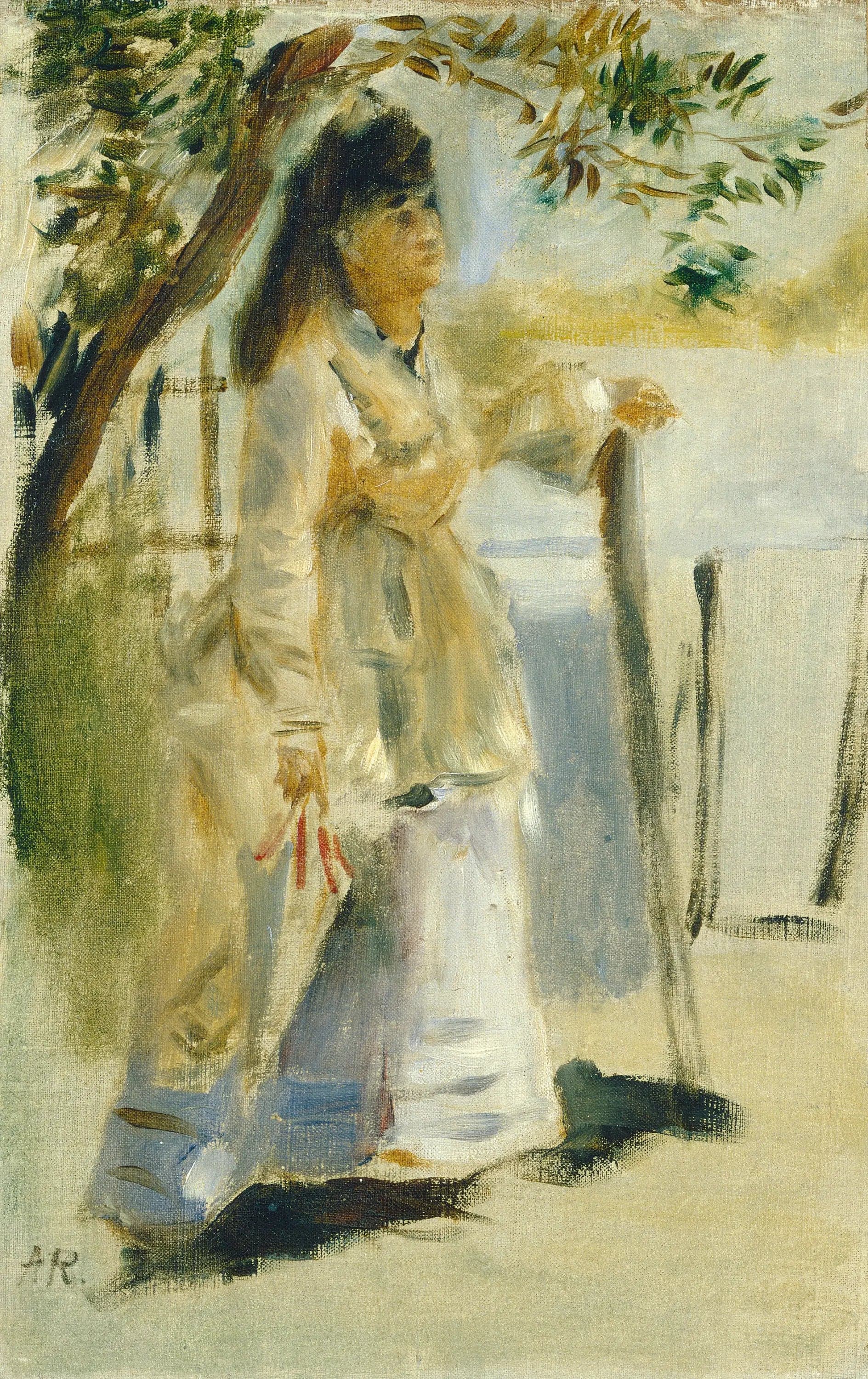
Woman by a Fence - Pierre
- Original dimensions
- 16.1 x 25 cm
- Museum
- National Gallery of Art
- Year
- 1866
Scene depicted
The painting "Woman near a Fence" reveals a serene young woman, lost in her thoughts, offering an enchanting view of the surrounding nature. The fence serves both as a symbol of separation and connection with the outside, enhancing the intimacy of this simple and meaningful scene.
Historical context
Created in 1866, in the heart of the beautiful city of Paris, this iconic painting belongs to the famous Impressionist period. Within this artistic movement, which revolutionized art by capturing light and ephemeral effects, Woman near a Fence stands out for its representation of an intimate scene revealing the charm of everyday life. Currently housed at the National Gallery of Art , this canvas of modest size, measuring 16.1 x 25 cm, exudes a rich atmosphere imbued with emotions.
Place in the artist's career
This painting , from a formative period of Renoir, testifies to his artistic evolution. At this time, he oscillates between tradition and modernity, while approaching the peaks of Impressionism , as highlighted by other masterpieces such as The Luncheon of the Boating Party and The Large Bathers . Each painting marks a unique fragrance of Renoir's quest to celebrate life.
Anecdote
Renoir once declared: "Painting is visible poetry." The inspiration for this work stems from a simple moment, when the soft morning light caresses faces in a blooming garden. Woman near a Fence is more than a painting; it is an invitation to savor the beauty of fleeting moments.