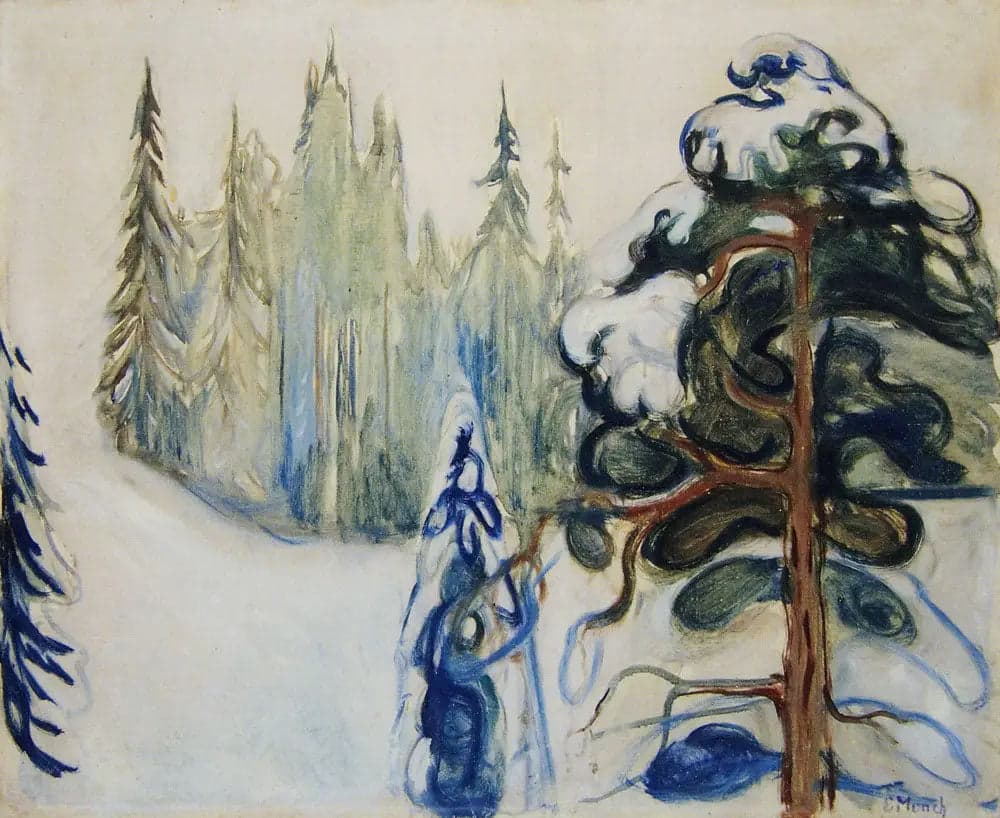
Winter
- Original dimensions
- 79.5 x 65 cm
- Museum
- Not specified
- Year
- 1899
Scene depicted
In the painting Hiver , Munch immerses us in a silent and melancholic atmosphere. This pictorial work depicts a winter landscape where the snow stretches like an immaculate cloak, and where solitary silhouettes stand out against a snowy background. The painting is imbued with an atmosphere of suffering, mingled with the beauty of a season frozen in time.
Historical context
Created at the end of the 19th century, in a bubbling artistic climate, the painting Hiver by Edvard Munch is located in Oslo, Norway. The artist, an iconic figure of symbolism and the expressionist movement, captures the essence of a winter scene in a deeply emotive way. Currently, this painting is not exhibited in a known museum, but retains a major influence in artistic circles.
Place in the artist's career
Hiver represents a key stage in the career of Edvard Munch . When comparing this painting to his works such as The Scream and The Madonna , one observes a significant evolution in his ability to represent the tumultuous states of human emotion, while integrating elements of his personal experience marked by suffering.
Anecdote
Edvard Munch once stated: "The painting is my scream against existence!" Inspired by a silent morning surrounded by biting snow and the ambient cold, Hiver translates both the solitude and the resigned beauty of a frozen landscape. This moment of creation shaped the identity of this canvas , rich in emotional nuances.