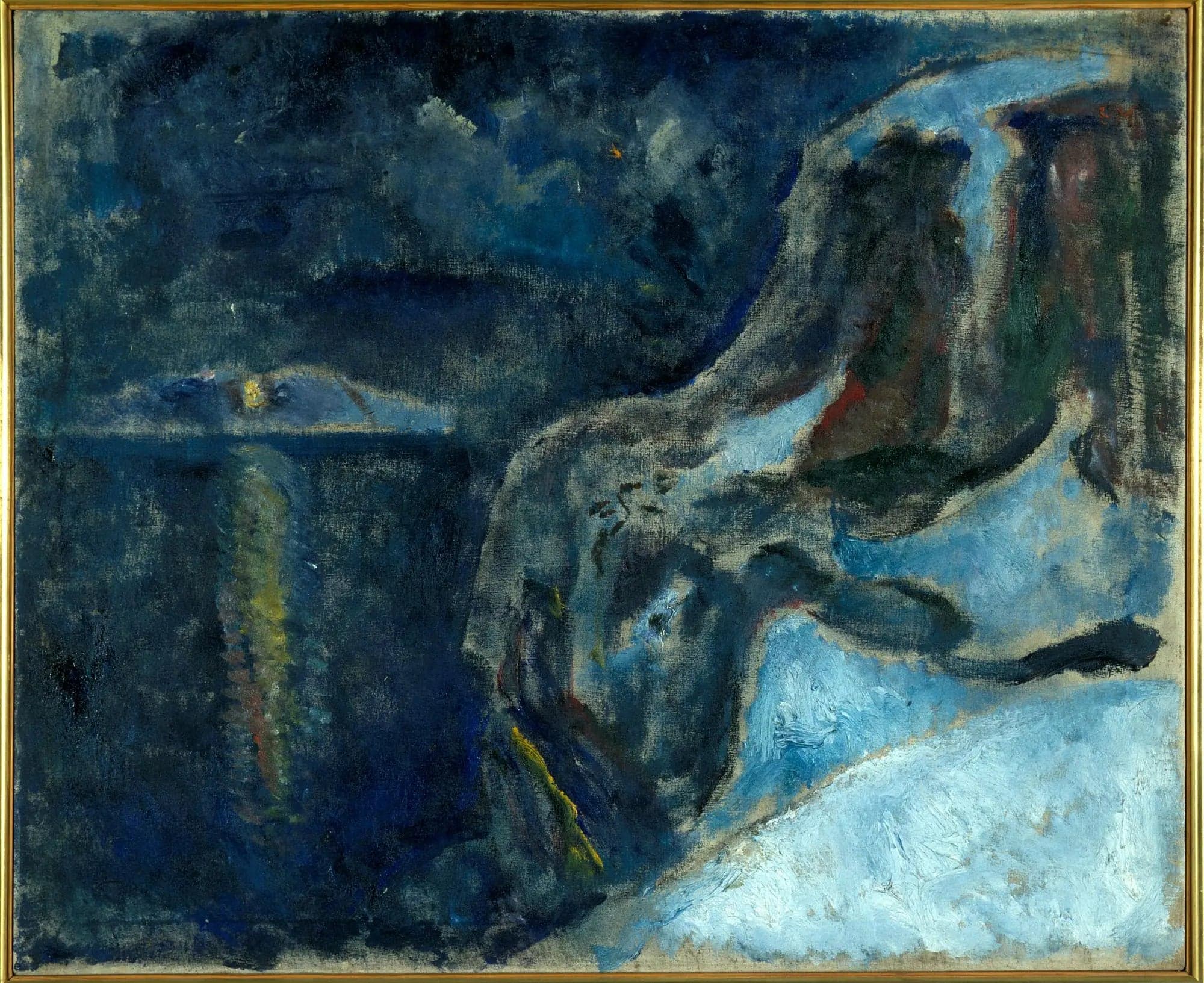
Winter by the Sea
- Original dimensions
- 112.5 x 92.5 cm
- Museum
- Munch Museum
- Year
- 1909
Scene depicted
This canvas evokes an introspective quest for solitude in the face of a wintry landscape. The shades of blue and white illustrate a frozen ocean while solitary silhouettes seem to merge into the vastness, suggesting a reflection on human nature. It is a meditation on isolation, the beauty of cold, and the infinity of the sea, where each brushstroke invites the viewer to dive into this landscape of thoughts and emotions.
Historical context
Created in 1909 in the city of Oslo, this painting is emblematic of the expressionist movement, characteristic of Munch's era. This historical context traces a period where human emotions are highlighted, where light and shadow dance on the canvas, creating a unique atmosphere. Today, the painting is carefully preserved at the Munch Museum, a sanctuary dedicated to one of the greatest masters of modern art, measuring 112.5 cm in height and 92.5 cm in width.
Place in the artist's career
The painting “Winter by the Sea” is a cornerstone in Munch's career, echoing his other famous works, such as “The Scream” and “The Madonna.” It embodies a turning point, revealing a style where the individual confronts the forces of nature, while highlighting the evolution of his technique, between intense expressiveness and poetic composition.
Anecdote
“Art does not reproduce the visible; it makes visible.” This quote from Edvard Munch resonates deeply through his masterpiece where a misty morning by the sea inspired the artist. In this calm ambiance, the echoes of the waves blend with the freshness of the sea air to bring the painting to life, capturing the essence of winter and the melancholy that accompanies it.