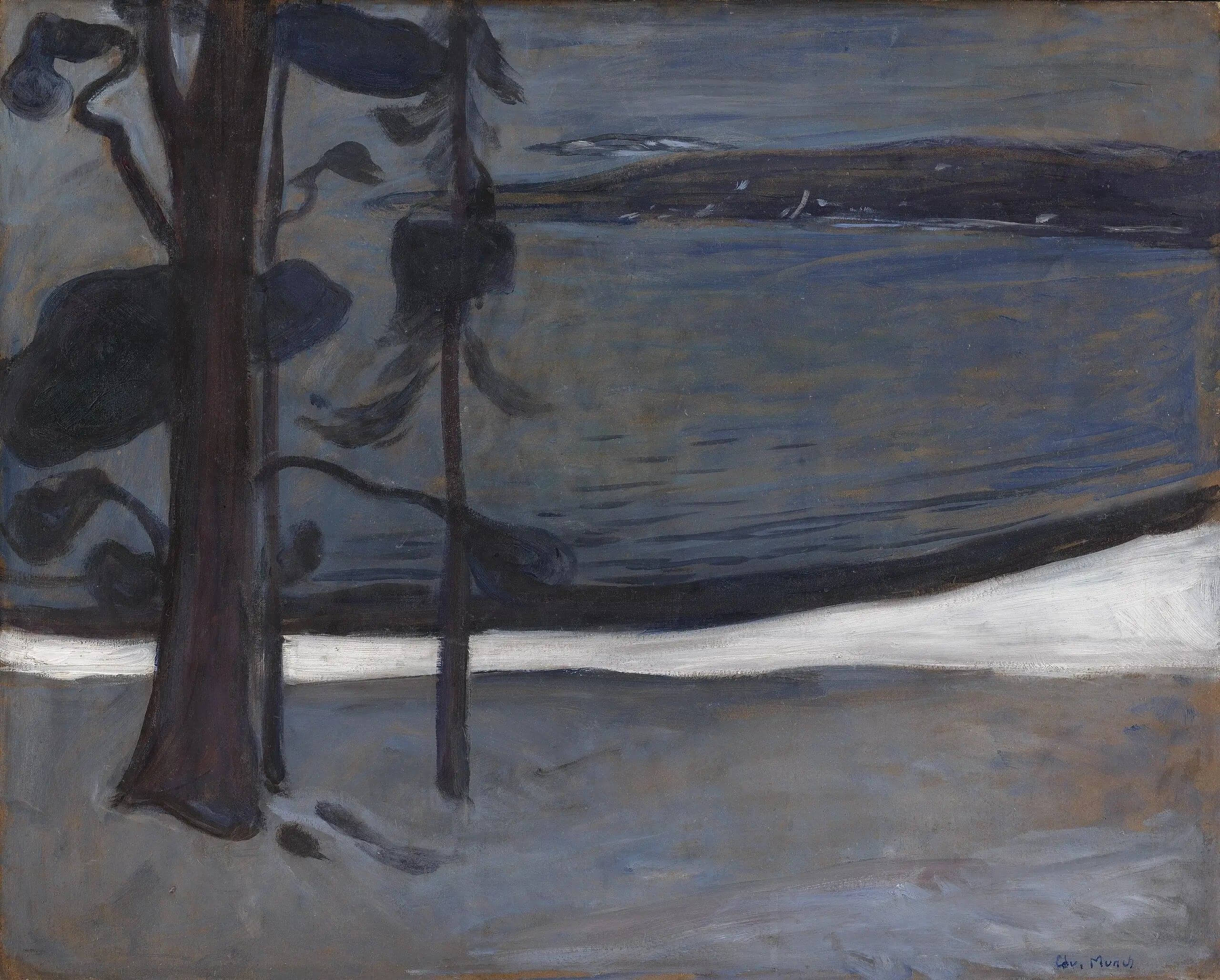
Winter at Nordstrand
- Original dimensions
- 80 x 64.5 cm
- Museum
- "degenerate art" collection
- Year
- 1900
Scene depicted
The painting “Winter at Nordstrand” captures a suspended moment, where the tranquility of the landscape is veiled by the chill of winter. Abstract forms of trees and snow intertwine in a silent dance, connecting the observer to a sensory experience of calm, where each brushstroke whispers the secrets of a Scandinavian winter.
Historical context
Created in 1900, in the picturesque setting of Nordstrand, this painting is part of the expressionist movement, marked by emotional intensity and the exploration of human psyches. Now housed within the "degenerate art" collection, this canvas resonates with the tumultuous cultural climate of the time, offering a window into the artistic concerns of a transforming Europe.
Place in the artist's career
This painting stands as a milestone in the career of Edvard Munch , reflecting his stylistic evolution. Alongside works such as “The Scream” and “The Madonna,” “Winter at Nordstrand” illustrates a period of maturation, where the artist gradually moves away from realism to achieve a more free and poignant emotional expression.
Anecdote
“Nature is like a mirror of my own desires,” Munch might have said while contemplating the snowy landscapes surrounding him. That winter morning, the soft and cold light, the gentle breeze caressing his face, filled his mind with visions that were later transcribed into the masterpiece that is Winter at Nordstrand .