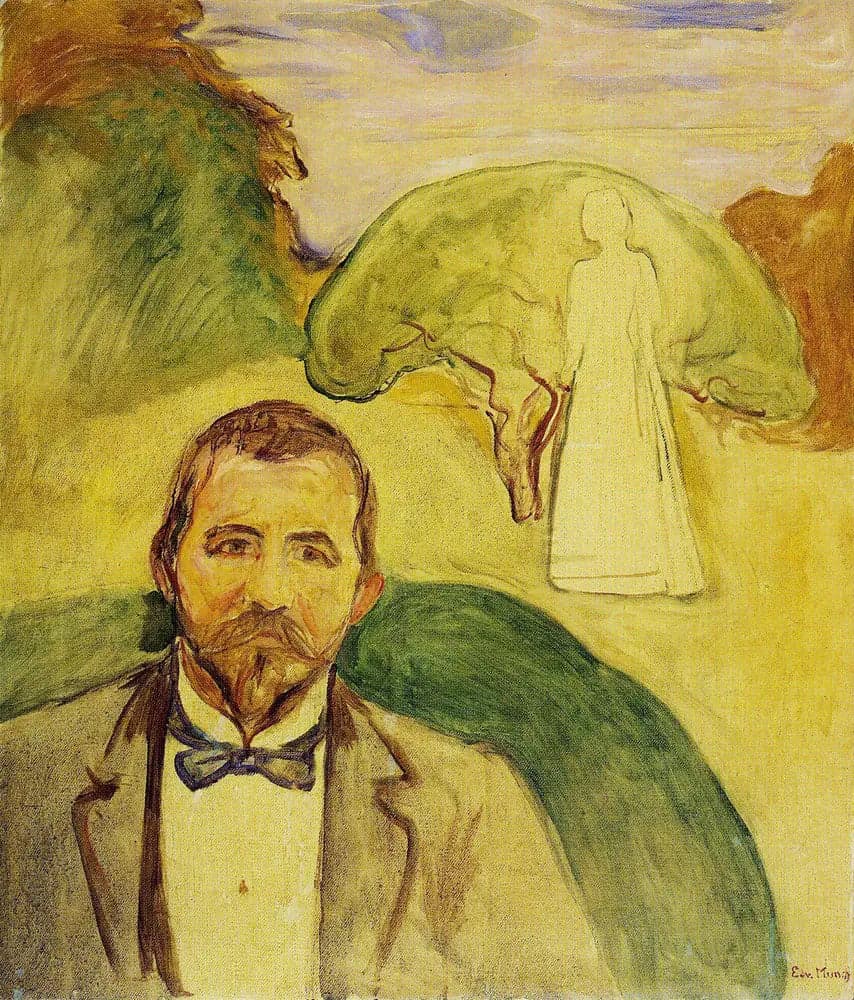
Wilhelm Le Fèvre Grimsgaard
- Original dimensions
- 64.2 x 75.5 cm
- Museum
- Not specified
- Year
- 1901
Scene depicted
The painting "Wilhelm Le Fèvre Grimsgaard" evokes the power of nature and the human soul, illustrating a powerful subject; this pictorial work transports us to a world where tearing and harmony coexist, revealing the inner struggles of the artist while connecting us to a universal reality.
Historical context
Created in 1901, the painting "Wilhelm Le Fèvre Grimsgaard" is part of the symbolist movement and is rooted in the city of Oslo, Norway. Edvard Munch , an iconic figure of this era, managed to capture the essence of the human soul during a tumultuous period. This canvas is currently in an unspecified collection, but its dimension of 64.2 x 75.5 cm gives it a captivating presence, bursting with emotion.
Place in the artist's career
Positioned at a pivotal moment in his career, this painting represents the peak of Munch, where his style becomes more mature. It dialogues admirably with other paintings like "The Scream" and "The Madonna," echoing his explorations of themes of love, death, and the human psyche.
Anecdote
“I paint not what I see, but what I feel,” said Munch. It was in a sunny alley, one spring morning, that he was inspired by the mystical aura of Wilhelm Le Fèvre Grimsgaard. This canvas conveys the depth of his emotions, carrying within it an echo of melancholy and timeless beauty.