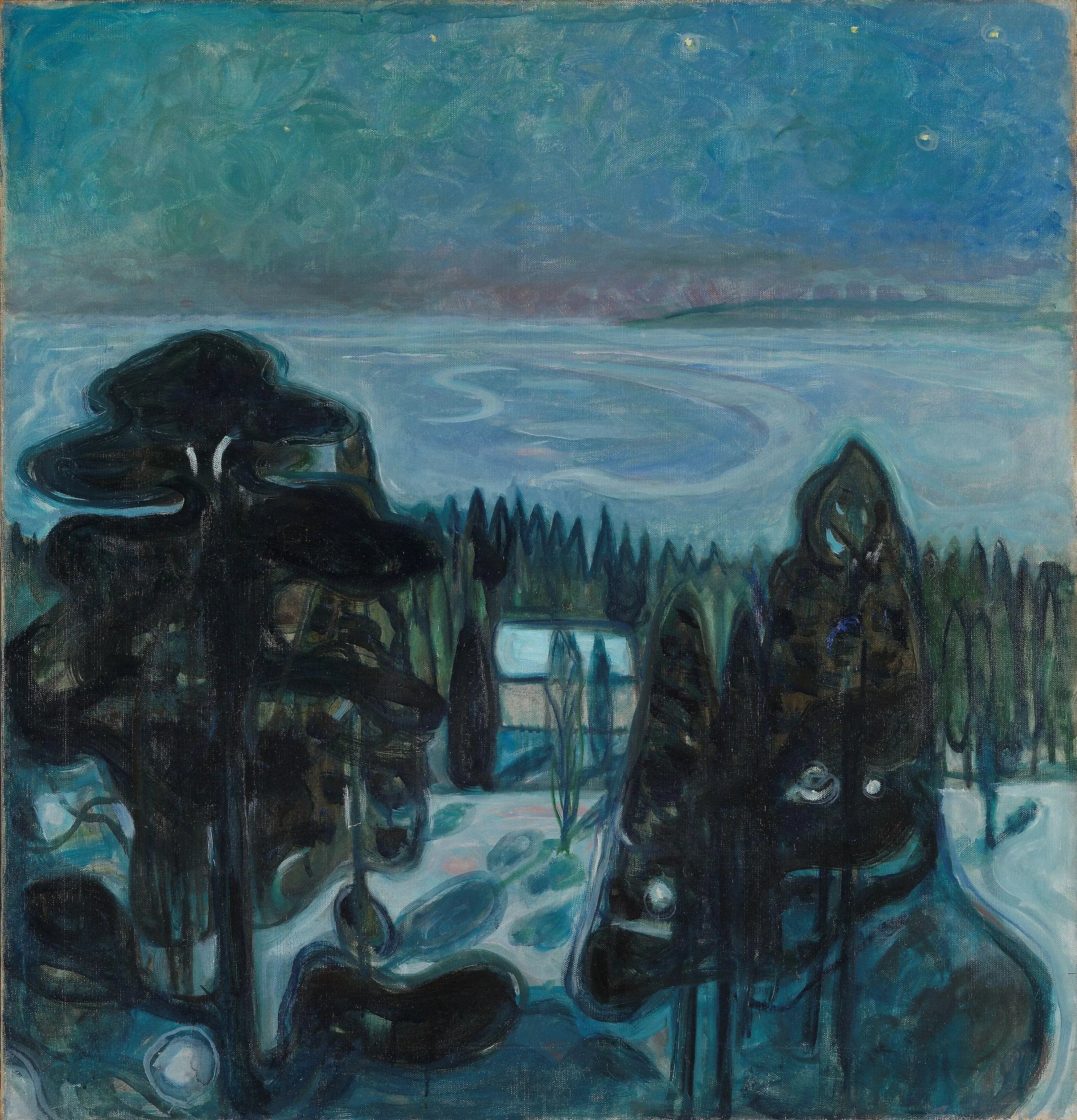
White Night
- Original dimensions
- 111 x 115.5 cm
- Museum
- National Gallery of Oslo
- Year
- 1900
Scene depicted
In this canvas , Munch illustrates a nocturnal scene that evokes an atmosphere both soothing and unsettling. Shadows dance in the moonlight, while the apparent tranquility of the night is brushed by a feeling of anxiety balancing emotions on the surface. Every detail of the painting contributes to creating an atmosphere imbued with mystery and psychological depth.
Historical context
Created in 1900, in Oslo, this painting is emblematic of the expressionist movement that emerged at the end of the 19th century and the beginning of the 20th century. It reflects the artistic effervescence of a time marked by societal and cultural upheavals. Today, this canvas can be admired at the National Gallery of Oslo, where it holds a privileged place within the Norwegian heritage.
Place in the artist's career
Night Watch is situated at a turning point in the career of Edvard Munch , marking a period of stylistic maturity. At that time, he had already created other iconic paintings such as The Scream and The Madonna, demonstrating a progression in capturing emotional struggles through art. With Night Watch, he redefines his perceptions and enriches his repertoire with a new depth.
Anecdote
Edvard Munch once stated: "The only light capable of illuminating the darkness of the soul is that of art." It was in a quiet alley in Oslo, while he contemplated the glow of the moon, that the inspiration for this masterpiece came to him, thus linking the essence of the painting to his own inner struggles and deep emotions.
Major exhibitions
The Magic North. Finnish and Norwegian art around 1900