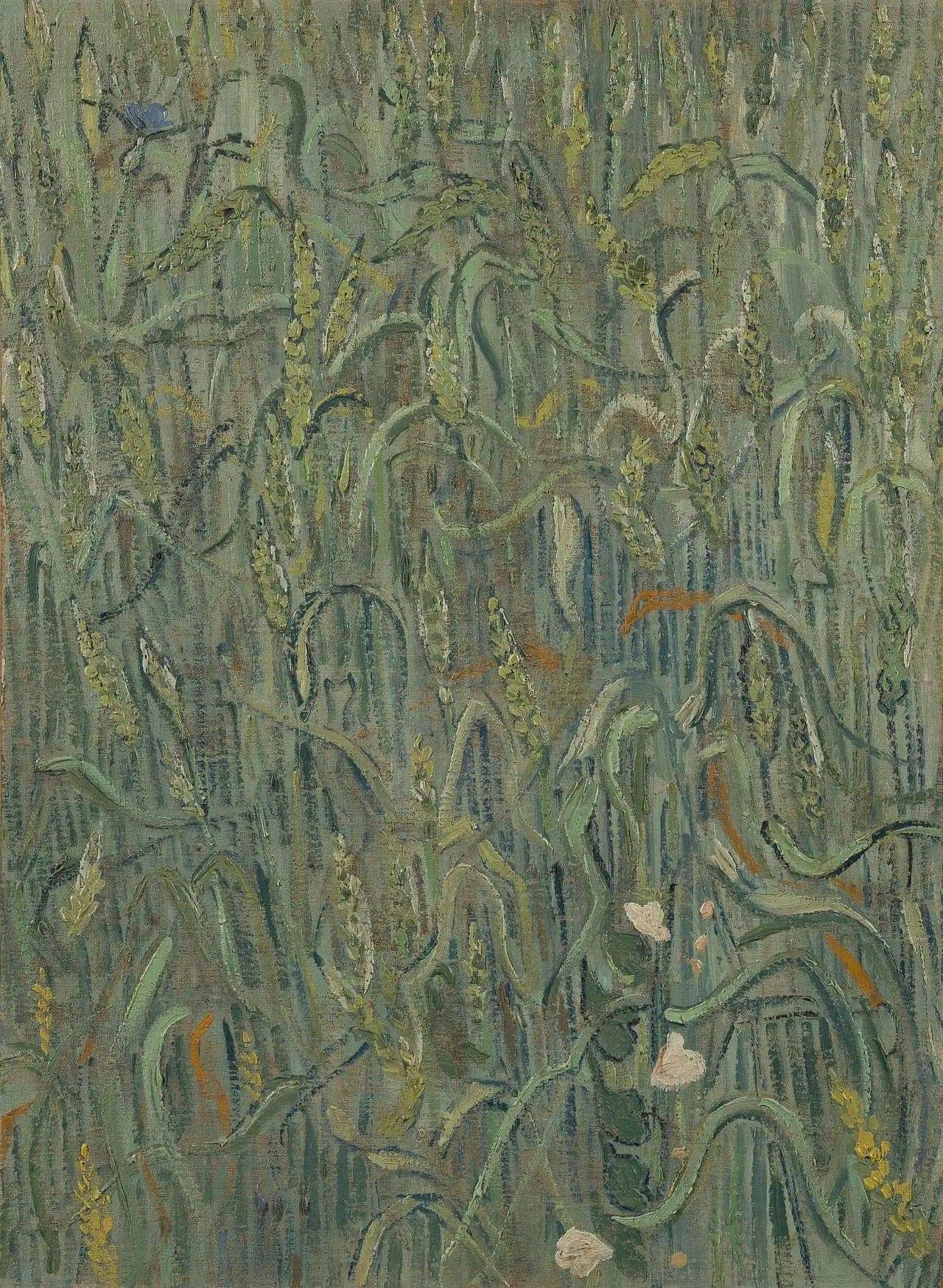
Wheat Stalks
Scene depicted
In this composition , Van Gogh delivers a vibrant vision of the wheat fields, filled with golden sheaves that seem to dance in the gentle breeze. One feels a deep connection with nature, as if each blade of wheat whispered forgotten secrets. The scene, bathed in warm light, evokes a tranquility and a unique burst of life characteristic of this region of France, inviting contemplation.
Historical context
Created in 1890, in the picturesque town of Auvers-sur-Oise , this painting is part of the post-impressionist movement, which is characterized by its explorations of light and color. This canvas emblematic of Vincent van Gogh is currently housed at the Van Gogh Museum , where it is carefully preserved. With dimensions of 48.5 x 64.5 cm, this pictorial work transports us to a key moment in Van Gogh's career.
Place in the artist's career
“Wheat Sheaves” represents a turning point in Van Gogh's career. At this stage, his style asserts itself with bold brushstrokes and a poignant use of color. Compared to other works such as “ The Starry Night ” and “ The Sunflowers ”, this painting bears witness to a stylistic maturity and an increasing emotional commitment to the representation of the natural world.
Anecdote
“The wheat sheaves, in their golden glow, are a breath of the earth, an ode to nature.” This inspired quote could resonate in Van Gogh's mind as he stood before the simplicity and pure beauty of the fields he loved so much. The painting “Wheat Sheaves” makes us feel the essence of a spring morning, cradled by the whisper of the wind and the softness of the sun's rays.