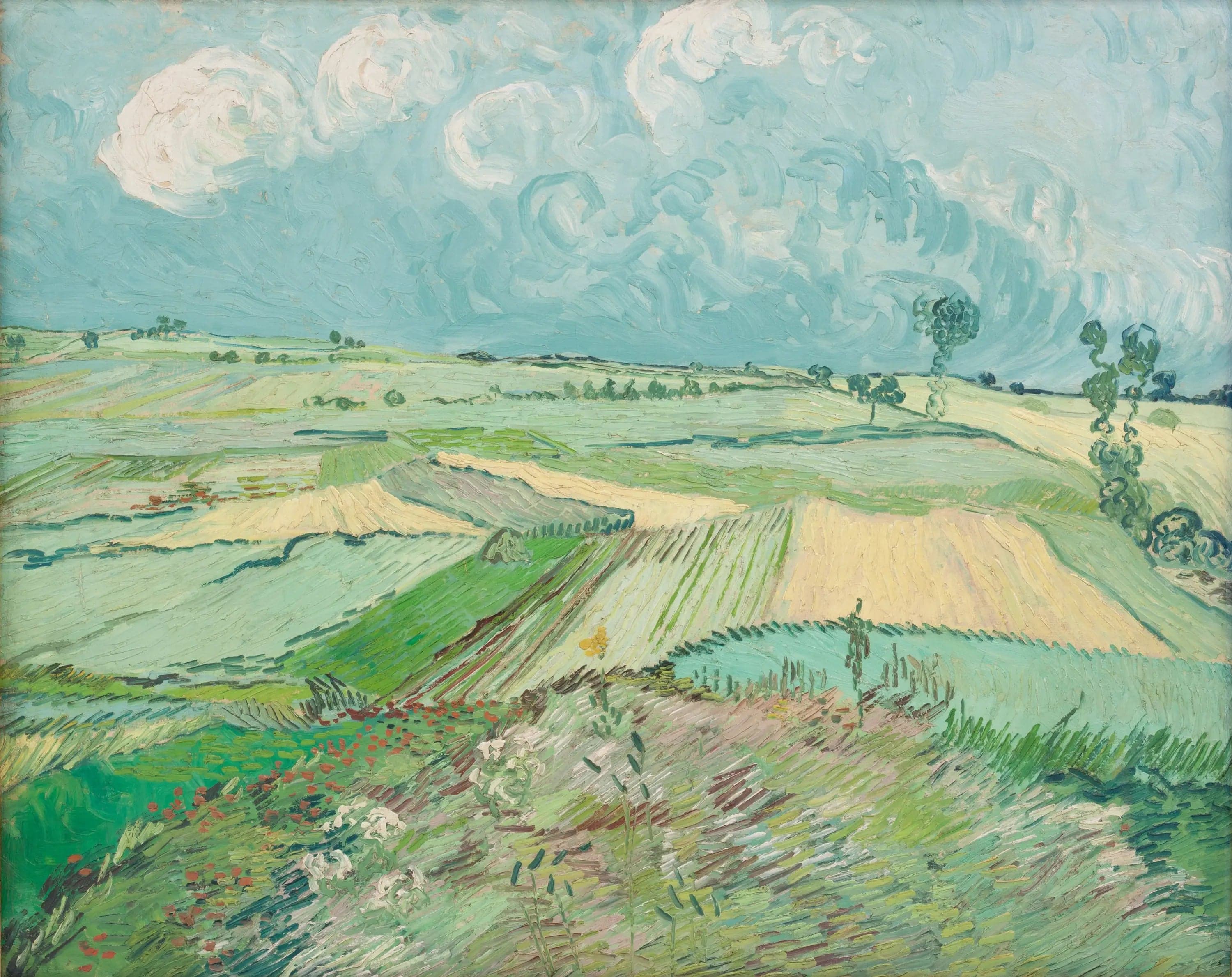
Wheat Fields after the Rain
Scene depicted
This painting , a true ode to nature, depicts vibrant wheat fields, glowing after a beneficial rain. The golden ears sway gently in a light breeze, reflecting radiant light. Van Gogh captures not only a landscape , but also an atmosphere of renewal and hope, inviting the observer to feel the freshness of the air and the tranquility of a calm day.
Historical context
Precisely created in 1890, the painting titled Wheat Fields after the Rain emerges from Auvers-sur-Oise , an iconic town in the Île-de-France region. This work belongs to the post-impressionist movement, characterized by its bold use of color and texture. Today, this canvas is housed at the Carnegie Museum of Art in the United States and measures 92.39 x 73.34 cm.
Place in the artist's career
Considered one of the major pieces of his final creative cycle, Wheat Fields after the Rain represents a pivotal period in Van Gogh's career, marked by stylistic experimentation. Alongside The Starry Night and The Bedroom , this canvas reflects his technical evolution, where each brushstroke communicates raw emotion while maintaining a palpable tenderness.
Anecdote
In his letters, Vincent van Gogh often spoke of his powerful connection to nature: “The earth is a living canvas, each brush of wind and each ray of sunshine adds a touch.” In Auvers-sur-Oise , one spring morning, the artist was inspired by the fields bathed in light after a warm rain, creating this masterpiece that captures the essence of spring vitality.