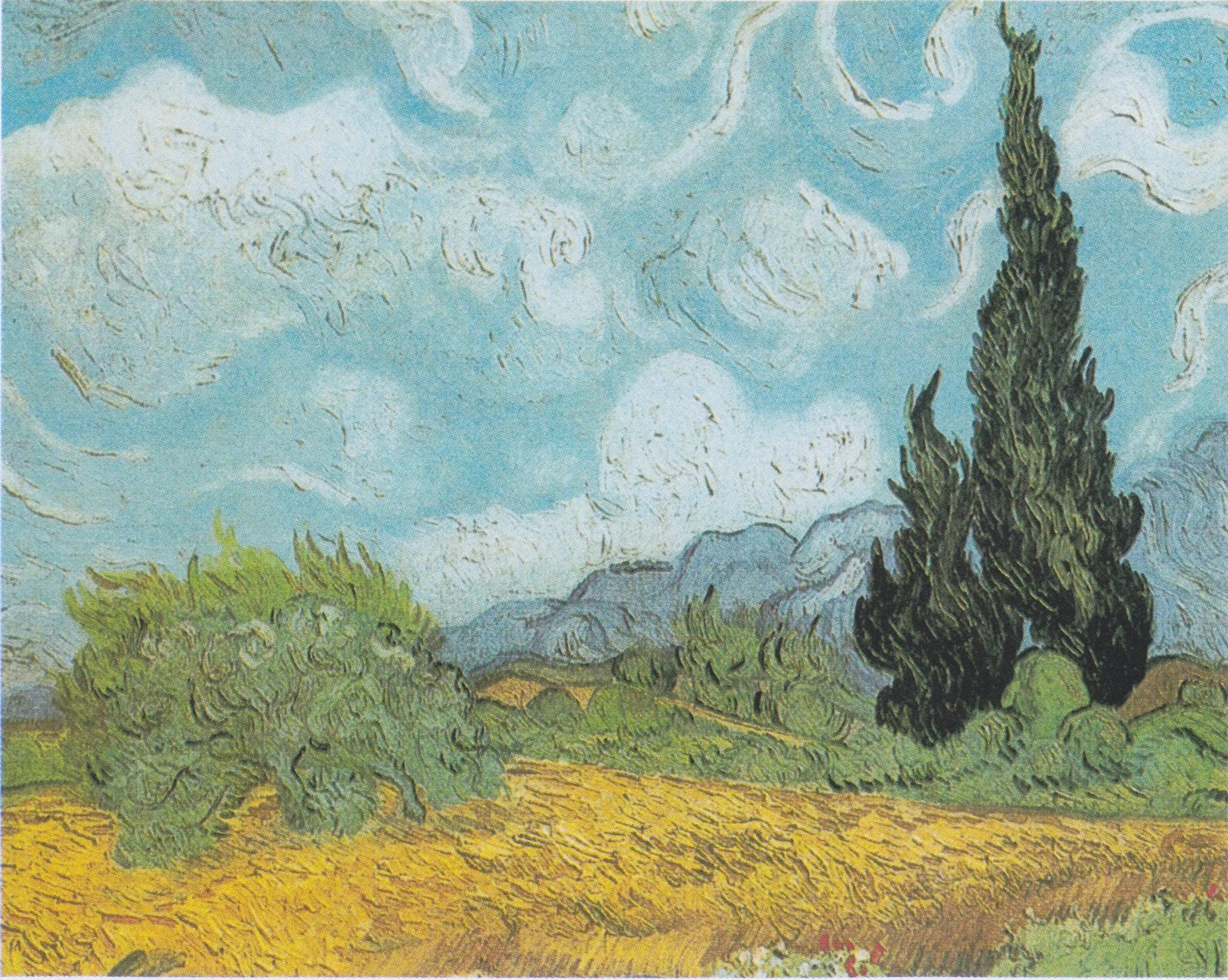
Wheat Field with Cypresses
Scene depicted
In this tableau , the golden wheat stretches as far as the eye can see, adorned with vibrant light, while the cypress trees, like sentinels, rise proudly towards the sky. Van Gogh composes a landscape where each element becomes a note of a hymn to nature: the movement of the ears, the undulation of the wind, and the dialogue between the sky and the earth.
Historical context
Created in 1889 in Saint-Rémy-de-Provence , this painting is emblematic of the post-impressionist movement, embodying the passionate spirit of Vincent van Gogh . At the heart of a region bathed in the sun of southern France, this canvas finds its place today within the Stávros Niárchos Collection . Measuring 65 x 51.5 cm, this tableau illustrates the connection between the artist and his surrounding nature.
Place in the artist's career
The wheat field with cypresses is situated at a turning point in Van Gogh's career, marking a period of maturity where the fusion of emotion and technique reaches its peak. Compared to works such as “ The Starry Night ” and “The Irises ”, this tableau reveals the evolution of his style, moving from the search for form to a palpable mastery of light.
Anecdote
"I am intoxicated by the colors and shapes that surround me," Van Gogh might have said during his walks in the fields. It was on a summer morning, in the shade of a heart beating with memories, that he captured the essence of life through this pictorial work , transposing his tumultuous emotions onto the canvas.