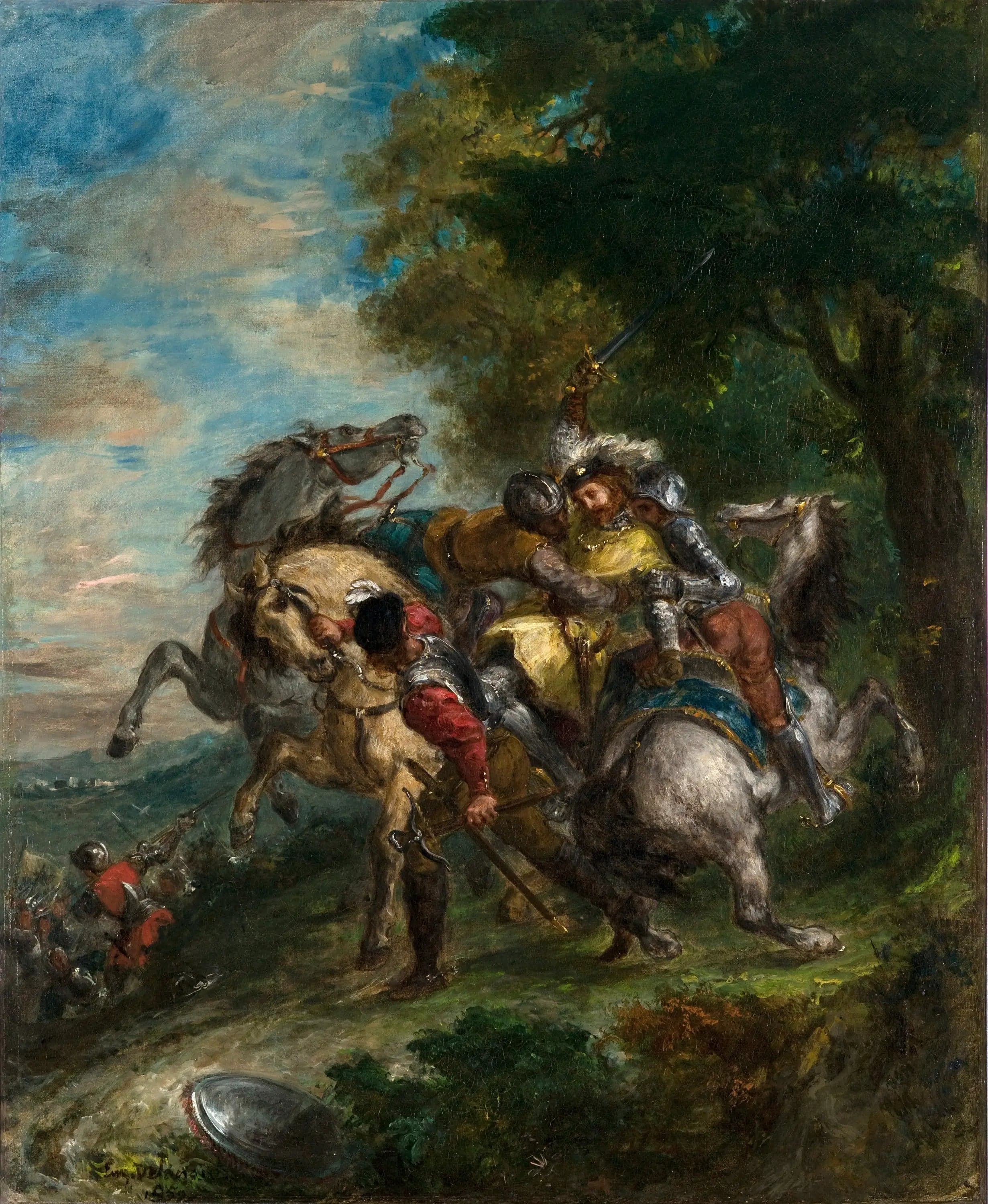
Weislingen captured by Götz's men
- Original dimensions
- 24 x 29 cm
- Museum
- Saint Louis Art Museum
- Year
- 1853
Scene depicted
This sumptuous painting illustrates a moment of dramatic tension, dear to Delacroix. At the heart of the composition, we observe Weislingen, a historical figure, trapped by the men of Götz. In a narrative context filled with emotion, this confrontation highlights the stakes of loyalty and betrayal, while underscoring the stripping of man before the relentless forces of fate. Every detail of the painting evokes psychological depth, solidifying its status as an essential work of art.
Historical context
Artwork: Weislingen Captured by the Men of Götz |BRK| Artist: Eugène Delacroix |BRK| Year: 1853 |BRK| Museum: Saint Louis Art Museum |BRK| Dimensions: 24 x 29 cm |BRK|
Place in the artist's career
Weislingen Captured by the Men of Götz stands as a milestone in Delacroix's career, illustrating his emergence as a master of the Romantic movement. By placing it in perspective with other works like Liberty Leading the People and The Massacre at Chios , one can grasp the technical and emotional evolution that characterizes him. This painting reflects an artist in search of a true expression of human struggle.
Anecdote
Delacroix once stated: “Art is the reflection of our deepest passions.” The inspiration for this canvas, Weislingen Captured by the Men of Götz, came on a cool spring morning, where the talented artist evoked the melancholy of lost battles, which is felt in every brushstroke of this powerful pictorial work.