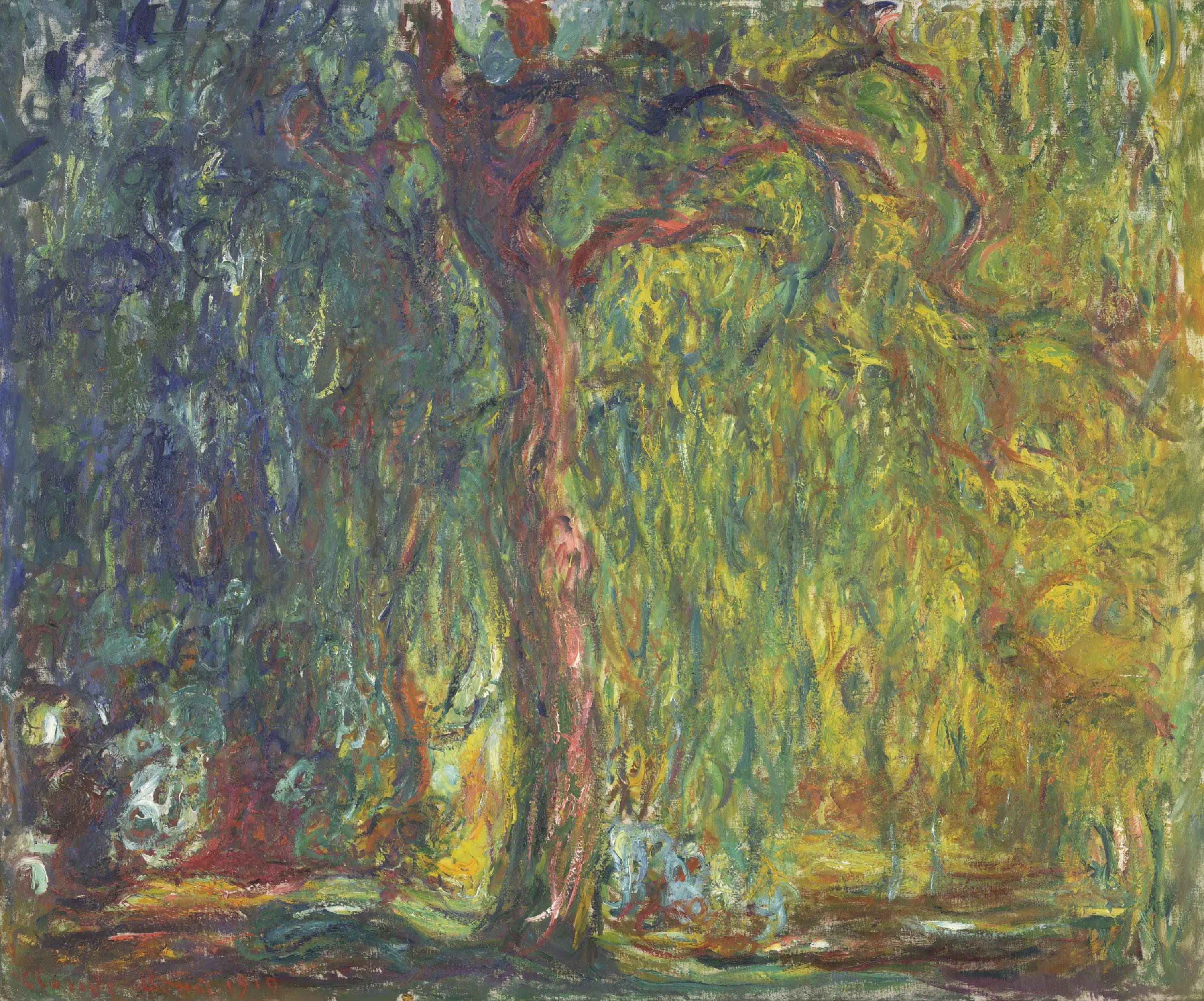
Weeping Willow
- Original dimensions
- 100 x 100 cm
- Museum
- Marmottan Monet Museum
- Year
- 1918
Scene depicted
The painting "Weeping Willow" captures the majesty of the willow, its branches swaying with the currents. Monet, with his unique touch, did not merely depict a tree but translated a feeling of intimacy and reflection. This painting does not simply speak of a scene but evokes a deep connection with nature, where each leaf seems to whisper a secret to the viewer.
Historical context
Year: 1918 |BRK| Museum: Marmottan Monet Museum |BRK| Dimensions: 100 x 100 cm
Place in the artist's career
At the end of his career, Weeping Willow represents a stylistic peak for Claude Monet. Following works such as Impression, Sunrise and Water Lilies , this painting reflects the evolution of his technique, where light and emotion merge to create an unforgettable composition.
Anecdote
"True art is that which captivates the soul and leaves it breathless." This quote, inspired by the spirit of Claude Monet, evokes the poignant moment when he leaned over his subject by the water's edge. On a cool April morning, with the whisper of the wind through the branches, it was in this natural ambiance that the evocative power of the painting Weeping Willow was born.