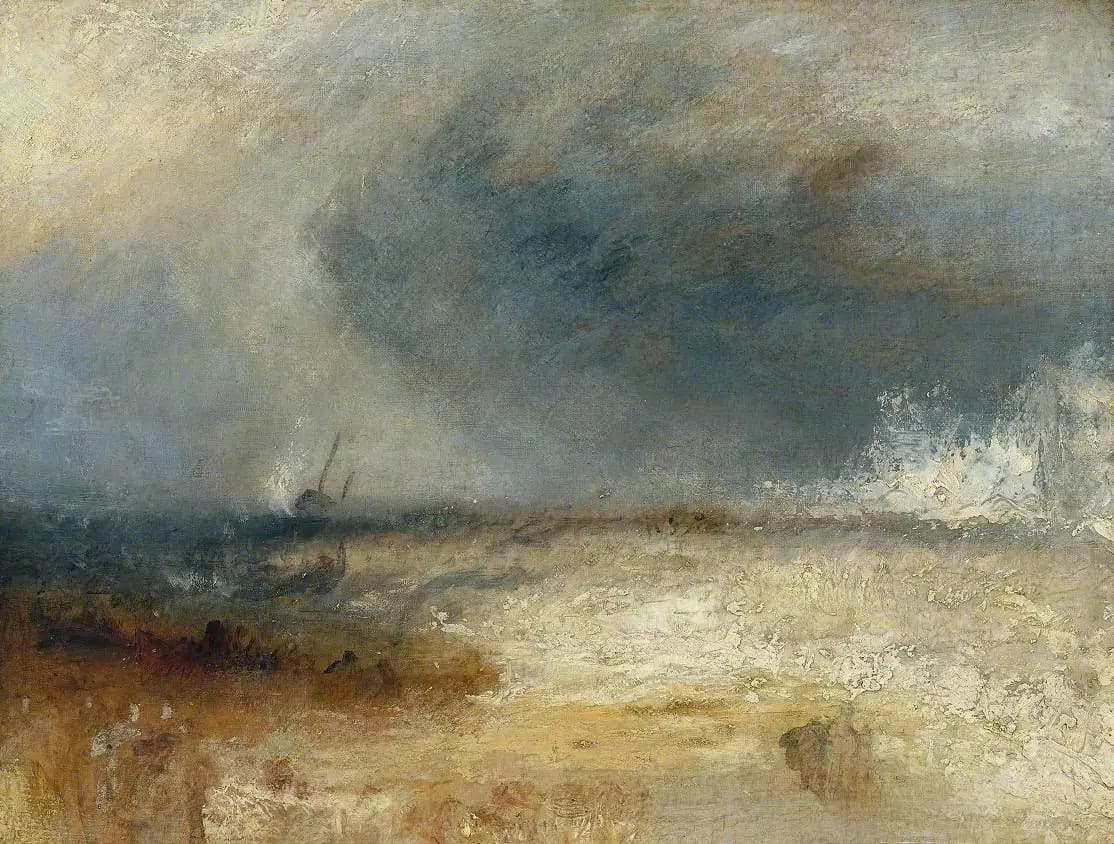
Waves Breaking on a Shore
- Original dimensions
- 46.4 x 60.6 cm
- Museum
- Tate
- Year
- 1835
Scene depicted
This masterpiece illustrates the raw energy of the waves crashing on the shore. The splashes of foam create a striking contrast with the cloudy skies, revealing the eternal struggle between the aquatic element and the terrestrial landscape. The composition evokes both the majesty of nature and the fragility of human life.
Historical context
Created in 1835, this canvas emblematic of the romantic movement, takes root in the dynamic artistic context of Victorian England. It is in London, the cradle of the industrial revolution, that Turner's avant-garde spirit is drawn. His painting , currently exhibited at the Tate Museum, is a perfect example of the harmony between nature and the tumult of the time.
Place in the artist's career
Waves Breaking on a Shore represents the pinnacle of Turner's genius, a synthesis of his earlier explorations in the emerging impressionism with works such as The Last Voyage of the Temeraire and Aubel The Interior of a Colony . This painting shows a technical evolution towards subtle abstraction.
Anecdote
Turner often stated: "Nature is the best of mistresses." In this bold exploration of the waves, one feels the artist's passion on a spring morning, when the song of the seagulls mingles with the tumult of the ocean. The emotions captured in Waves Breaking on a Shore transport us into this vibrant and lively atmosphere.