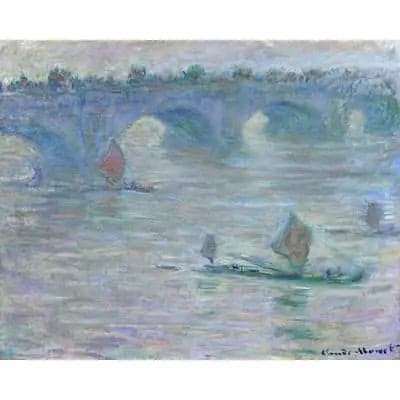
Waterloo Bridge
- Original dimensions
- 81 x 65.5 cm
- Museum
- Davis Museum and Cultural Center
- Year
- 1901
Scene depicted
In Waterloo Bridge , Monet captures a snapshot of a reality in motion. The painting depicts the famous bridge that connects the city to the countryside, vibrant with color and energy. The steam locomotives, silhouettes of industrialization, intertwine with the lightness of the clouds, creating a striking composition where time seems suspended. This painting evokes not only a specific place but also a historical moment of transition.
Historical context
Year: 1901 |BRK| Museum: Davis Museum and Cultural Center |BRK| Dimensions: 81 x 65.5 cm
Place in the artist's career
Waterloo Bridge fits into a period of maturity for Claude Monet , illustrating his skill in using light to evoke deep feelings. Alongside his other major paintings , such as Impression, Sunrise and Water Lilies , this canvas manifests a dialogue between plein air technique and the fleeting capture of the moment, marking a significant evolution in his artistic journey.
Anecdote
Claude Monet once stated: "Light is color." It was while walking along the banks of the Thames one awakening morning that the artist found inspiration for this pictorial work . The shimmering reflections on the water and the light mist evoke a fleeting feeling, like a breath of fresh air carrying the scent of spring flowers.