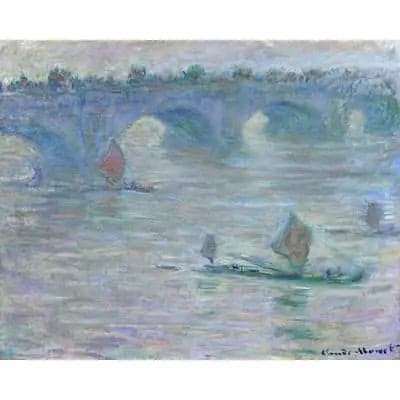
Waterloo Bridge
- Original dimensions
- 92.7 x 65.4 cm
- Museum
- Santa Barbara Museum of Art
- Year
- 1903
Scene depicted
The painting “ Waterloo Bridge ” illustrates the majesty of one of London's most iconic monuments, enveloped in a mysterious atmosphere. The play of light reflecting in the waters of the river symbolizes not only the beauty of the city but also the sensation of escape that these urban landscapes provide. Monet, with his Impressionist technique, captures the ephemeral, making the scene alive and vibrant.
Historical context
Year: 1903 |BRK| Museum: Santa Barbara Museum of Art |BRK| Dimensions: 92.7 x 65.4 cm
Place in the artist's career
“ Waterloo Bridge ” holds a strategic place in Monet's career, representing a synthesis between his exploration of landscape and the innovative language of Impressionism . This masterpiece follows the famous series of paintings such as “ Impression, Sunrise ” and “ The Water Lilies ”, marking a technical maturity where color and light dominate the pictorial discourse, revealing the artist's personal emotions.
Anecdote
“The light and colors dance on this canvas, like the whisper of the wind on a spring morning.” These words from Monet resonate as an ode to his creative process. It was while admiring the misty fog and the shimmering reflections on the Thames that the idea for Waterloo Bridge blossomed in his mind, capturing the magic of a fleeting moment.