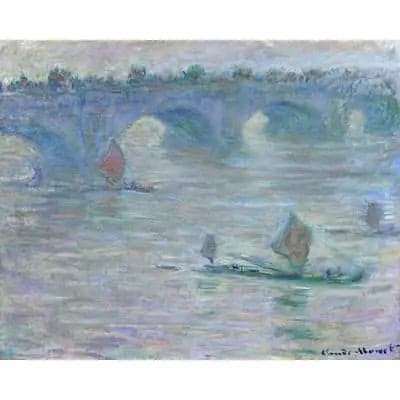
Waterloo Bridge
- Original dimensions
- 81 x 65 cm
- Museum
- Matsushita Museum of Art
- Year
- 1899
Scene depicted
In Waterloo Bridge , Monet paints a dazzling view of the famous bridge, a pathway between two shores, between past and present. The canvas evokes the shimmering reflections on the surface of the Thames, where boats glide gracefully. This painting invites a journey through time, illustrating both the vibrancy of London and the calm of the waters that surround it.
Historical context
Year: 1899 |BRK| Museum: Matsushita Museum of Art |BRK| Dimensions: 81 x 65 cm
Place in the artist's career
This canvas represents a pivotal moment in the career of Claude Monet , demonstrating his bold approach to light and color. At this time, his creations such as Impression, Sunrise and Water Lilies had already made history. Waterloo Bridge stands at the crossroads of his exploration of light effects and the blossoming of his mature style.
Anecdote
“Light plays and dances on the surface of the water, revealing a world that only the artist can see.” These words resonate within us as we contemplate this pictorial work . Monet finds his inspiration one spring morning, when the mist gently rises over the river, a silent melody of colors that blend and intertwine. This magic is captured in the masterpiece that is Waterloo Bridge , awakening a deep emotion.