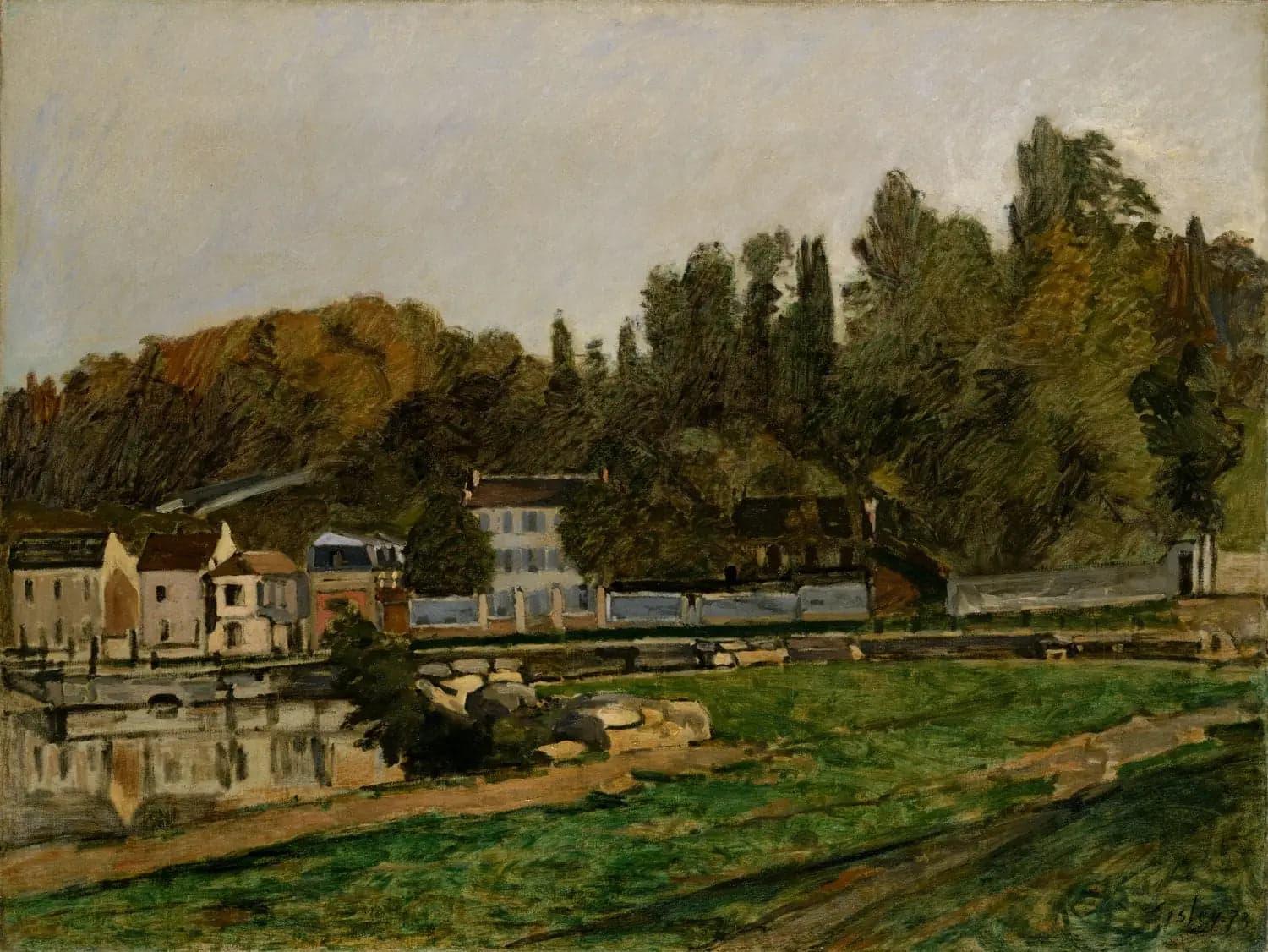
Water Points at Marly
- Original dimensions
- 130.5 x 98.1 cm
- Museum
- Pola Museum
- Year
- 1873
Scene depicted
The painting depicts a peaceful scene along a tranquil water point, where the light of a gentle afternoon caresses the ground and dances on the surface of the water. Sisley succeeds in conveying the harmony between nature and man, illustrating a moment of rare serenity, suspended in time. The delicate reflections blend with the lush greenery surrounding the painting, creating a composition that breathes authenticity.
Historical context
Created in 1873, the painting "Water Points at Marly" is part of the Impressionist movement, a period when the town of Marly, located near Paris, became a favored place for artists in search of light and nature. This canvas is currently housed in the Pola Museum , a collection that celebrates the legacy of Impressionist art while paying tribute to the visual richness of this era.
Place in the artist's career
"Water Points at Marly" represents a turning point in the career of Alfred Sisley , illustrating his development as a major artist of Impressionism . This masterpiece follows "The Seine at Bougival" and precedes "The Bridge at Moret," two other iconic paintings that reveal the evolution of his technique and emotions in response to nature.
Anecdote
Alfred Sisley , whose artistic soul was touched by the ephemeral beauty of landscapes, once declared: "Nature is my guide, and each painting is a reflection of my emotions towards it." This quote evokes the genesis of his masterpiece , capturing the magic of a bright morning in the gardens of Marly, where the sparkling water meets the softness of the morning breeze.