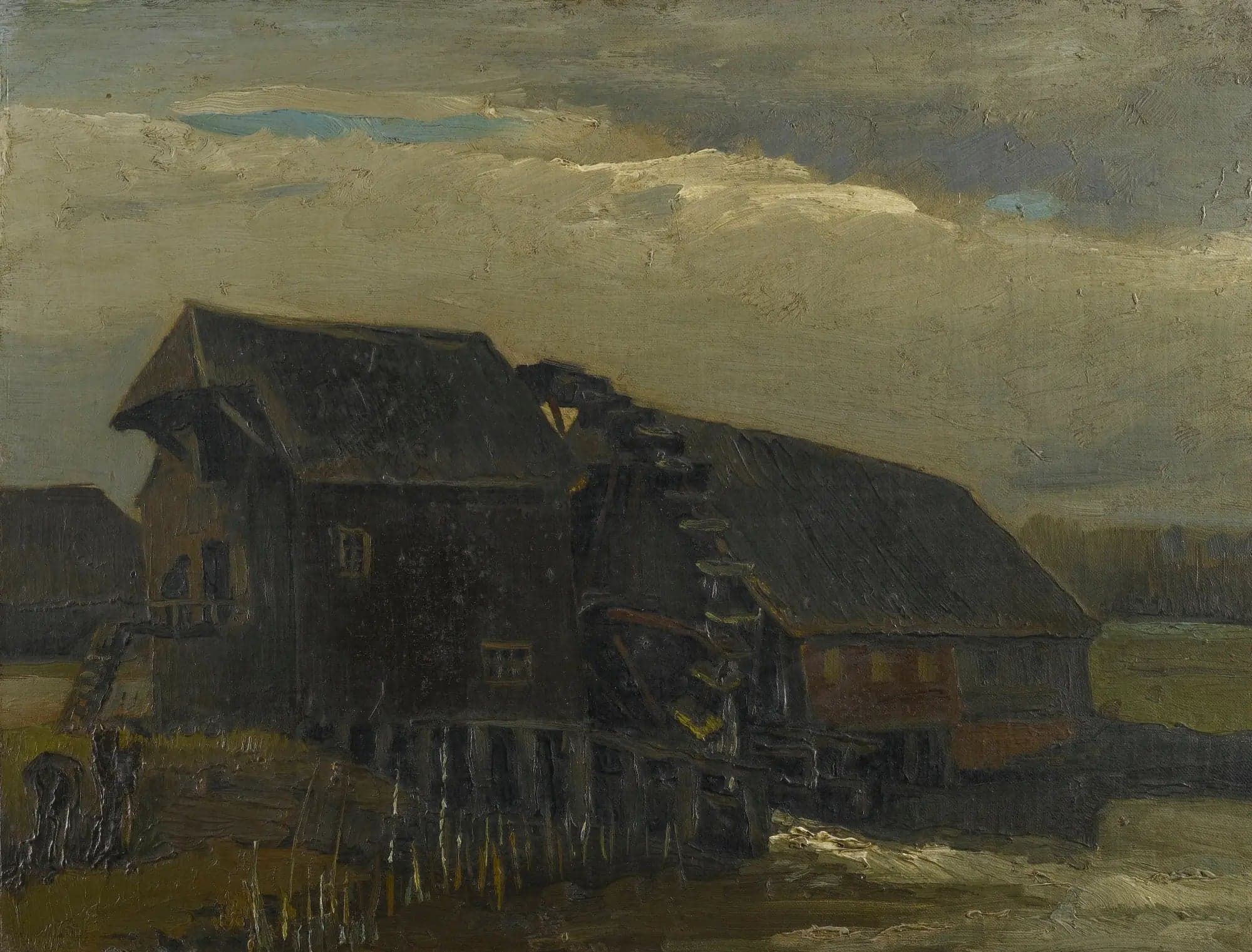
Water Mill at Opwetten
- Original dimensions
- 58 x 45 cm
- Movement
- realism
- Museum
- Not specified
- Year
- 1884
Scene depicted
This canvas depicts a watermill nestled in a green setting, where the movement of the water constrained to rest mingles with the tranquility of a rural landscape. The meticulous details of the mill's structure delicately combine with the vibrant colors of the surrounding nature, creating a peaceful and contemplative atmosphere. The visitor is invited to dive into this pictorial work, filled with sensations and emotions.
Historical context
This painting , created in 1884 in Nuenen , is situated in the era of realism , an artistic movement marked by a desire to represent the world as it is, far from idealizations. During this period, Van Gogh immerses himself in rural life, revealing unexpected scenes of the human condition. Although the canvas is not exhibited in a well-known museum, it remains a centerpiece in the artist's work.
Place in the artist's career
Watermill at Opwetten represents a pivotal moment in Van Gogh's career. In the midst of his artistic exploration period, this painting testifies to his evolution towards an increasingly introspective and personal style. Compared to other works such as The Starry Night and The Sunflowers , it shows a growing mastery in the use of color and light, thus creating a unique atmosphere.
Anecdote
Vincent van Gogh once said: “It is in the most humble places that beauty reveals itself.” On the morning he created this masterpiece , the soft light filtering through the trees seemed to whisper to the leaves and the mill. This harmony between nature and art is perfectly illustrated in the painting , capturing the very essence of the moment.