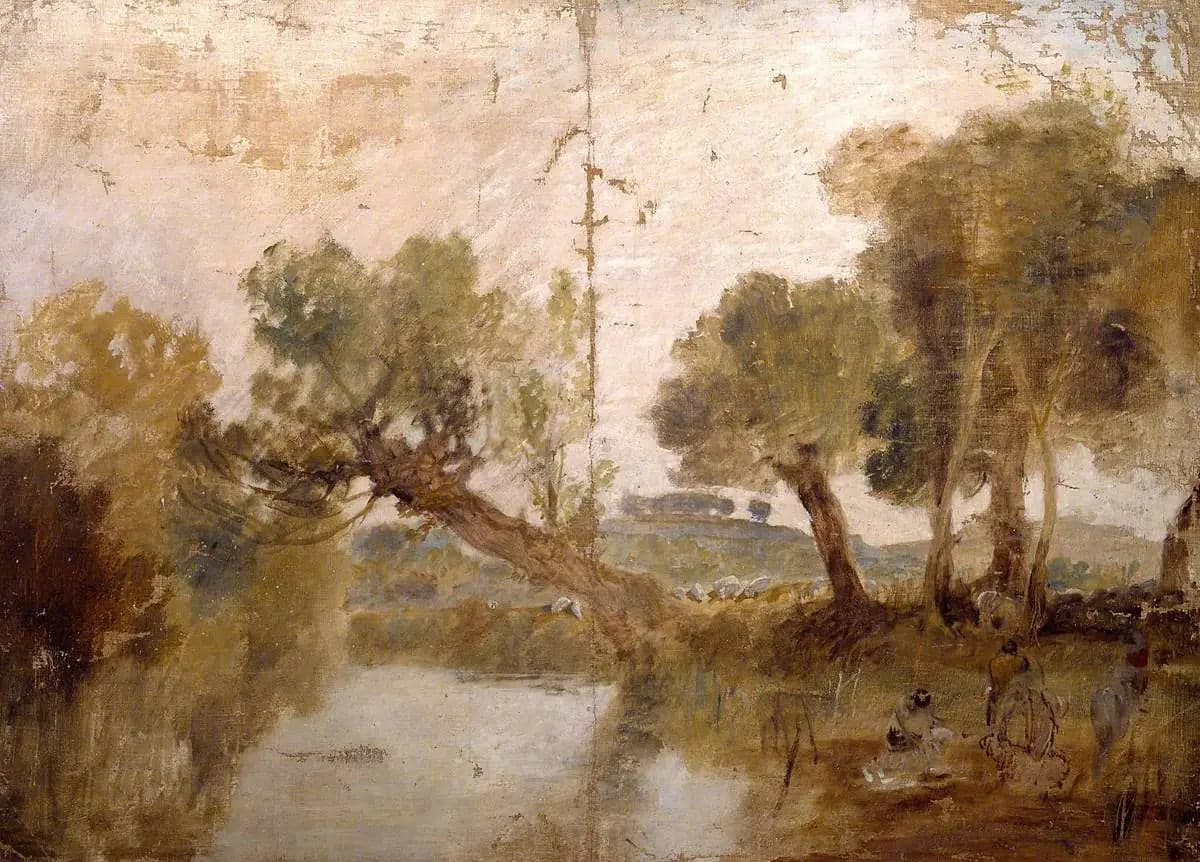
Washing Sheep
- Original dimensions
- 84.5 x 116.5 cm
- Museum
- Tate
- Year
- 1806
Scene depicted
In this painting , Turner illustrates a peaceful moment of English rural life, where sheep are washed in a crystal-clear river. The delicate movement of the water and the softness of the morning light reveal an intimate interaction between man and nature, highlighting the ephemeral beauty of everyday scenes.
Historical context
Created in 1806, the painting Washing Sheep finds its origins in the romantic movement, a current that advocates emotion and escape. Turner, the visionary British artist, captured the essence of the English countryside through his vibrant canvases. Currently, this painting is housed in the Tate museum in London, where visitors can admire its grandeur and visual impact.
Place in the artist's career
Washing Sheep represents a turning point in Turner's career, anchoring his reputation as a master of romantic landscape. Compared to works such as The Fighting Temeraire and Rain, Steam, and Speed , this painting shows a remarkable evolution in his ability to express emotion and light, testifying to the culmination of his style.
Anecdote
“Light is the very essence of painting, nature is my muse.” These words from Turner resonate strongly, evoking a misty morning in the countryside, where the artist was inspired by the flowing water reflecting the soft rays of the sun. This fleeting atmosphere gave birth to Washing Sheep , a pictorial work that transcends time.