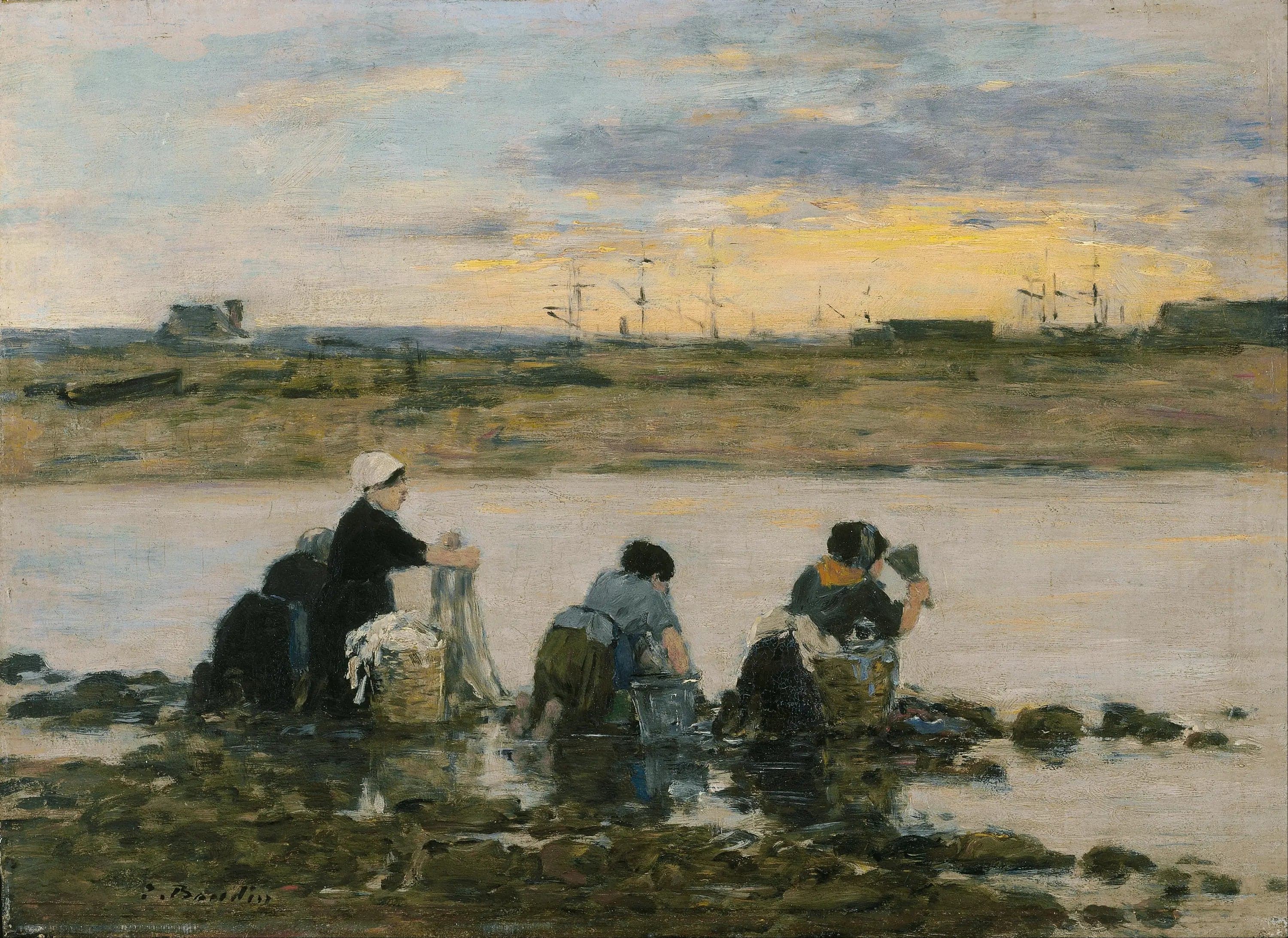
Washerwomen by the River
- Original dimensions
- 36.2 x 26.2 cm
- Museum
- Israel Museum
- Year
- 1880
Scene depicted
In this work, the washerwomen, emblematic figures of rural life, gracefully lean over the shimmering banks of the river. Their delicate gestures, rhythmically accompanied by the murmur of the water, intertwine in a living tableau where each element evokes the harmony of nature and labor. The scene unfolds a feeling of tranquility, daily toil, and an intimate relationship between man and his environment.
Historical context
Created in 1880, this painting emblematic of Eugène Boudin illuminates the Norman landscape with a nostalgic light. Located in Honfleur, a port city where nature and creative impulse meet, this painting brilliantly fits into the Impressionist movement, which celebrates the fleeting beauty of everyday moments. Today, this painting is preserved at the Israel Museum where it bears witness to the generosity of its time.
Place in the artist's career
Washerwomen by the River represents a turning point in Boudin's career, showcasing his growing mastery of light and color effects. Compared to other paintings such as Trouville Beach and Fishing Boats , this masterpiece illustrates his evolution towards a bolder style and an increased sensitivity to the maritime landscape.
Anecdote
“The light on the water has always been my muse,” Boudin reportedly said during a walk by the river. It was in this very place, while observing the washerwomen at work, that the creative impulse for this pictorial work sprang forth. Through Washerwomen by the River , Boudin translates a gentle melody of labor, resonating with the lapping of the water and distant laughter, revealing a deep connection with nature, an inexhaustible source of inspiration.