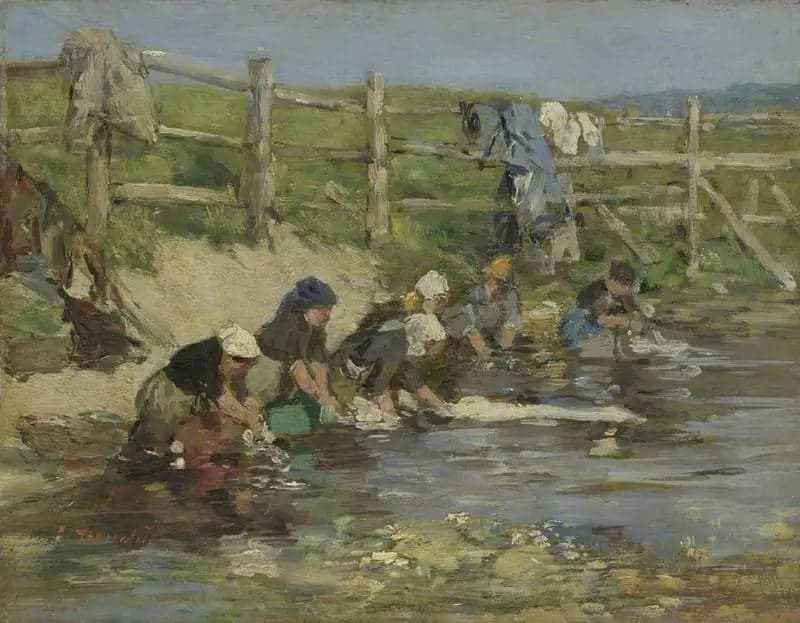
Washerwomen by a Stream
- Original dimensions
- 22.9 x 17.8 cm
- Museum
- National Gallery
- Year
- 1887
Scene depicted
In this composition , the eye is immediately drawn to the peaceful scene where washerwomen are busy above the stream, enveloped by the soft sunlight. The figures come alive in a daily ballet of simple gestures, and their laughter seems to resonate in harmony with the sound of flowing water. It is a painting that breathes calm and serenity, offering a true window into rural life in the 19th century.
Historical context
Created in 1887, this canvas is set in the vibrant context of the Impressionist movement, emerging at the end of the 19th century. At that time, Eugène Boudin , as a pioneer of this artistic era, captured the light and color of French nature, particularly along the Normandy coasts. Currently, this painting is housed in the National Gallery, where it continues to dazzle visitors with its delicate dimensions and unique atmosphere.
Place in the artist's career
This painting , Washerwomen by a Stream, marks a significant turning point in Boudin's career. It signifies a period of artistic maturity, where his plein air techniques and mastery of light and textures flourish. In parallel, works like The Landing of Fishermen at Honfleur and The Beaches of Trouville reveal an evolution, transitioning from simple realism to a vibrant impression of colors and sensations.
Anecdote
“Nature is my greatest teacher,” Boudin might have said while looking at the gentle stream winding through the flowering fields. Immersed in the scent of flowers and the murmur of water, it was on this spring day that he found inspiration for this painting . This vibrant memory conveys the very essence of the harmony present in this pictorial work.