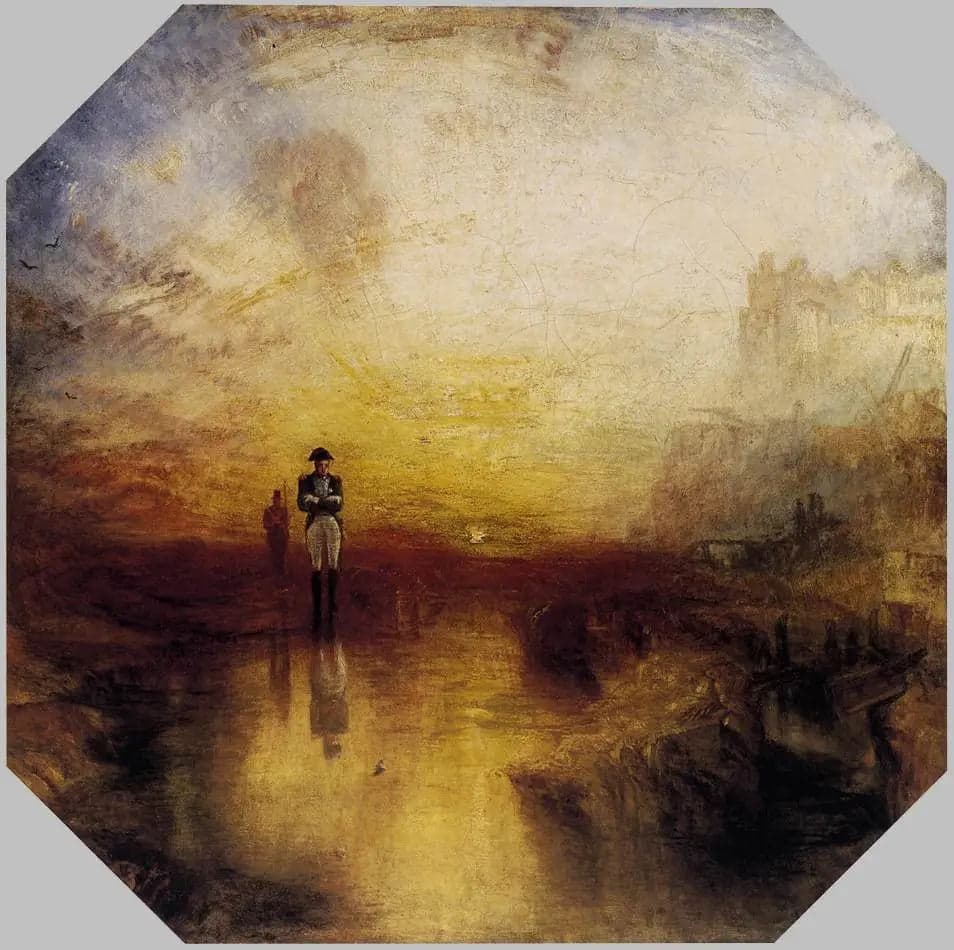
War. The Exile and the Arapede
- Original dimensions
- 79.4 x 79.4 cm
- Museum
- Tate Britain
- Year
- 1842
Scene depicted
The canvas illustrates the confrontation between two opposing forces: the exile, a symbol of suffering and wandering, and the arapede, representing untamed, wild nature. The palpable tension of the scene materializes in an electrifying atmosphere, where colors come alive to evoke a world caught in chaos, but also in hope. The way Turner sublimates this struggle contributes to the emotional depth of the masterpiece.
Historical context
Created in 1842, this painting masterfully fits into the tumultuous context of Victorian England, a time when the struggle for power and peace resonated through the streets of London. Associated with the romantic movement, this canvas stands out for its intense representation of human emotions in the face of war. The masterpiece currently resides at the Tate Britain, where it attracts art lovers from around the world.
Anecdote
In his words: “Every ray of light must tell a story.” It was during a slightly misty morning, as he contemplated the river, that Turner drew inspiration for this canvas . This fleeting observation led him to intertwine the fates of the exile and the arapede, capturing the very essence of the human condition in an elusive world.