War
- Original dimensions
- 197 x 72.5 cm
- Museum
- Munch Museum
- Year
- 1918
Scene depicted
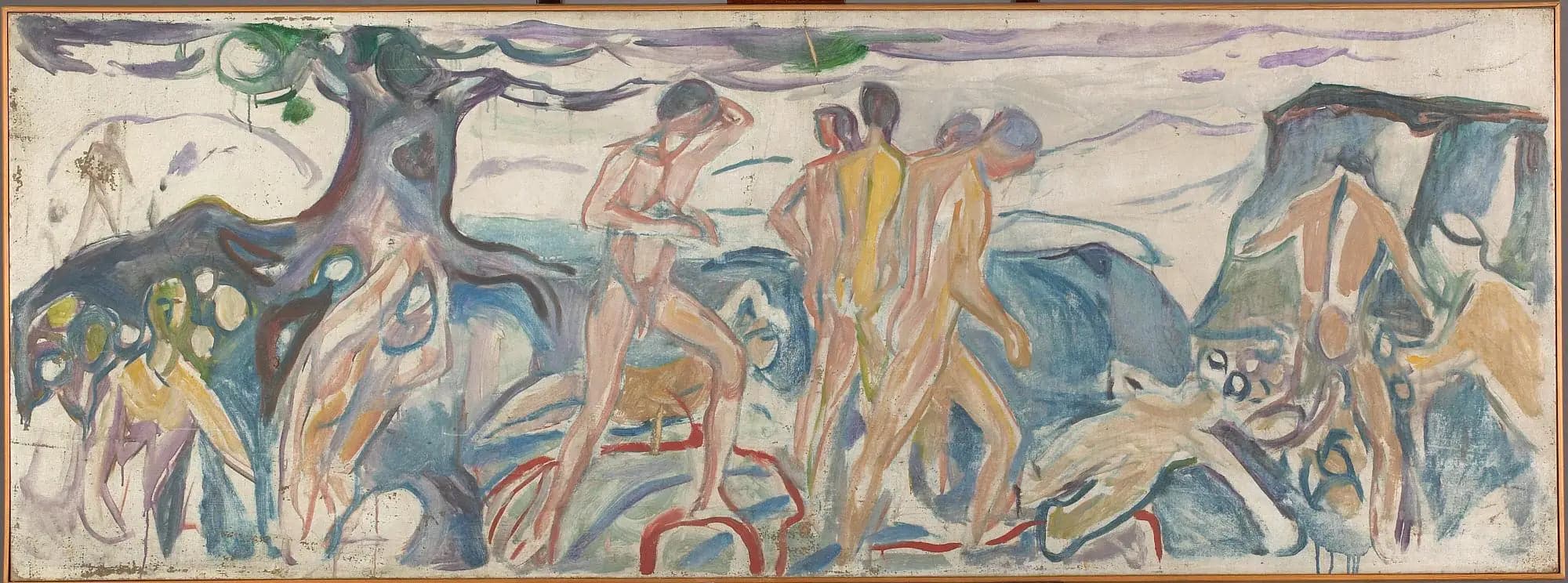
The painting “War - Edvard Munch ” powerfully illustrates the tragic impact of an armed conflict on humanity. The dark colors and almost tormented shapes project the chaos of lost souls, while disembodied silhouettes parade, testifying to individual sufferings amidst collective turmoil. Each element composes a tragic scene where pain and hope intertwine.
Historical context
Created in 1918, in the heart of Oslo, Norway, War represents a vast composition of the expressionist movement. This iconic painting is a testament to an artistic apotheosis born from the turmoil of World War I. Currently exhibited at the Munch Museum, this work masters a subtle balance between despair and introspection, captivating the viewer's gaze.
Place in the artist's career
This painting fits into a period of maturity for Edvard Munch , marked by works like “The Scream” and “The Madonna.” These paintings share an emotional aesthetic that transcends the boundaries of human anguish. Over time, the artist's technique strengthens, and “War” is a poignant reflection of that.
Anecdote
“Art is a confession.” Thus expressed Edvard Munch , in the melancholic glow of a spring morning. At the time of the birth of this masterpiece , he sought to capture the fierce anguish that war and devastation left in the hearts of men. The depth of this painting still resonates through the centuries.