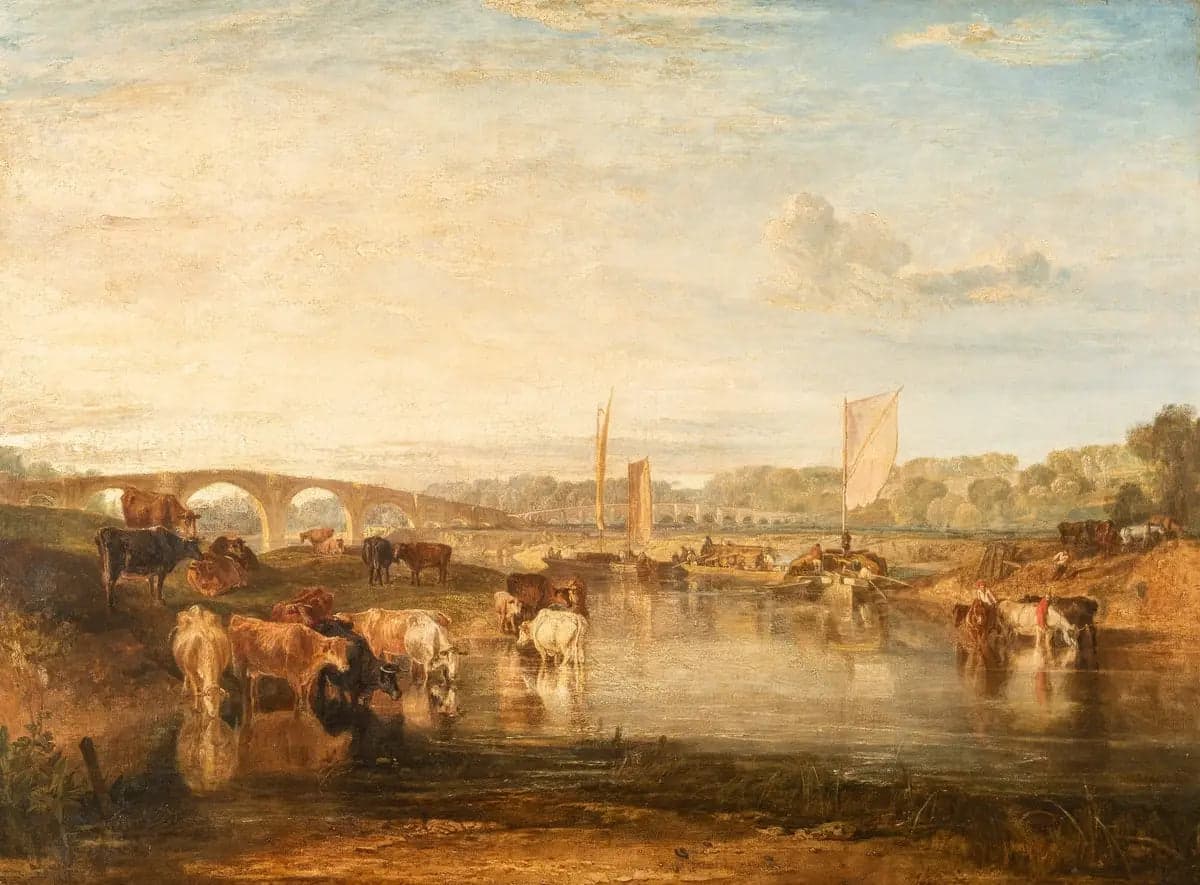
Walton Bridges
- Original dimensions
- 123.8 x 92.7 cm
- Museum
- Norfolk Museums Collections
- Year
- 1806
Scene depicted
The painting "Walton Bridges" magically depicts an iconic bridge, connecting two banks, overlooking a misty and poetic atmosphere. The composition highlights the harmony of natural elements and the interaction of light with the reflections on the water, creating a serene and contemplative atmosphere.
Historical context
Created in 1806, this iconic work by J. M. W. Turner immerses the viewer in a typical British setting, more specifically in the Norfolk region. During this time, the romantic movement influenced artists, of which Turner is one of the most famous representatives. Currently, the painting is part of the prestigious Norfolk Museums Collections.
Place in the artist's career
Positioned between his promising beginnings and later masterpieces, "Walton Bridges" reflects Turner’s evolution. Compared to "The Last Voyage of the Temeraire" and "The Vengeur," this painting illustrates a refinement in the evocative power of painting and mastery of light.
Anecdote
Turner is said to have once stated: "Light is color," thus illustrating his unique approach to painting . That morning, as the dew sparkled on the Thames, he passionately drew inspiration from this canvas , feeling every vibration of the surrounding nature.